Apparition
Harry Potter and the Half-Blood PrinceApparition is the magical means of instantaneous travel from one place to another, a skill that becomes a formal part of the curriculum for sixth-year students at Hogwarts in Harry Potter and the Half-Blood Prince. The novel introduces Apparition not merely as a convenient mode of transport but as a demanding, uncomfortable, and often humiliating discipline that tests the nerve, concentration, and emotional stability of those who attempt it. Its lessons serve as a recurring motif of adolescent anxiety, personal inadequacy, and the gap between intention and achievement, most pointedly embodied in Ron Weasley's struggles.
Definition and Mechanics
Apparition is described as a method of magical travel that compresses the traveler through a "very tight rubber tube," producing sensations of suffocation, pressure, and disorientation. Harry experiences it for the first time when Albus Dumbledore takes him Side-Along to Budleigh Babberton; he feels "iron bands tightening around his chest," his eyeballs forced back, and his eardrums pushed deeper into his skull. The Ministry of Magic Apparition Instructor, Wilkie Twycross, teaches the technique through the mantra of the "Three D's": Destination, Determination, and Deliberation. The first step requires fixing the mind firmly upon the desired destination; the second demands focusing one's determination to occupy that visualized space; the third involves turning on the spot with deliberation, feeling one's way into nothingness. The process is governed by strict legal restrictions: wizards must be seventeen years old to take the official test, and Apparition is normally impossible within the Hogwarts grounds due to protective enchantments, though the Headmaster can lift this prohibition temporarily for lessons.
Lessons and Practice
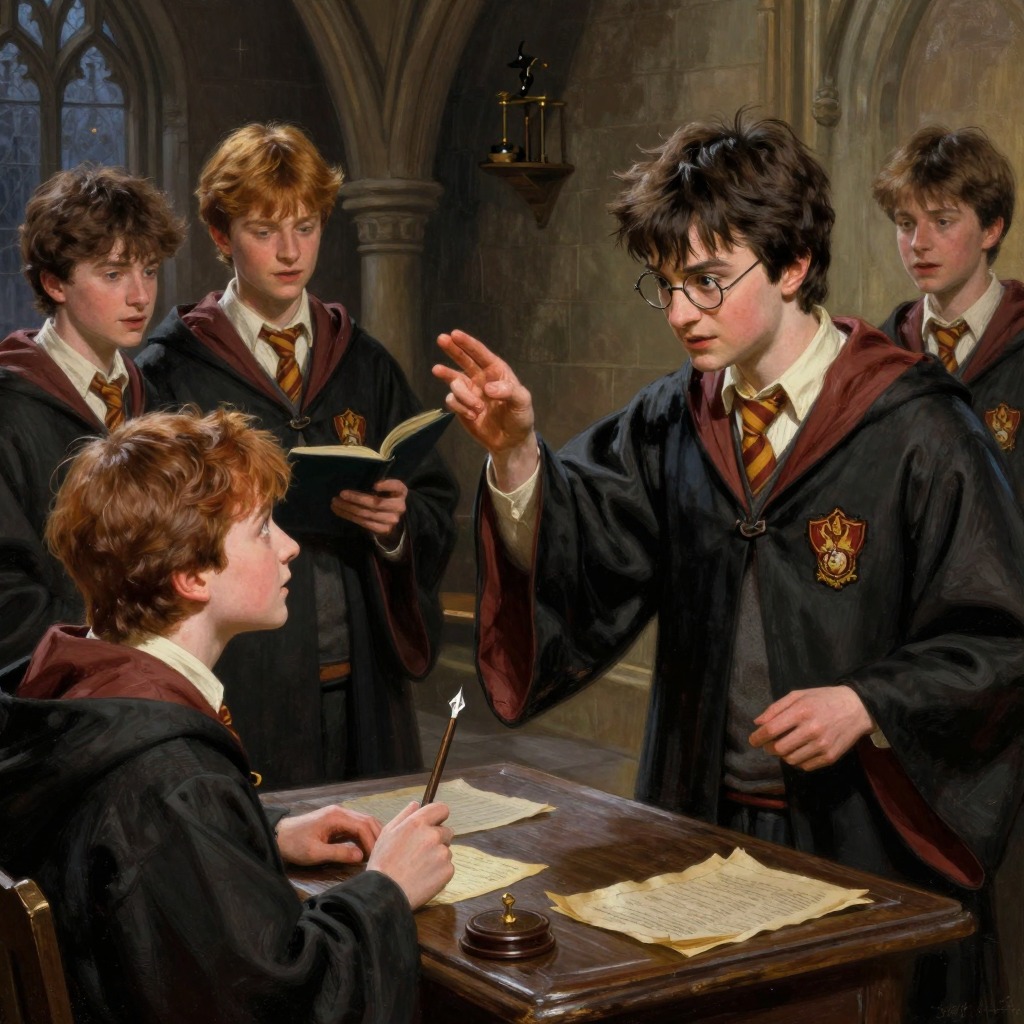
The Apparition lessons take place in the Great Hall, where the usual tables have been removed and the Heads of House — Professors McGonagall, Snape, Flitwick, and Sprout — supervise alongside Twycross. Each student stands inside an old-fashioned wooden hoop conjured by the instructor, and the goal is to disappear from one's own hoop and reappear inside it. The results are almost uniformly disastrous. Most students fail to move at all; Neville Longbottom ends up flat on his back; Ernie Macmillan performs a pirouetting leap into his hoop but looks ridiculous; and Susan Bones of Hufflepuff suffers a spectacular "Splinching" — the separation of random body parts — leaving her left leg standing five feet away from where the rest of her wobbles in pain. Twycross explains that Splinching occurs when the mind is insufficiently determined, and he demonstrates the correct technique by vanishing gracefully and reappearing at the back of the Hall. The lessons generate widespread frustration, and Twycross himself acquires a number of unflattering nicknames, the politest of which are "Dog-breath" and "Dung-head."
Ron Weasley's Struggle
Ron Weasley's inability to Apparate becomes a central source of personal anguish and social embarrassment. He fails to achieve even a partial movement during the lessons, and his anxiety is compounded when Snape publicly humiliates him in Defense Against the Dark Arts class, calling him "the boy so solid he cannot Apparate half an inch across a room." Ron's distress is so acute that he considers abandoning the test altogether, telling Harry, "I dunno whether it's worth me taking the test. I just can't get the hang of Apparition." He eventually decides to attend the extra practice sessions in Hogsmeade, and on one such outing he manages to overshoot his intended destination of Madam Puddifoot's Tea Shop and ends up near Scrivenshaft's, a partial success that cheers him considerably. However, when the official test arrives, Ron fails: the examiner notices that he has left "half an eyebrow behind," a tiny but disqualifying Splinching. Ron is bitterly disappointed, complaining that "half an eyebrow — like that matters!" but Harry promises they can take the test together over the summer.
Harry's Experience and Perspective
Harry's relationship with Apparition is markedly different from Ron's. He first experiences it as a passenger during Dumbledore's Side-Along Apparition, and while he finds the sensation deeply unpleasant — preferring brooms — he is able to perform the skill himself during the lessons, successfully disappearing and rematerializing inside his hoop on one occasion. He cannot take the official test because he will not turn seventeen until July, four months after the first test date. Harry's relative indifference to Apparition reflects his preference for flying and his deeper preoccupations with Draco Malfoy, the Half-Blood Prince's book, and the mission Dumbledore has given him. When he needs to Apparate Dumbledore back from the seaside cave to Hogsmeade after the Horcrux retrieval, he does so successfully despite his inexperience, concentrating harder than he ever has before on his destination.
Narrative and Thematic Significance
Apparition functions in the novel as a marker of coming-of-age, a source of comic relief, and a measure of character. The legal age requirement ties magical adulthood to the ability to travel independently, and the test becomes a rite of passage that Ron fails and Hermione passes with ease. The physical dangers of Splinching — the separation of body parts — literalize the psychological fragmentation that the characters experience under the pressures of war, romance, and personal inadequacy. The lessons also provide a rare opportunity for Harry to observe Malfoy at close quarters; during one lesson, Harry positions himself behind Malfoy and overhears him arguing with Crabbe about a secret task that is "taking longer than I thought it would," a crucial piece of evidence in Harry's ongoing investigation of Malfoy's activities. The contrast between Ron's public failure and Hermione's effortless success — she performs a graceful pirouette while murmuring the Three D's to herself — underscores the growing rift between them, while Harry's calm competence in a crisis, when he Apparates the injured Dumbledore back to safety, demonstrates the practical courage that will define his role in the battles to come.