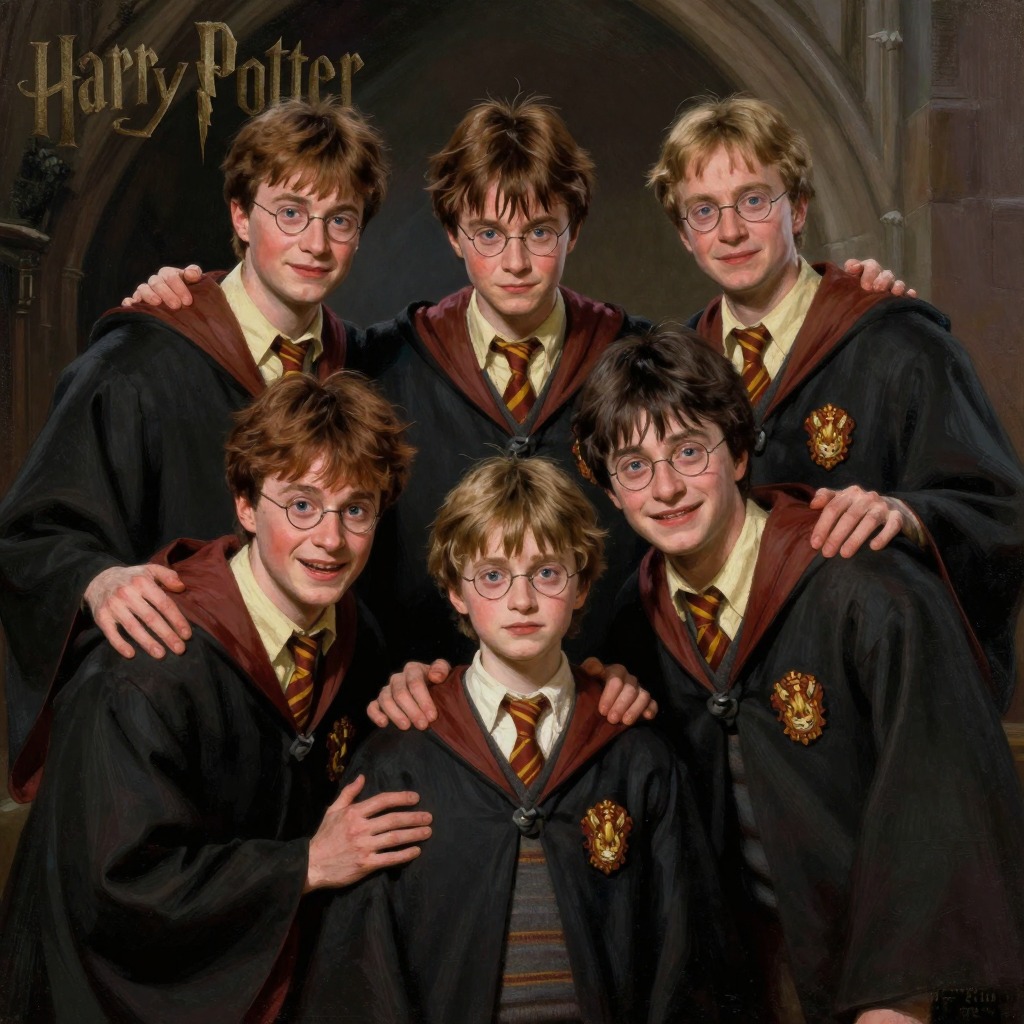
George Weasley
Harry Potter and the Half-Blood PrinceGeorge Weasley is one half of the famously mischievous Weasley twins, a pair whose humor and ingenuity define much of the lighter side of the wizarding world even as the shadow of war lengthens. Alongside his brother Fred, George is a co-owner of Weasleys' Wizard Wheezes, a joke shop that evolves from a source of schoolyard pranks into a vital supplier of defensive goods for the fight against Voldemort. His character is marked by an unbreakable bond with Fred, a relentless entrepreneurial drive, and a deep, often understated, courage that comes to the fore in moments of crisis.
Identity and Background
George, the younger of the identical twins by a few minutes, grew up in the crowded Burrow as the fifth of seven children. From an early age, he and Fred were inseparable, their shared sense of humor and talent for mischief setting them apart. Their antics, from bewitching snowballs to tormenting Percy, were legendary at Hogwarts, but beneath the laughter lay considerable magical skill. This talent found its true outlet after they left school, when they transformed their childhood experiments into a successful business. The shop, Weasleys' Wizard Wheezes, located at number ninety-three, Diagon Alley, became a beacon of defiant cheerfulness. Its windows were a dazzling spectacle, and its products ranged from the whimsical, like the "U-No-Poo" constipation sensation, to the practical, such as Shield Hats and Decoy Detonators, which they developed to meet the growing demand for defensive items.
Role in the War and the Order of the Phoenix
As members of the Order of the Phoenix, George and Fred fought alongside their family and friends. George's role extended beyond the battlefield; his shop became a crucial hub for the resistance. The twins' products, initially seen as mere jokes, were adapted for serious use. The Ministry of Magic itself purchased five hundred Shield Hats for its support staff, a testament to the twins' unexpected contribution to the war effort. George's courage was tested during the Battle of the Astronomy Tower, where he fought against the Death Eaters who had infiltrated Hogwarts. He was present in the hospital wing afterward, his face grim as he and Fred delivered a birthday present to their unconscious brother, Ron, who had been poisoned. The gravity of the situation was not lost on him, but his characteristic humor remained, a vital coping mechanism in the face of tragedy.
Relationships and Personal Loss
The defining relationship of George's life is with his twin, Fred. Their partnership is total, a seamless blend of thought and action. They finish each other's sentences, share a business, and face danger together. This bond makes the loss of Fred in the final battle a shattering blow, one that fundamentally alters George's identity. The grief is profound, but it is also a testament to the depth of their connection. George's relationship with the rest of his family is equally strong, though often expressed through teasing. He is protective of his younger siblings, particularly Ginny, and shares a complex, affectionate rivalry with Ron. His loyalty to his parents, Arthur and Molly, is absolute, even as he and Fred constantly challenge their mother's rules. The loss of his ear during the escape from Privet Drive, a wound inflicted by the dark magic of Severus Snape, is a physical scar that mirrors the emotional ones he will later carry.
Thematic Significance
George Weasley embodies the theme of joy as an act of resistance. In a world darkened by Voldemort's terror, he and Fred refuse to surrender their humor. Their joke shop is not an escape from reality but a weapon against despair. The "U-No-Poo" campaign, a parody of the Ministry's fear-mongering, is a perfect example of their approach: they mock the enemy and lift spirits simultaneously. George's journey also illustrates the cost of war. The loss of his ear is a prelude to the greater loss of his twin, a sacrifice that underscores the personal price of victory. His eventual marriage to Angelina Johnson and the naming of his son after Fred show that while the war leaves permanent scars, life and love continue. George's story is one of resilience, proving that even in the face of unimaginable loss, the spirit of laughter and loyalty can endure.