Killing Curse
Harry Potter and the Half-Blood PrinceThe Killing Curse, known by its incantation Avada Kedavra, stands as the most terrible and final of the three Unforgivable Curses in the wizarding legal code. It is a spell of pure murder, causing instantaneous death with a flash of green light and a rushing, rushing sound. Unlike other forms of lethal magic, the Killing Curse leaves no mark of damage on the body, making it the weapon of choice for Lord Voldemort and his Death Eaters. Its very nature—unblockable, unstoppable by any known magical defense—makes it the ultimate expression of evil intent, a spell that cannot be cast with any hesitation or moral ambiguity, requiring a genuine, focused desire to kill.
Nature and Mechanism
The Killing Curse operates on principles fundamentally different from other offensive magic. As Dumbledore explains, the Avada Kedavra curse does not usually leave any sign of damage; the exception is Harry Potter's lightning-shaped scar, a unique and lasting mark of the curse's failed attempt. The curse is not a projectile that can be deflected by a Shield Charm; it is an absolute, a magical law of murder. The only known way to survive a direct hit is through the ancient, powerful magic of sacrificial love, as when Lily Potter's willing death to save her son created a protective counter-charm that rebounded Voldemort's own Killing Curse back upon him. This event, which left Harry as the only person ever known to survive the Killing Curse, is the foundational mystery of the entire conflict.
Legal Status and Consequences
Under wizarding law, the Killing Curse is classified as an Unforgivable Curse, alongside the Imperius Curse and the Cruciatus Curse. The use of any Unforgivable Curse on a fellow human being carries a life sentence in Azkaban. This legal severity reflects the curse's absolute evil; it is not a tool for combat but an act of execution. The Ministry of Magic's strict enforcement of this law, however, is shown to be imperfect, as Death Eaters routinely employ the curse without facing justice, and the Ministry itself is sometimes powerless to prevent its use. The curse's legal status also creates a moral boundary: those who use it are irredeemably marked as killers, a line that even the conflicted Draco Malfoy cannot bring himself to cross when ordered to kill Dumbledore.
Role in the Plot
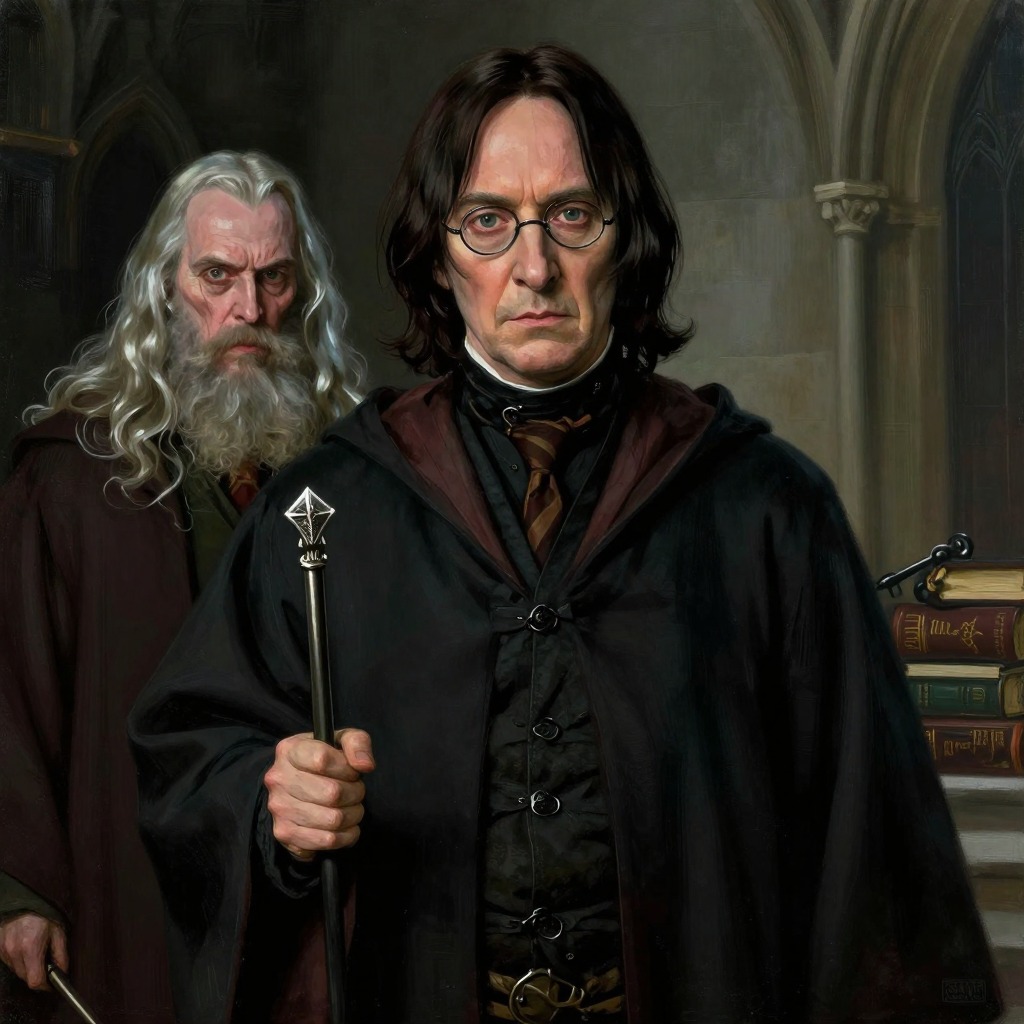
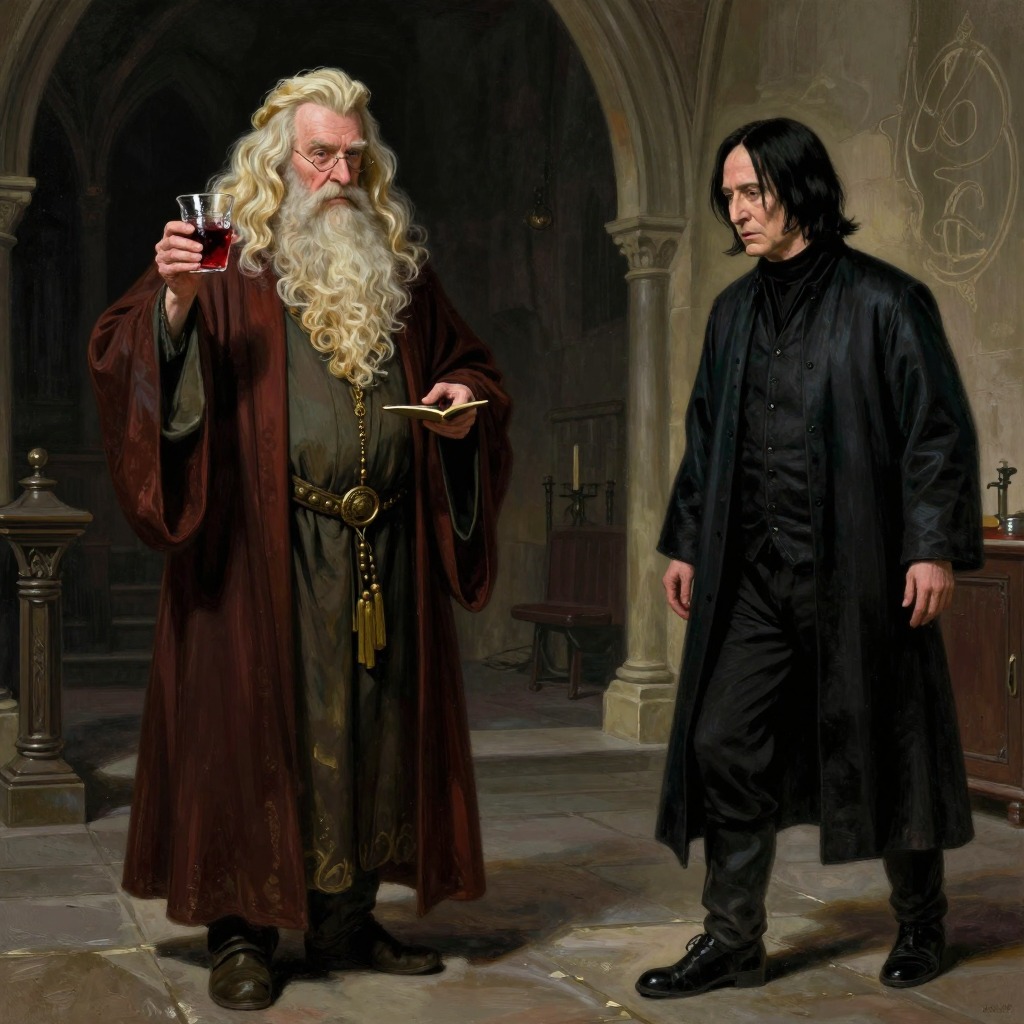
The Killing Curse is the engine of the entire narrative. Voldemort's first attempt to use it on the infant Harry Potter failed catastrophically, reducing him to a spectral existence and creating the prophecy that would ultimately lead to his downfall. Throughout the story, the curse is Voldemort's signature weapon, used to murder the Riddles, Hepzibah Smith, and countless others. Its most devastating application occurs when Severus Snape, on Voldemort's orders, casts the curse on Albus Dumbledore, blasting the headmaster off the Astronomy Tower to his death. This act, witnessed by a paralyzed Harry, is the emotional climax of the book, proving that even the greatest wizard can fall to the curse when caught defenseless. The curse's final, intended target is always Harry, and the prophecy that "neither can live while the other survives" is ultimately a statement about the inevitability of one of them dying by this very spell.
Thematic Significance
The Killing Curse serves as the ultimate symbol of Voldemort's philosophy: the belief that power, fear, and the willingness to kill are the only things that matter. Its green light is a visual motif of death and evil, appearing whenever Voldemort or his followers commit murder. The curse's inability to be blocked by conventional magic underscores the theme that love, sacrifice, and moral courage are the only true defenses against evil. Harry's survival of the curse as a baby, and his continued resistance to it, is not a matter of superior magical skill but of the protective power of his mother's love, a force Voldemort cannot understand or replicate. The curse, therefore, is not just a weapon but a moral test: those who use it are damned, and those who face it with courage are redeemed.