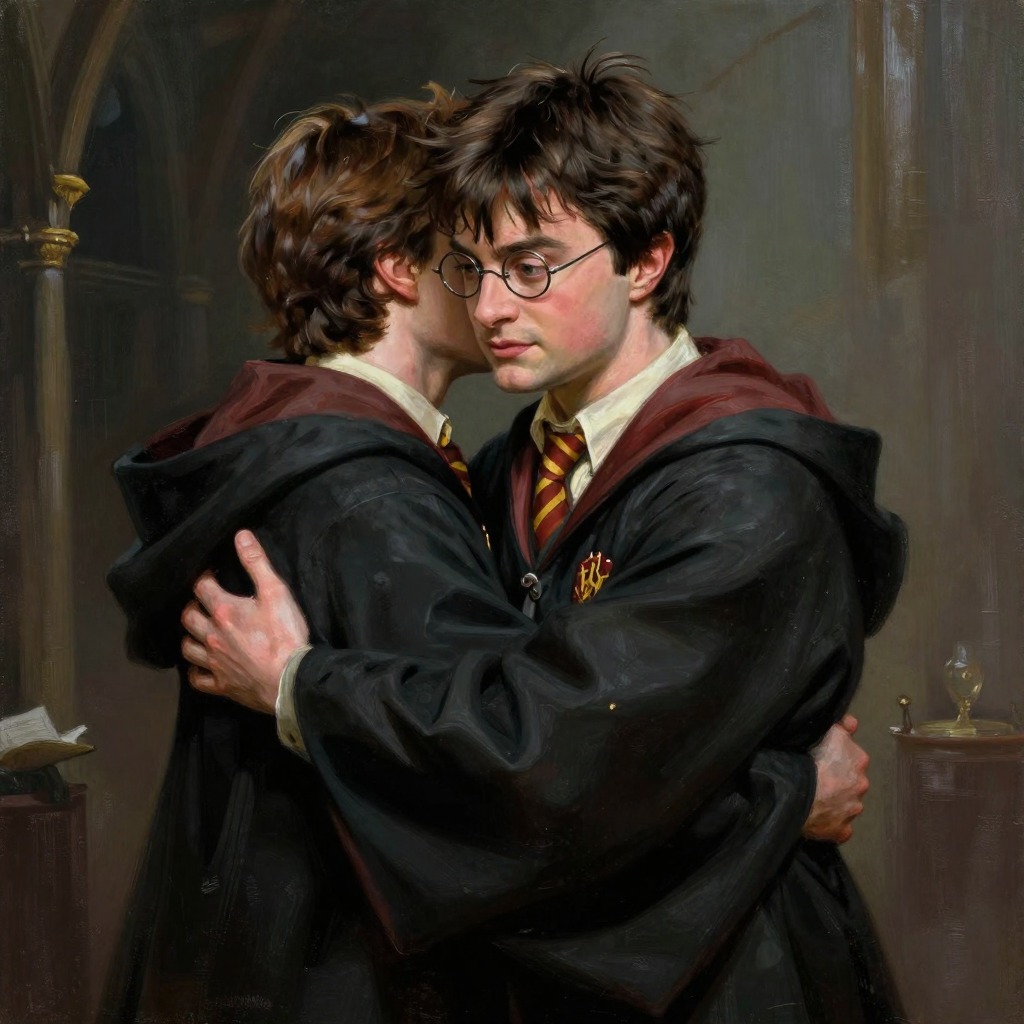
The Prophecy
Harry Potter and the Half-Blood PrinceThe Prophecy is the hinge on which the entire war between Harry Potter and Lord Voldemort turns—a fragment of spoken fate that, because Voldemort believed in it and acted on it, became the engine of his own destruction. It was uttered by the Divination teacher Sybill Trelawney during a job interview with Albus Dumbledore at the Hog's Head inn, a prophecy she herself does not remember making. The only other person present, eavesdropping at the door, was a young Severus Snape, who carried the news to his master, Lord Voldemort. That single act of betrayal set in motion the chain of events that would define Harry's life and the wizarding world's future.
Content and Meaning
The prophecy's exact wording, as Harry hears it from Dumbledore's Pensieve, is stark and absolute: "The one with the power to vanquish the Dark Lord approaches... born to those who have thrice defied him, born as the seventh month dies... and the Dark Lord will mark him as his equal, but he will have power the Dark Lord knows not... and either must die at the hand of the other for neither can live while the other survives." It identifies two possible candidates—Harry Potter and Neville Longbottom—both born at the end of July to parents who had defied Voldemort three times. Voldemort, hearing only the first half of the prophecy, chose to believe it referred to Harry, the half-blood like himself, and marked him as his equal by attacking him as an infant. That attack rebounded, leaving Harry with a lightning-shaped scar and a fragment of Voldemort's own soul, and it gave Harry the very protection—his mother's sacrificial love—that would later make him invulnerable to Voldemort's touch.
Role in the Plot
The prophecy is the secret the Death Eaters try to steal from the Hall of Prophecy at the Ministry of Magic, the event that leads to the battle in which Sirius Black dies. Harry learns its full contents from Dumbledore at the end of his fifth year, and the knowledge weighs on him throughout the sixth. He tells Ron and Hermione, who react with shock and quiet support, and the prophecy becomes the unspoken reason for Dumbledore's private lessons. Dumbledore insists that the prophecy is not a binding destiny but a record of what Voldemort made true by his own choices: "If Voldemort had never heard of the prophecy, would it have been fulfilled? Would it have meant anything? Of course not!" The prophecy matters only because Voldemort decided it did, and in doing so, he handpicked the person most likely to finish him and handed him uniquely deadly weapons—the love of his mother, the ability to see into Voldemort's mind, and the Parseltongue that lets him understand the enemy's commands.
Thematic Significance
The prophecy embodies the book's central argument about choice versus destiny. Harry initially feels trapped by it, a puppet of fate, but Dumbledore reframes it as a matter of moral agency: "You are free to choose your way, quite free to turn your back on the prophecy! But Voldemort continues to set store by the prophecy. He will continue to hunt you... which makes it certain, really, that one of us is going to end up killing the other." Harry comes to understand that the difference between being dragged into a battle and walking into it with your head held high is everything. The prophecy also underscores the theme of love as the ultimate power: the "power the Dark Lord knows not" is not a spell but the capacity for sacrificial love, which Voldemort, in his haste to mutilate his own soul, never paused to understand. In the end, the prophecy is not a curse but a challenge—one that Harry accepts not because he must, but because he chooses to.
Aftermath and Legacy
After Dumbledore's death, the prophecy remains the guiding star of Harry's mission. He knows he must destroy all of Voldemort's Horcruxes and then face the Dark Lord himself, because "neither can live while the other survives." The prophecy's words echo in his mind as he plans to leave Hogwarts and hunt the remaining Horcruxes, and they give him a grim clarity: he is the one who must kill Voldemort, and he will do it not because a prophecy said so, but because it is right. The prophecy is finally fulfilled in the Battle of Hogwarts, when Harry walks to his death in the Forbidden Forest, only to return and defeat Voldemort once and for all—proving that the prophecy was never about inevitability, but about the choices that make a hero.