Full moon
Harry Potter and the Prisoner of AzkabanThe full moon is the astronomical trigger that forces Remus Lupin, a werewolf, to transform into a dangerous, wolf-like creature against his will. This monthly cycle is the central fact of Lupin's life, determining his physical state, his social isolation, and the elaborate precautions taken to contain him during his transformations. In Harry Potter and the Prisoner of Azkaban, the full moon functions not merely as a background detail but as a structural and thematic engine, driving the revelation of Lupin's lycanthropy, the history of the Marauders, and the climactic confrontation in the Shrieking Shack.
The Full Moon and Lupin's Condition
Lupin's lycanthropy, contracted as a very small boy, forces him to transform into a werewolf once a month at the rising of the full moon. Before the discovery of the Wolfsbane Potion, these transformations were terrible and painful; Lupin would become a fully fledged monster, separated from humans to prevent him from biting anyone, so he would bite and scratch himself instead. The potion that Professor Snape brews for Lupin throughout the year is a very recent discovery that allows him to keep his mind when he transforms, enabling him to curl up in his office as a harmless wolf and wait for the moon to wane. However, the potion must be taken in the week preceding the full moon; on the night of the climactic events in the Shrieking Shack, Lupin forgets to take it, and when a cloud shifts and the moonlight falls upon him, he undergoes a violent, uncontrolled transformation, his head lengthening, his body hunching, and hair sprouting visibly on his face and hands as they curl into clawed paws.
The Shrieking Shack and the Whomping Willow
The full moon directly explains the existence of the Shrieking Shack and the Whomping Willow. When Albus Dumbledore became Headmaster and admitted Lupin to Hogwarts, the Whomping Willow was planted the same year Lupin arrived, and the Shrieking Shack and the tunnel leading to it were built for his use. Once a month, Lupin was smuggled out of the castle to the Shack to transform, and the tree was placed at the tunnel mouth to stop anyone from coming across him while he was dangerous. The screams and howls the villagers of Hogsmeade used to hear, which led to the Shack being considered the most severely haunted building in Britain, were actually made by Lupin during his werewolf transformations. This secret arrangement was known to the staff, but the full moon's role in Lupin's condition was kept from the student body until Hermione Granger deduced it from Snape's assigned essay on werewolves and by noticing that Lupin was always ill at the full moon.
The Marauders and the Full Moon
The full moon was the catalyst for the creation of the Marauders' friendship and their illegal transformation into Animagi. Lupin's three friends—Sirius Black, Peter Pettigrew, and James Potter—noticed that he disappeared once a month and eventually worked out the truth about his lycanthropy. Instead of deserting him, they spent the best part of three years learning to become Animagi so they could keep him company during his transformations. As animals, they could safely accompany him; Peter, as the smallest, could slip beneath the Whomping Willow's attacking branches and touch the knot that freezes it, allowing them all to enter the tunnel. Under their influence, Lupin became less dangerous, his mind becoming less wolfish while he was with them. This monthly adventure led them to roam the school grounds and Hogsmeade by night, and it was this shared experience that inspired them to create the Marauder's Map, signing it with their nicknames: Moony (Lupin), Wormtail (Pettigrew), Padfoot (Black), and Prongs (Potter).
The Full Moon's Climactic Consequences
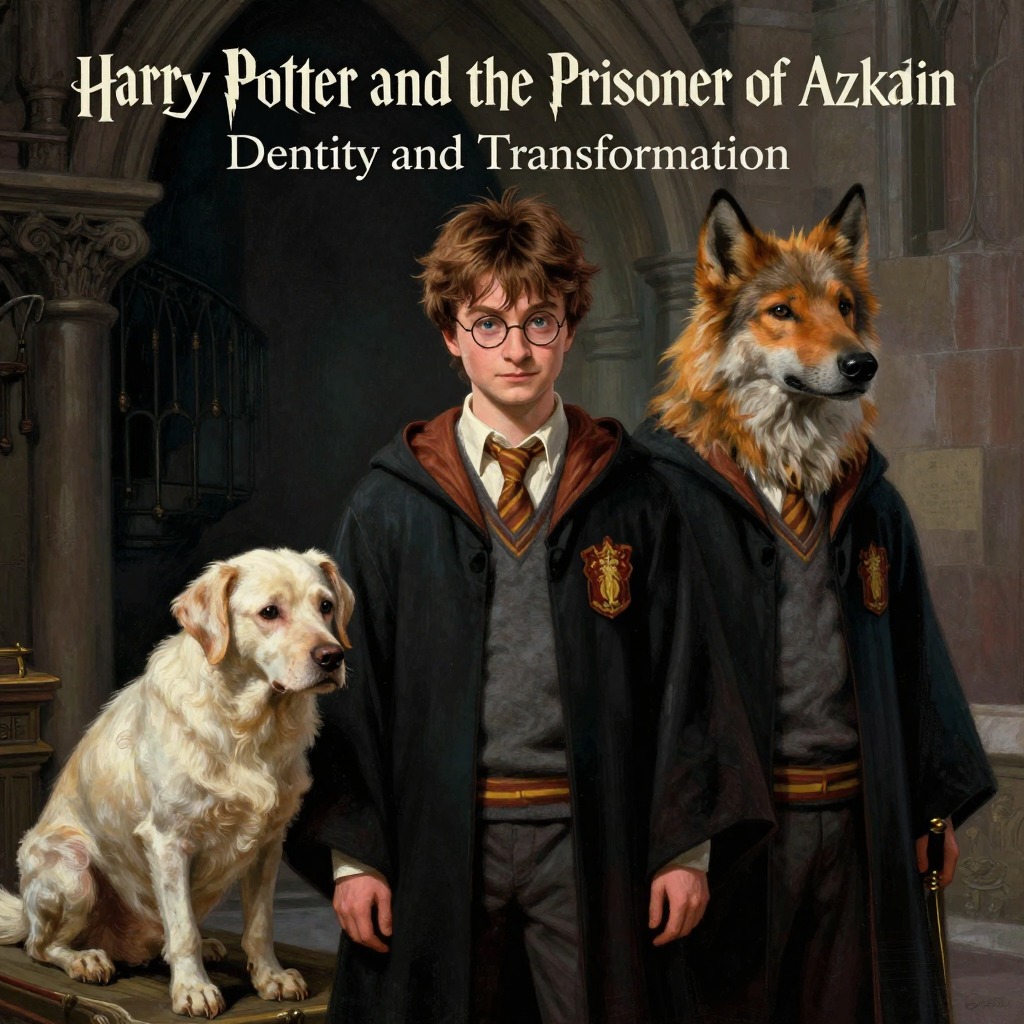
The full moon precipitates the crisis of the novel's climax. On the night Sirius Black is captured and Peter Pettigrew is revealed, Lupin, having forgotten to take his Wolfsbane Potion, transforms under the moonlight. The werewolf wrenches itself free of the manacle binding it to Pettigrew, and Sirius, in his dog form, seizes it about the neck to protect the others. In the chaos, Pettigrew seizes the opportunity to transform into a rat and escape into the darkness. The full moon thus directly enables Pettigrew's flight, undoing the chance to prove Sirius's innocence through conventional legal means. Later, Lupin's lycanthropy, tied to the full moon, becomes the reason for his resignation. After his secret is revealed by Snape, Lupin explains that parents will not want a werewolf teaching their children, and he acknowledges that he could have bitten any of them, a risk that must never happen again. The full moon, which once forged his deepest friendships, ultimately forces him to leave the career and community he loves.
Thematic Significance
The full moon in Prisoner of Azkaban is a symbol of the hidden, the feared, and the misunderstood. It represents the condition that marks Lupin as an outsider, subject to prejudice and institutional secrecy, yet it also becomes the occasion for the most profound acts of loyalty and friendship among the Marauders. The cycle of the moon dictates the rhythm of Lupin's life, from his childhood infection to his adult employment, and its narrative function is to expose the gap between public perception and private reality. The full moon is not merely a plot device but a recurring emblem of the novel's central themes: the stigma of difference, the power of secret bonds, and the tragic consequences of a single, uncontrollable night.