Severus Snape
Harry Potter and the Prisoner of AzkabanSeverus Snape, the Potions Master at Hogwarts, is a figure of simmering resentment and calculated cruelty, whose every action in Harry Potter's third year is driven by a decades-old grudge. More than a mere antagonist, Snape embodies the corrosive power of unresolved hatred, using his authority as a teacher to torment students and his knowledge as a former Death Eater to pursue a personal vendetta against Sirius Black and Remus Lupin, all while masking his own traumatic past. His presence in Harry Potter and the Prisoner of Azkaban transforms the school into a battleground where the sins of the fathers are visited upon the sons, and where the line between justice and revenge is irrevocably blurred.
Identity and Background
Snape is introduced as Harry's least favorite teacher, a man who would be "delighted to have an excuse to give Harry detention for a month" . He is the Head of Slytherin House, a position he uses to favor his own students, allowing Draco Malfoy to get away with behavior that would earn others detention . His appearance is consistently described as menacing: he has a "thin, sallow face," greasy black hair, and a hooked nose, and his eyes are "black" and "glittering" . Snape's deep-seated animosity toward Harry is rooted in the past; he sees in Harry the image of his father, James Potter, whom he accuses of being "exceedingly arrogant" and of "strutting around the place with his friends and admirers" (E02944-E02945). This hatred is so profound that the mere sight of Harry provokes a look of "loathing" .
Role in the Plot and Key Actions
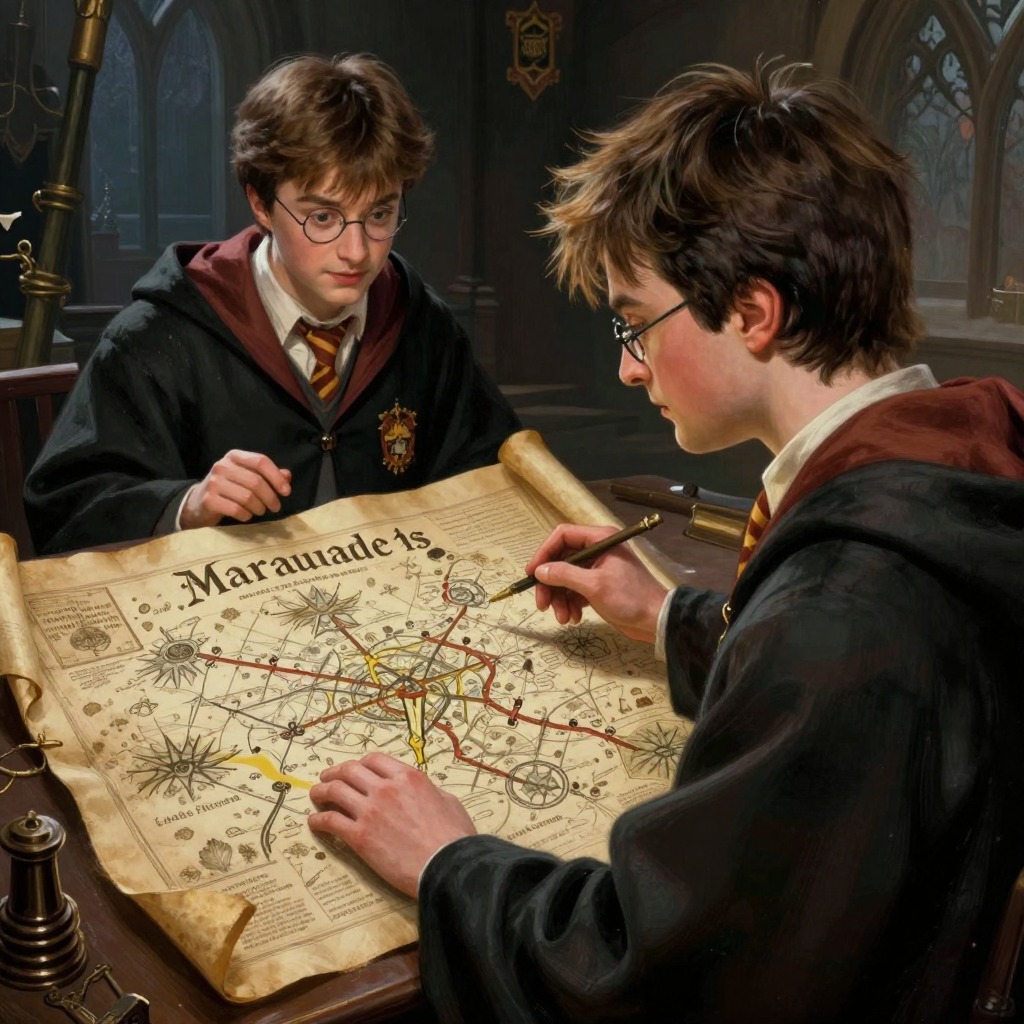
Snape's primary function in the narrative is as an obstacle and a source of conflict. He is the enforcer of the Ministry's unjust rules, having issued Harry an official warning the previous summer for underage magic . He is also the one who, as a substitute teacher for Defense Against the Dark Arts, deliberately teaches material far beyond the class's level, assigning an essay on werewolves to expose Lupin's secret . His most significant action is his relentless pursuit of Sirius Black. When he discovers Harry using the Marauder's Map, he immediately assumes it is a tool for Dark Magic and summons Lupin, revealing his suspicion that Lupin is helping Black . He later tracks them to the Shrieking Shack, where he attempts to capture Black himself, declaring, "Vengeance is very sweet" . His obsession blinds him to the truth, and he is only stopped when Harry, Ron, and Hermione disarm him .
Relationships and Conflict
Snape's relationships are defined by conflict. He bullies Neville Longbottom mercilessly, once taking five points from Gryffindor for Hermione's successful help . He is openly contemptuous of Hermione, calling her an "insufferable know-it-all" . His hatred for Sirius Black is palpable; he calls him a "murderin' traitor" and is eager to see him receive the Dementor's Kiss . His relationship with Lupin is the most complex. Snape brews the Wolfsbane Potion for Lupin, but does so with visible resentment, and his eyes flicker toward Lupin "more often than was natural" during the Halloween feast . This is because Snape knows Lupin is a werewolf, a secret he learned in their school days when Sirius Black tricked him into approaching the transformed Lupin, an event that nearly killed him and from which James Potter had to save him . This incident is the source of Snape's lifelong grudge, and he uses his knowledge to force Lupin's resignation at the end of the year .
Change and Ending
Snape undergoes no redemption in this book. His character remains static, consumed by his hatred. At the story's conclusion, he is furious that Sirius Black has escaped, and he blames Harry, screaming, "THEY HELPED HIM ESCAPE, I KNOW IT!" . Dumbledore calmly dismisses his accusations, noting that Snape has "just suffered a severe disappointment" . Snape's final act is to reveal Lupin's lycanthropy to the Slytherins, forcing Lupin to resign . He is left seething, his desire for vengeance unfulfilled, a man whose past has not only shaped him but has trapped him in a cycle of bitterness and cruelty.
Thematic Significance
Snape serves as a dark counterpoint to the book's themes of innocence, justice, and the power of choice. While Harry learns to forgive and to see the complexity in people like Sirius Black, Snape remains incapable of moving beyond his schoolyard trauma. He represents the danger of allowing past wrongs to define one's present, and his actions demonstrate how the pursuit of revenge can corrupt even a position of authority. His character is a warning that the wounds of the past, if left to fester, can turn a person into the very thing they despise.