Slytherin
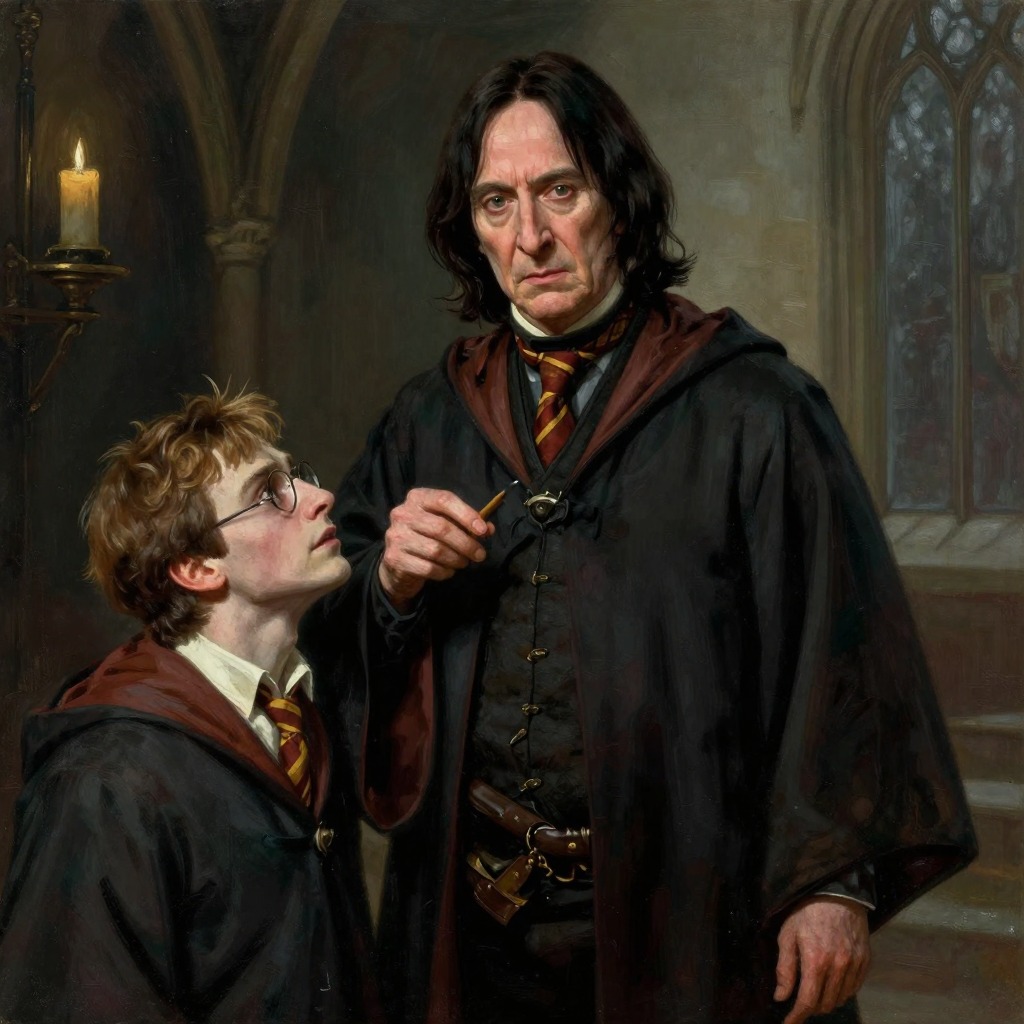
Harry Potter and the Prisoner of AzkabanSlytherin is one of the four founding Houses of Hogwarts School of Witchcraft and Wizardry, traditionally associated with ambition, cunning, leadership, and a preference for pure-blood wizardry. Throughout Harry Potter's third year, Slytherin functions as the primary antagonist House, its members consistently opposing Harry and his friends while the House's reputation for dark arts and elitism is reinforced by the actions of its students and its Head, Professor Severus Snape.
Identity and House Culture
Slytherin House values ambition, resourcefulness, and cunning above all else. Its common room and dormitories are located in the dungeons of Hogwarts, and its emblem is a silver serpent on a green background. The House has a long-standing reputation for producing dark witches and wizards, a stereotype that is actively reinforced by many of its current members. The Sorting Hat, which assigns students to Houses, has been known to place those who crave power and have a certain disregard for rules into Slytherin. The House's emphasis on blood purity is a central tenet of its identity, with many of its members, particularly those from old wizarding families like the Malfoys, looking down on Muggle-born students. This ideology is a source of constant conflict with other Houses, especially Gryffindor.
Key Members and Their Roles
The most prominent Slytherin student is Draco Malfoy, Harry's chief rival at Hogwarts. Malfoy is consistently supported by his two cronies, Vincent Crabbe and Gregory Goyle, who act as his enforcers. Other notable Slytherin students include Pansy Parkinson, a girl with a pug-like face who is part of Malfoy's social circle. The Slytherin Quidditch team is captained by Marcus Flint, a player known for his aggressive and often underhanded tactics. The Head of Slytherin House is Professor Severus Snape, who openly favors his own students, allowing them to get away with behavior that would earn students from other Houses detention. Snape's favoritism is a constant source of frustration for Harry, Ron, and Hermione.
Conflicts and Rivalry with Gryffindor
The rivalry between Slytherin and Gryffindor is the central social conflict of the school year. This animosity is expressed in numerous ways, from daily taunts in the corridors to outright sabotage. Malfoy constantly mocks Harry and his friends, particularly targeting Ron's family's poverty and Harry's fame. The Slytherin Quidditch team engages in dirty play, as seen when Malfoy fakes an injury to avoid playing in bad weather and later grabs the tail of Harry's Firebolt during a match. The House's collective malice is also directed at other targets, such as Rubeus Hagrid, whose first Care of Magical Creatures lesson is deliberately disrupted by Malfoy, leading to a Hippogriff attack and a subsequent campaign by Lucius Malfoy to have the creature executed. The Slytherins also revel in Harry's misfortune, such as when he faints on the Hogwarts Express due to a Dementor, with Malfoy performing mocking imitations.
Narrative Significance and Thematic Role
Slytherin serves as a crucial foil to Gryffindor, embodying the negative aspects of the wizarding world that Harry and his friends must oppose. The House's obsession with blood purity and its members' willingness to use underhanded means to achieve their goals represent the very prejudices and corruption that threaten the magical community. The actions of Slytherin students, particularly Malfoy, directly drive several key plot points, including the near-execution of Buckbeak and the increased security measures following Sirius Black's break-in. The House's collective behavior also highlights the systemic issues within Hogwarts, such as Snape's biased enforcement of rules and the influence of powerful pure-blood families like the Malfoys. Ultimately, Slytherin's role is to provide a constant, tangible threat and a moral counterpoint, reinforcing the values of courage, friendship, and justice that define Gryffindor and Harry's journey.