
Walter Thirsk’s Passage from Outsider to Exile
HarvestThis flow follows Walter Thirsk from a settled but uneasy life in the village toward a final departure of his own choosing.
increasing Bearing strength in each event
 decreasing
Bearing strength in each eventdecreasingSmoke at Dawn
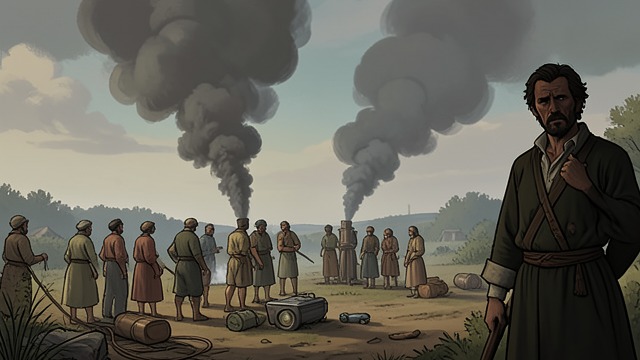
Smoke at Dawn
A threatened home
Walter Thirsk wakes to two plumes of smoke: one marks a new settlement on the commons, while the other rises from the burning farm buildings.
The fire draws the villagers together, but also exposes their readiness to suspect outsiders. Walter Thirsk recognizes that the young men responsible may be neighbors.
A withheld truth
He stays silent, partly to spare the young men and partly to preserve the day’s hoped-for celebrations. That choice begins his gradual separation from the community.
The Wounded Witness
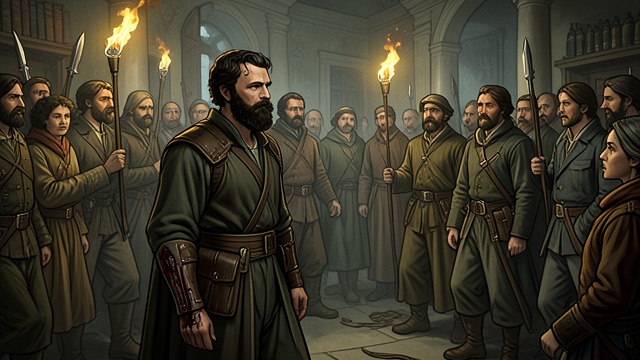
The Wounded Witness
Pain and duty
Walter Thirsk burns his left hand while helping to save hay from the fire. The injury removes him from ordinary labor at a moment when the village expects every able body to work.
He treats the wound as a practical disability, but it also leaves him watching rather than acting when the crowd confronts the newcomers.
A missed intervention
His silence and injury combine into an excuse for passivity. The resulting punishment will later trouble him more than the burn itself.
A Place Between Worlds
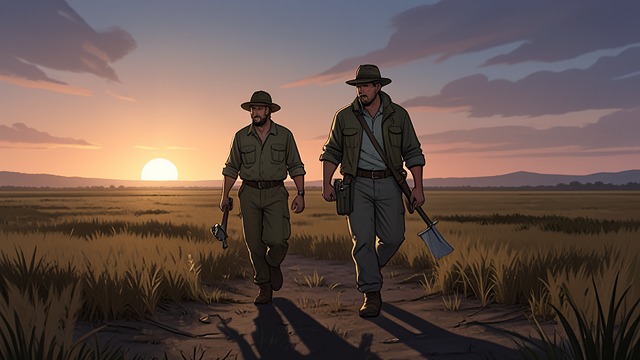
A Place Between Worlds
Changing loyalties
Walter Thirsk works beside Philip Earle, carrying tools and guiding him across the estate. Their conversations make Walter Thirsk imagine a life beyond the fields.
At the same time, Charles Kent remains his oldest friend, while the villagers begin treating Walter Thirsk as an outsider again.
Unsettled belonging
The prospect of leaving is attractive but painful. He has lived in the village for years without fully becoming one of its native families.
The Last Furrow
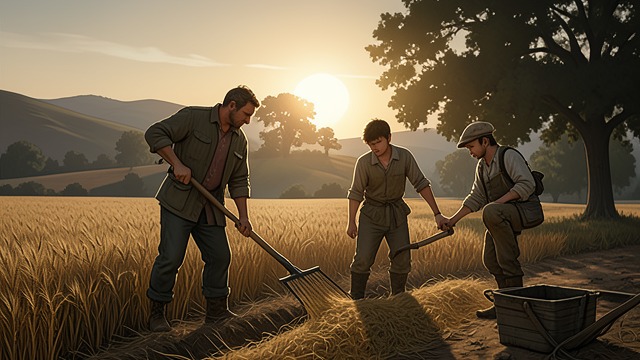
The Last Furrow
A temporary partnership
Walter Thirsk releases Young Beldam from the pillory and persuades him to help plow the barley field. Their work restores a possibility the new landowners mean to abolish.
Walter Thirsk sows winter wheat in the furrow, making a small, deliberate claim for a future harvest.
A limited rebellion
The work cannot restore the village or prevent enclosure. It lets Walter Thirsk leave behind a living sign of resistance before events carry him away.
Beyond the Boundary Stone
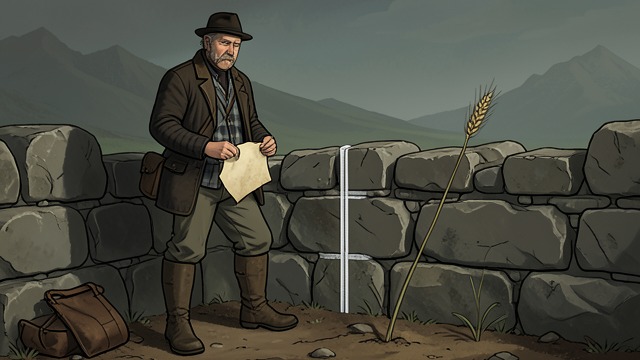
Beyond the Boundary Stone
A final boundary rite
Walter Thirsk marks the estate boundary with his body, recalling the practice used to teach children where they belong. He carries a piece of vellum, a few belongings, and a burden of memory.
The manor is ruined, the village is empty, and his winter wheat grows without witnesses.
Chosen departure
He finally crosses the boundary instead of remaining as a Jordan servant. His departure turns an imposed exile into a step toward an unknown life.
At the opening, before sunrise after harvest
The morning after the stable fire
During the first days after the newcomers arrive
After the masters leave, near the ending
At the conclusion, after the manor burns
