
The Pillory and the Price of Neglect
HarvestThis flow follows the pillory from communal symbol to instrument of punishment and a lasting source of guilt.
increasing Bearing strength in each event
 decreasing
Bearing strength in each eventdecreasingCross Without a Church
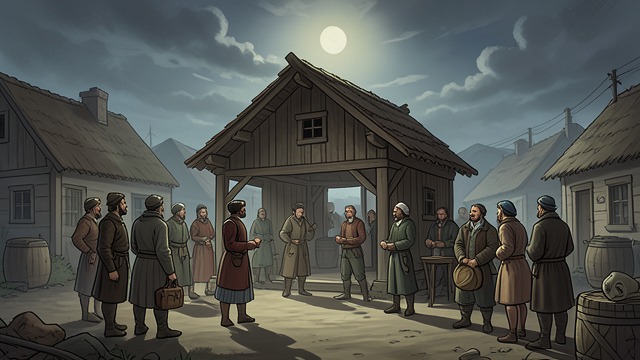
Cross Without a Church
A shared village structure
The Village uses its pillory as a cross for marriages, baptisms, funerals, and seasonal rites. The absent church leaves the wooden structure at the center of communal life.
Its dual purpose reflects the village’s practical blending of sacred custom and public authority.
A familiar symbol changes
The same object that holds communal ceremonies can confine strangers. Its later use will expose the distance between the village’s ideals and its actions.
A Sentence for Two Men
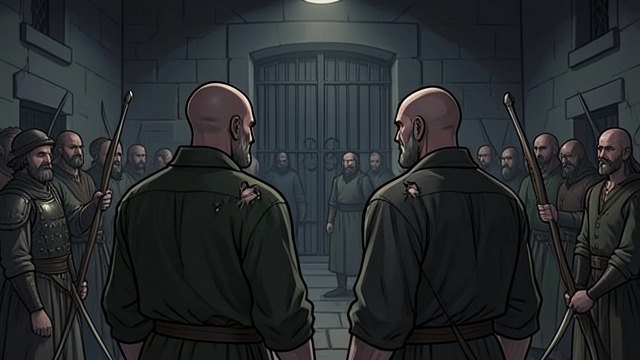
A Sentence for Two Men
Punishment imposed
Charles Kent sentences the newcomers’ father and husband to a week in the pillory for eating a bird. Their bows are broken and their heads shaved.
The punishment is mild by the standards of harsher jurisdictions, but it leaves the men exposed and dependent on their captors.
A dangerous imbalance
The sentence separates the men from Mistress Beldam and gives the villagers time to objectify and threaten her. Its apparent moderation hides its physical risks.
Walter’s Failed Kindness
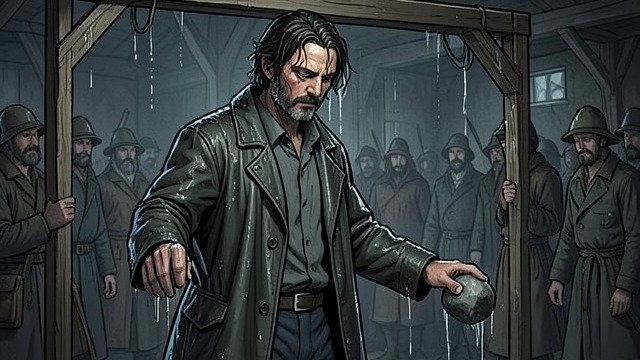
Walter’s Failed Kindness
An attempted aid
Walter Thirsk reaches the pillory in heavy rain and sees that the older prisoner is forced to stand on his toes. He tries to move a stone to provide support but his burned hand fails him.
He decides to return at dawn with help.
Delay becomes guilt
His intention is compassionate, but it does not alter the man’s exposure. Walter Thirsk’s failure to act in time becomes part of his moral reckoning.
The Father’s Death
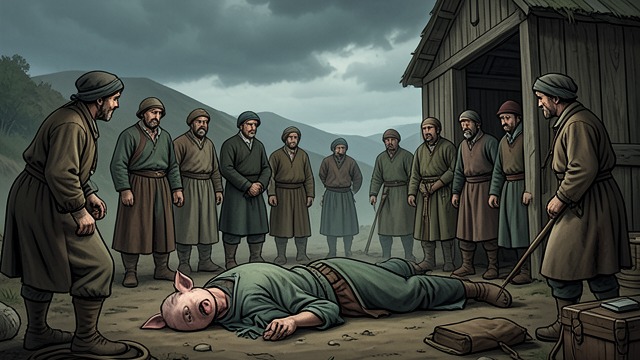
The Father’s Death
Death in custody
The older prisoner falls or collapses and breaks his neck. By the time his body is found, pigs have torn at his leg.
The uncertainty of how he died does not obscure the basic fact: he was left restrained and without care.
A communal burden
Walter Thirsk, Charles Kent, and the villagers recognize their part in the catastrophe. The pillory’s familiar presence now signifies a cruelty they cannot undo.
The Pillory Dismantled
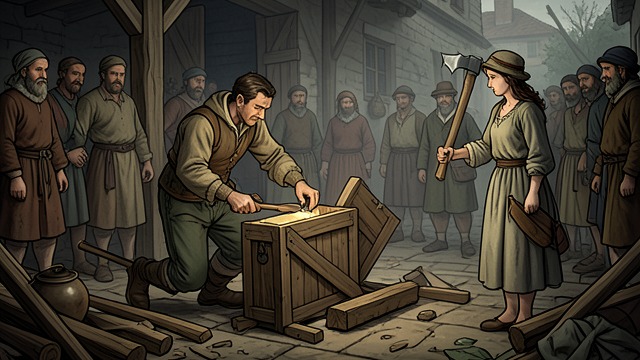
The Pillory Dismantled
A prisoner freed
Walter Thirsk opens the pillory and releases Young Beldam before the sentence is complete. He asks for one day’s help with the plow and offers goods for the couple’s journey.
Young Beldam accepts the work and later takes an axe to the structure.
A symbol destroyed
The pillory is cut down as the village’s authority disappears. Its destruction cannot revive the father, but it prevents the instrument from remaining intact as a monument to the wrong.
Before the strangers arrive
The first morning after the newcomers arrive
The rain-soaked night after the sentence
The morning after the rainy night
During the Beldams’ flight, near the ending
