
Young Beldam’s Captivity and Return to Work
HarvestThis flow follows Young Beldam from armed defender to prisoner, bereaved son-in-law, and reluctant partner in a final act of cultivation.
increasing Bearing strength in each event
 decreasing
Bearing strength in each eventdecreasingDefending the Den
Defending the Den
An armed response
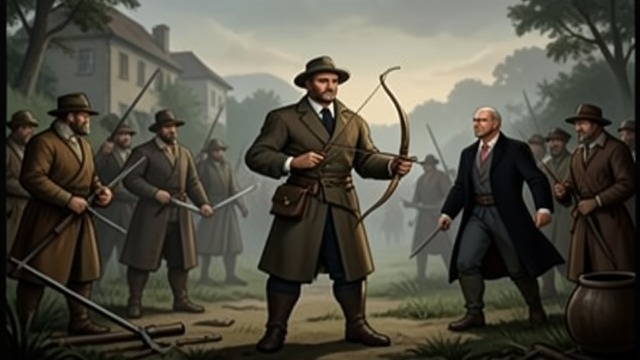
Young Beldam appears with a bow when villagers attack the family shelter. He tells the crowd to step away, treating the assault as a threat to his home.
His defense confirms the villagers’ fears even though he is responding to their violence.
A family under siege
His father-in-law and Mistress Beldam are present in the conflict. The young man’s attempt to protect them cannot prevent the sentence that follows.
The Pillory Sentence
The Pillory Sentence
Public humiliation
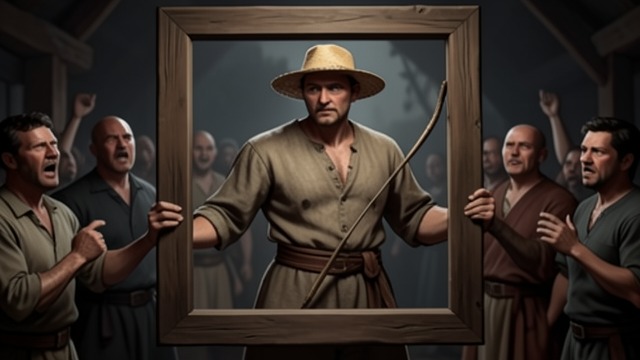
Charles Kent condemns Young Beldam to a week in the pillory, has his hair shaved, and orders his bow broken. Young Beldam is left exposed to weather and insult.
He threatens retribution after the older man dies.
Grief made dangerous
His anger is understood as evidence of criminality rather than a response to loss. The punishment intensifies the conflict between his family and the village.
The Father’s Death
The Father’s Death
A fatal confinement
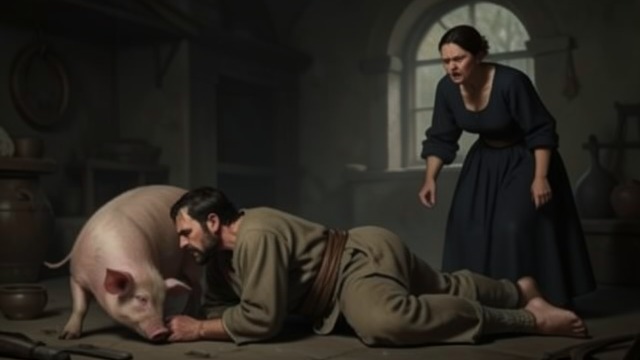
Young Beldam’s father dies while restrained. The body is later found damaged by pigs, giving the surviving family no ordinary chance to mourn or bury him.
Young Beldam remains confined and cannot protect him.
Loss becomes a bond
The death joins Young Beldam and Mistress Beldam in bereavement and anger. Their later retaliation grows from a shared catastrophe, not a simple wish for theft.
Release and Bread
Release and Bread
Freedom offered with conditions
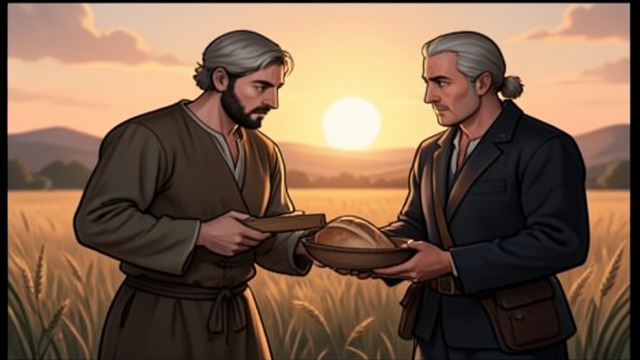
Walter Thirsk unlocks the pillory and offers food, property, and a day’s labor in exchange for help with the field. Young Beldam is physically weakened but understands the agricultural task.
He accepts the meal and later takes up the plow.
A cautious truce
The two men establish trust through shared bread and work rather than declarations. Young Beldam remains guarded, but he does not attack the man who releases him.
The Last Furrow
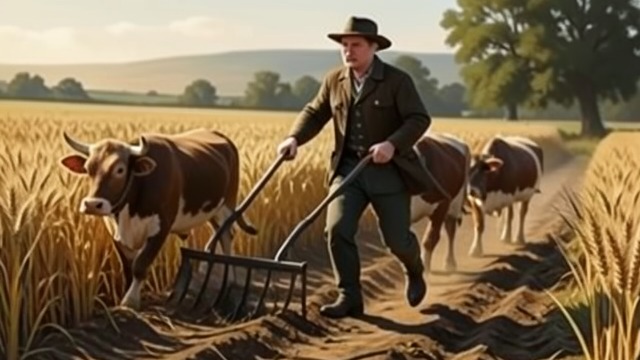
The Last Furrow
Skilled cultivation
Young Beldam assembles the plow and guides the oxen across the barley field. His body remembers the work, and his whistle accompanies the steady progress of the furrow.
Walter Thirsk sows winter wheat after their shared labor.
A practical farewell
The work gives Young Beldam a temporary return to a livelihood lost to enclosure. He leaves the land soon afterward with Mistress Beldam, carrying goods but not a secure future.
During the first attack on the newcomers’ shelter
The first morning after arrival
The morning after the first night in the pillory
Near the end, after Walter Thirsk opens the pillory
The day before the village fires
