
Witchcraft as Political Cover
HarvestThis flow traces how an unsupported witchcraft charge turns vulnerable women and an artist into targets during a struggle over land.
increasing Bearing strength in each event
 decreasing
Bearing strength in each eventdecreasingA Suggestion at the Door
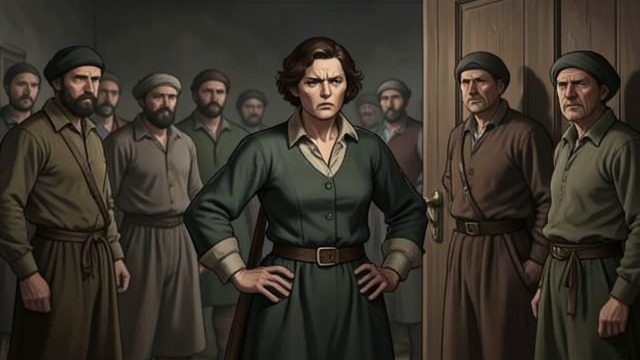
A Suggestion at the Door
A charge appears
Baynham tells the villagers that witchcraft is suspected and that women are already in custody. The villagers deny that witchcraft is customary or credible in their community.
The word nevertheless changes the stakes of the encounter.
Fear gains official force
A casual accusation becomes a threat of execution when joined to the heir’s authority. The villagers discover that they cannot simply dismiss a charge made by armed outsiders.
Captives Under Question
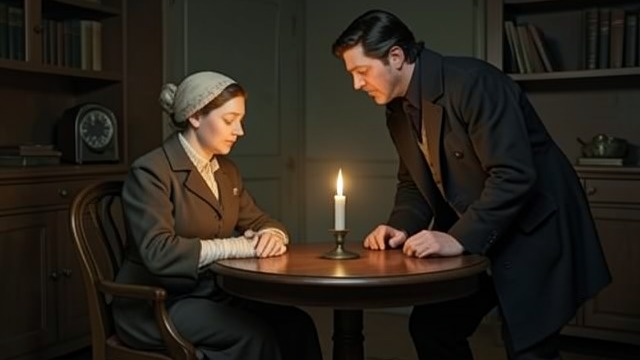
Captives Under Question
Coercion produces names
Kitty Gosse and Anne Rogers are interrogated, while Lizzie Carr is frightened into statements about Philip Earle. The captors frame every answer as corroboration.
The process privileges a useful confession over an independent account of events.
A case manufactured
The women’s suffering allows the heir’s men to present their conclusions as investigated fact. The accusation obscures the power struggle that surrounds them.
The Artist Recast
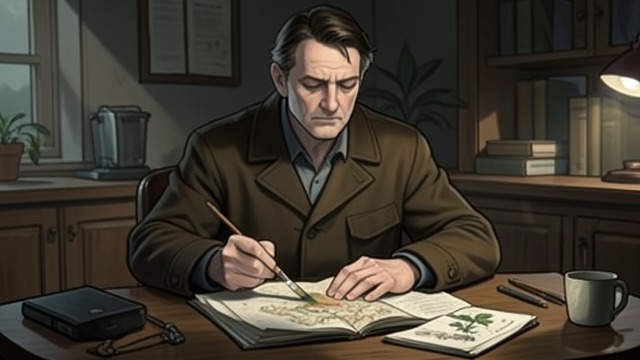
The Artist Recast
Innocent objects made sinister
Philip Earle’s paints, fiddle, plant notes, and maps are treated as signs of sorcery. His disability and artistic practice are used to make him seem suspicious.
His absence from the manor further allows the accusers to construct his guilt without him.
Difference becomes evidence
The episode shows how ordinary creative tools can be converted into incriminating objects. The target is chosen partly because he does not fit the expected social order.
The Order of Silence
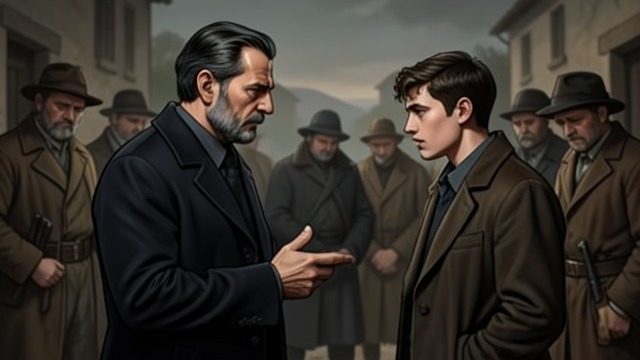
The Order of Silence
The charge withdrawn
Young Edmund Jordan tells Walter Thirsk that magic and sorcery must not be mentioned again. There will be no trial or public burning.
The order follows a change in political convenience, not a discovery that the accusations were false.
Power chooses its story
The same ruler who permitted coercion can erase the accusation when it no longer serves him. Silence protects the new program, not the people already harmed.
A Scapegoat’s Afterlife
A Scapegoat’s Afterlife
Unresolved responsibility
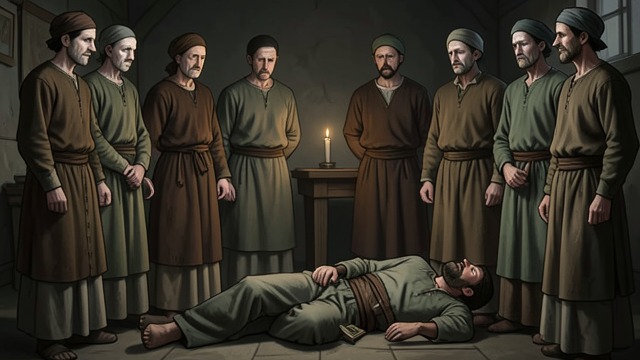
Philip Earle is found murdered in the manor, but no one knows who killed him. The witchcraft accusation has already made him a plausible target for multiple enemies.
His death cannot be securely assigned to the authorities, the villagers, or the Beldams.
Violence outlasts the charge
The accusation disappears from official conversation, but its consequences remain in the dead surveyor and the frightened captives. Political silence cannot restore justice.
The night villagers seek an audience with the heir
Later that night in the manor
The same night, after Philip Earle leaves his room
The morning after the accusations
Near the ending, after Philip Earle’s murder is discovered
