
Walter Thirsk and John Carr
HarvestThis flow traces a neighborly friendship strained by secrecy, suspicion, and the collapse of their shared community.
increasing Bearing strength in each event
 decreasing
Bearing strength in each eventdecreasingCompanions in the Woods
Companions in the Woods
A shared experiment
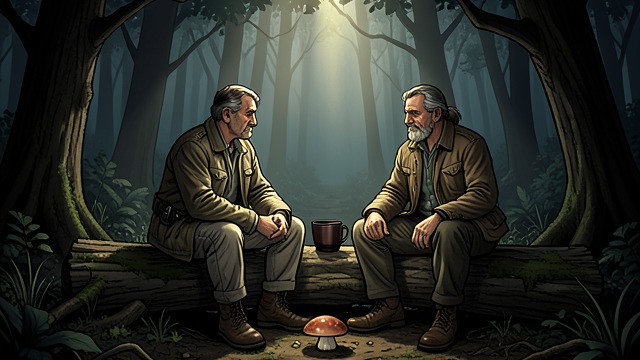
Walter Thirsk and John Carr once eat fairy caps together, an experience Walter Thirsk remembers as vivid and frightening. Their shared memory joins youthful curiosity to the local woods.
The episode remains a private point of contact between two men shaped by different temperaments.
A durable friendship
John Carr later becomes a trusted neighbor. Their relationship is expressed through quiet conversation and mutual respect for household boundaries.
Harvest Companions
Harvest Companions
Working side by side
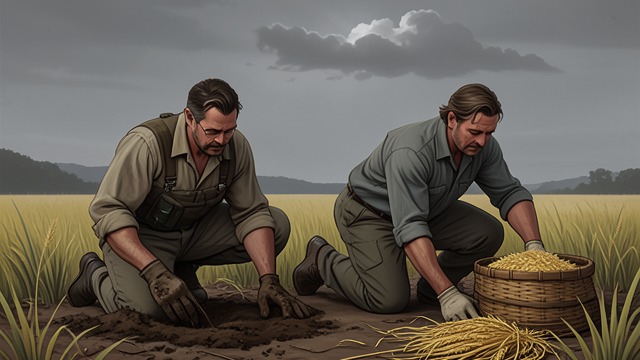
Walter Thirsk and John Carr labor within the village’s shared harvest customs. Their work belongs to an economy where each person’s effort contributes to common survival.
John Carr’s steadiness and kindness make him one of Walter Thirsk’s most trusted neighbors.
Friendship in ordinary life
Their bond is built less through intimate visits than through companionship in open air. The village’s stability gives their restraint a familiar shape.
A Cautious Reconciliation
A Cautious Reconciliation
Suspicion spoken aloud
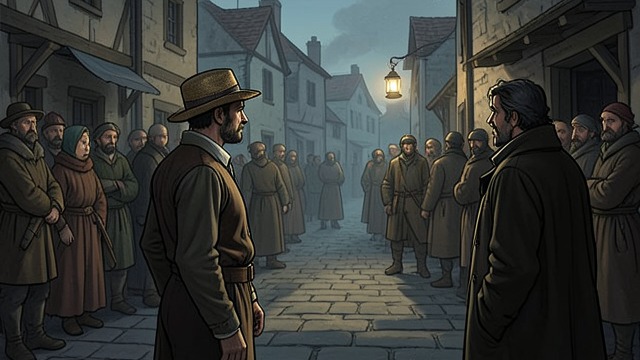
John Carr visits Walter Thirsk after the villagers accuse him of conspiracy. He admits that the crowd named Walter Thirsk but urges him to flee for safety.
Walter Thirsk insists he has not betrayed them.
Trust tested
John Carr’s warning is both care and distrust. Their conversation restores some honesty but cannot restore the community’s earlier confidence.
A Parting Without Farewell
A Parting Without Farewell
Carrs prepare to go
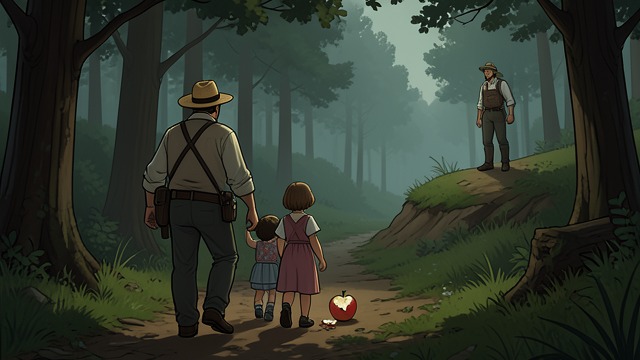
John Carr and his family leave along the forest route. Walter Thirsk does not test John Carr about the fate of Lizzie Carr, whose parents cannot safely remain.
The men have made a fragile peace, but there is no time for a full reconciliation.
Friendship displaced
Walter Thirsk watches neighbors leave without joining them. His bonds with the village become memories carried into solitude.
An Absent Voice

An Absent Voice
Imagined witnesses
As Walter Thirsk drinks alone, he imagines John Carr among the friends watching his act of plowing. He wants to prove that he can resist the new order.
The imagined audience reflects how much he still needs the absent villagers’ judgment.
A bond carried onward
John Carr is not present to approve or condemn Walter Thirsk’s decision. Their friendship persists as an inward measure of loyalty and regret.
Twelve years before the main events
During the final harvest day
The morning after the women are detained
The afternoon families leave the estate
On Walter Thirsk’s first night alone
