
The Land and Its Inhabitants
HarvestThis flow develops the novel’s contrast between lived landscape and the abstraction of ownership, enclosure, and mapping.
increasing Bearing strength in each event
 decreasing
Bearing strength in each eventdecreasingA World of Work
A World of Work
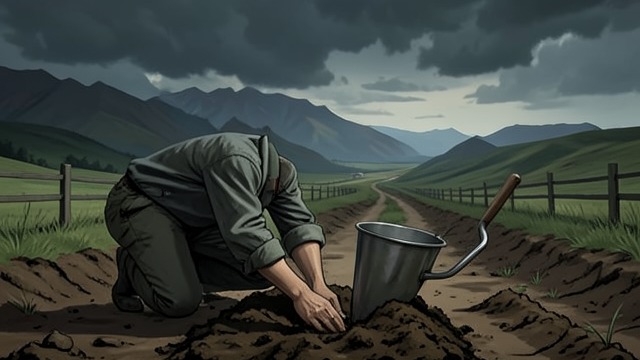
Land felt through labor
Walter Thirsk understands the fields through seasons, soil, crops, and bodily effort. The community’s landscape is a network of paths, tasks, and remembered boundaries.
Its value lies in sustaining people, animals, and shared customs.
More than property
The land’s material reality resists any simple account of ownership. Those who work it feel they have a claim even without formal deeds.
The Surveyed Estate
The Surveyed Estate
Measurement changes perspective
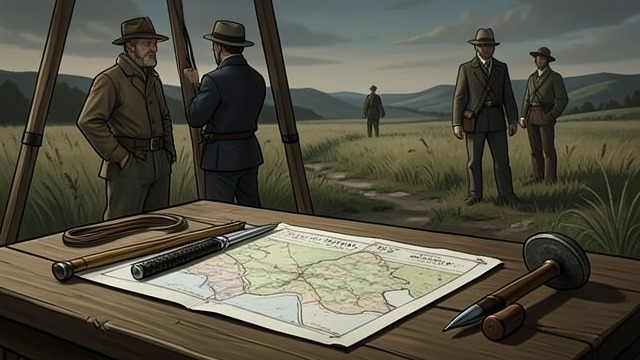
Philip Earle counts people and plots boundaries for Charles Kent. The estate becomes a set of shapes that can be compared, claimed, and reorganized.
The survey’s detached precision unsettles residents who fear that they too are being measured.
Knowledge carries power
Mapping is not neutral when its information enables enclosure. A chart can make land legible to distant authority while omitting the lives rooted in it.
The Valley as a Figure
The Valley as a Figure
A shape revealed
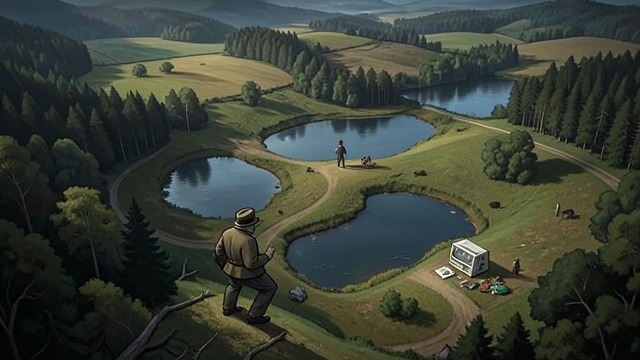
Walter Thirsk sees the estate rendered from above as a brawny-headed figure, with fields, pond, and woods forming its features. He has never encountered the land in this arrangement.
The map makes familiar places seem newly adjacent and strangely separate.
Beauty and distortion
Philip Earle’s chart is vivid but flattens distance, slope, duration, and labor. Its beauty clarifies the estate while making its lived experience less visible.
A Face Removed
A Face Removed
Enclosure redrawn
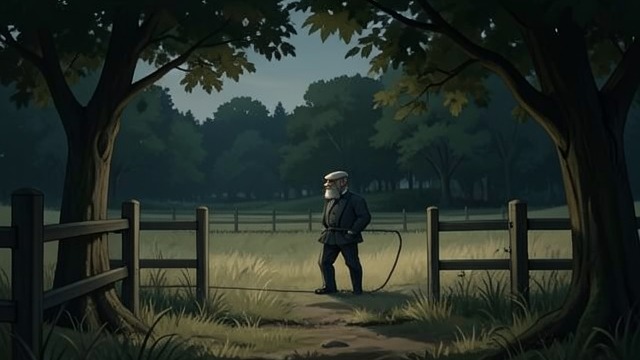
The proposed map breaks the land into smaller, fenced fields. The wooded darkness nearly disappears, and the figure Walter Thirsk recognized loses its face.
The sheep landscape is tidy precisely because it removes the old relationships among people and places.
Abstraction made visible
The map gives enclosure an attractive visual order. It also reveals the cost: a familiar world is converted into units for production.
A Field Left Alive
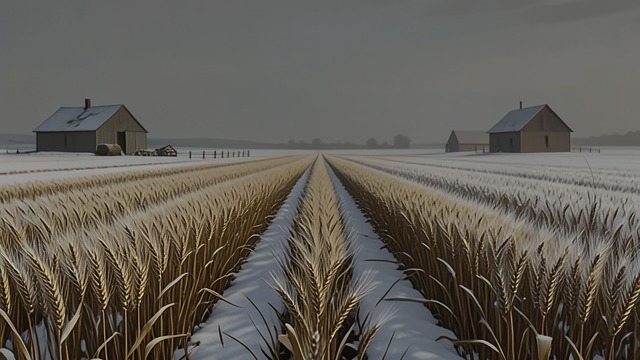
A Field Left Alive
Growth without observers
Walter Thirsk leaves the winter wheat growing in a narrow furrow. The seed persists even after the village, manor, and ordinary community have been emptied or burned.
The land continues its processes beyond the reach of ownership’s plans.
Landscape after history
The novel closes on the possibility of renewal without promising a restored community. Land can endure, but endurance does not erase the human costs of change.
During the harvest before the survey is explained
On the final harvest day
During the map-making scene in the scullery
After the planned sheep map is shown
At the boundary, after the manor burns
