
Boundaries, Belonging, and Exile
HarvestThis flow traces the way estate boundaries define belonging, drive residents into exile, and finally become a threshold Walter Thirsk chooses to cross.
increasing Bearing strength in each event
 decreasing
Bearing strength in each eventdecreasingA Boundary Learned
A Boundary Learned
Children taught the edge
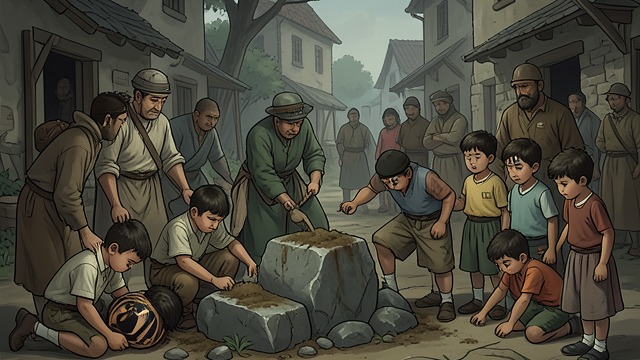
The villagers mark boundaries by bringing children to stones, sometimes bumping their heads so they will remember where they belong. The ritual makes geography part of bodily memory.
Belonging is taught as both communal knowledge and a limit.
Safety within limits
Charles Kent’s maxim suggests that life is secure so long as residents remain inside the estate. The safety depends on accepting the owner’s boundaries as permanent.
An Outsider Settles
An Outsider Settles
A newcomer becomes a neighbor
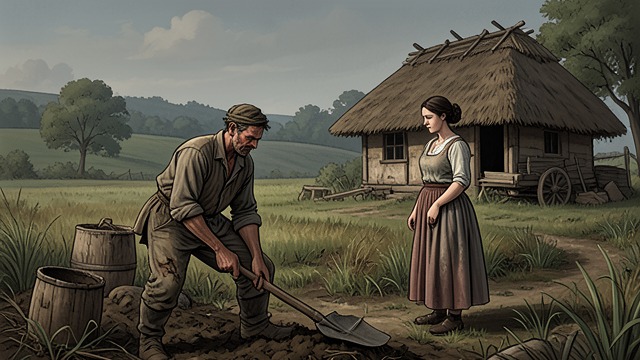
Walter Thirsk arrives with Charles Kent and chooses to remain after falling in love with Cecily. He works the land and adopts the village’s rhythms.
He gains a home in practice but never fully becomes part of its interrelated families.
Belonging’s conditions
His experience shows that labor and marriage can make a person locally useful without erasing the difference of origin. The village’s welcome is real but incomplete.
Strangers on the Commons
Strangers on the Commons
A claim unsettles residents
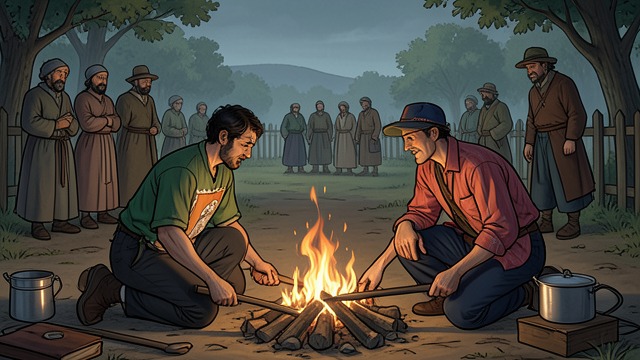
The newcomers build on common ground and light a fire, hoping the act will secure a right to remain. The villagers regard them as threats to limited resources.
Neither side shares a secure understanding of how the other belongs.
Hospitality denied
The residents’ own history includes migration, yet they treat their prior settlement as different. A boundary becomes a moral distinction between established neighbors and suspect strangers.
Exile by Enclosure and Fear
Exile by Enclosure and Fear
Families leave the estate
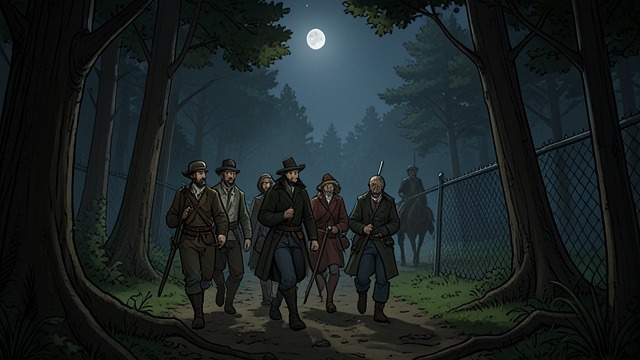
Villagers cross the boundary to escape expected punishment and the coming sheep policy. Their familiar lands are left behind even though they claim generations of use.
The route through the woods offers less safety from hardship but more distance from mounted pursuit.
A boundary made coercive
Leaving is not a free choice in any simple sense. Law, violence, and enclosure make the boundary a line between survival and dispossession.
Walter Crosses Alone
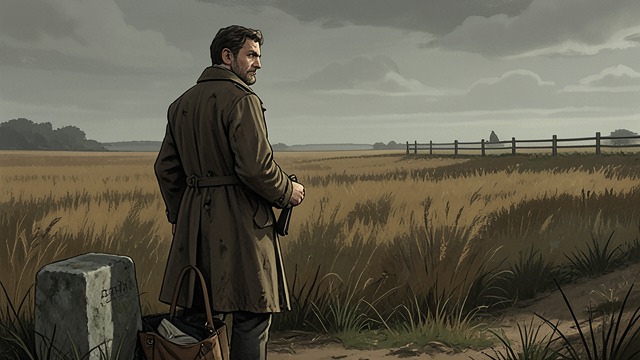
Walter Crosses Alone
The final boundary rite
Walter Thirsk approaches the estate marker and repeats the bodily gesture once used to teach children their limits. This time he recognizes that nothing remains to bind him there.
He gathers his few possessions and looks back at the silent land.
Exile becomes choice
Unlike the villagers, Walter Thirsk leaves after the community has already collapsed. His departure is still painful, but it is a decision to seek another life rather than remain as a servant to enclosure.
During the village’s annual spring custom
Twelve years before the present events
At the opening, before the villagers approach their shelter
After the groom is attacked
At the conclusion, after the manor fire
