
Gleaning and the Measure of Plenty
HarvestThis flow explores the harvest ritual as a promise of shared survival that becomes fragile under enclosure and displacement.
increasing Bearing strength in each event
 decreasing
Bearing strength in each eventdecreasingThe Last Sheaf
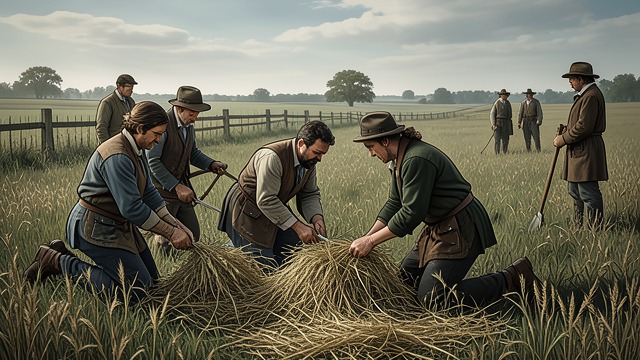
The Last Sheaf
Collective labor
The villagers cut the final barley together, assigning tasks across generations. Their custom makes harvest both economic necessity and a shared social event.
The crop is modest, but the labor creates a brief feeling of abundance and fellowship.
A precarious plenty
Every grain matters because households depend on the harvest. The communal ritual is vulnerable to any change that removes people from fields or rights to use them.
The Interrupted Feast
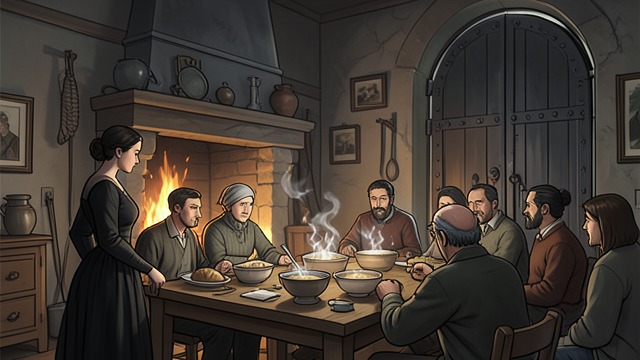
The Interrupted Feast
Celebration after work
The villagers eat veal and bread, drink ale, and prepare to choose a Gleaning Queen. Dancing temporarily gathers the community after a demanding season.
The feast also lets them avoid confronting the fire and the punishment of the newcomers.
Joy under strain
The celebration is sustained by food and shared custom, but guilt remains. Mistress Beldam’s appearance reveals that communal pleasure has been built alongside another family’s humiliation.
Lizzie Finds the Ear
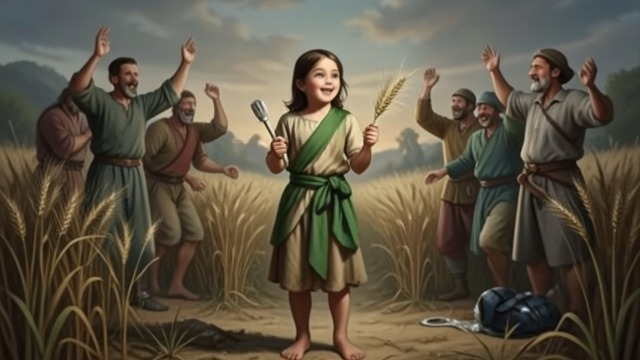
Lizzie Finds the Ear
Ritual enacted
Lizzie Carr steps barefoot into the barley stubble and finds a complete ear. She winnows grain into her palm while the villagers cheer.
Her green sash marks her as Queen for the coming year.
A child represents continuity
The rite connects past harvests to future meals through a young participant. Its assurance is brief because the child will soon be detained by the heir’s men.
A Queen Taken from Her Field
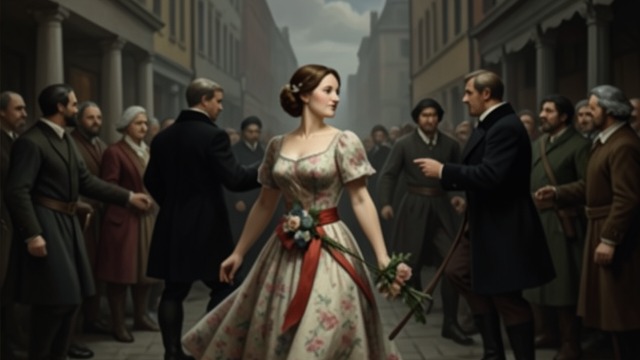
A Queen Taken from Her Field
Ceremony turned into suspicion
Lizzie Carr is taken from the threshing area after her sash and flowers attract the attention of the heir’s men. Kitty Gosse and Anne Rogers are detained when they try to protect her.
The ritual’s chosen child becomes a captive rather than a symbol of shared good fortune.
Custom cannot protect her
The community’s ceremonial recognition has no force against the new owner’s authority. The scene exposes the weakness of tradition without control over land and law.
The Harvest Without Harvesters
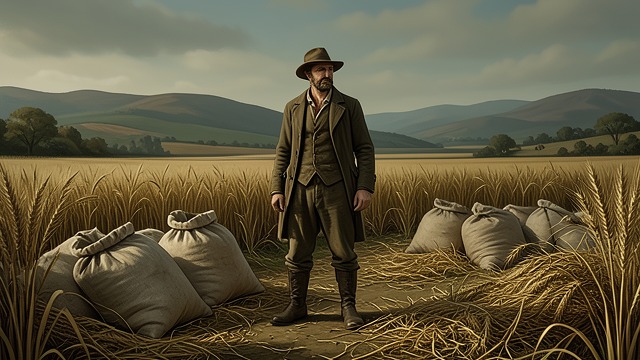
The Harvest Without Harvesters
Produce left unattended
Once the villagers flee, sacks spill, animals roam, and the barley stands without the community that would finish its processing. The land’s abundance no longer reliably feeds the people who cultivated it.
Walter Thirsk is left among remnants of the harvest.
A ritual loses its people
Gleaning depends on rights and collective presence, not simply grain in a field. With the villagers gone, the Queen’s ceremony has no living community to carry it forward.
The final harvest day
The evening after the harvest
Gleaning Day morning
The day after the crowning
After the village has emptied
