
The Human Cost of Improvement
HarvestThis flow traces the gap between the promise of progress and the violence, displacement, and losses that make it possible.
increasing Bearing strength in each event
 decreasing
Bearing strength in each eventdecreasingImprovement Promised
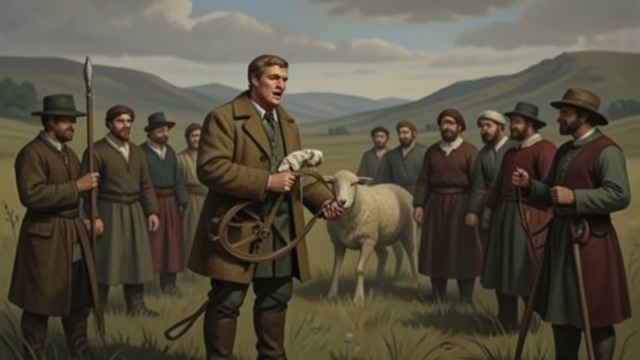
Improvement Promised
A future made gentle
Charles Kent presents sheep and weaving as a means to reduce uncertainty and hard labor. His dream offers a more comfortable life to people who have endured poor harvests.
The idea sounds like care because it is spoken by a trusted master.
Unasked questions
The villagers are not told how many will retain work or who will control the land. The language of shared benefit conceals the coming distribution of power.
Improvement Explained
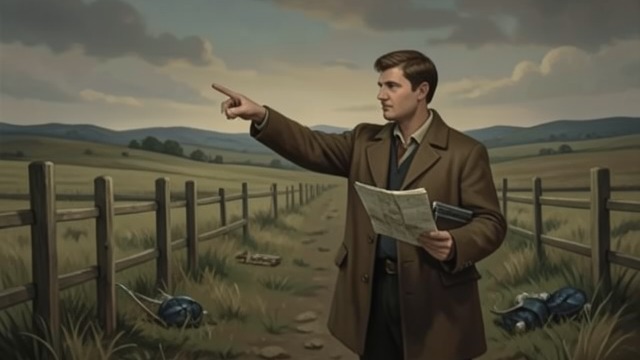
Improvement Explained
Profit made explicit
Young Edmund Jordan describes a planned economy of wool, fences, and hired labor. He argues that unused woods and common land should be reorganized for greater returns.
He expects to employ only as many residents as the new system requires.
Efficiency has a human cost
The reform’s neatness depends on making some people unnecessary. A promise of productivity becomes an explanation for dispossession.
A Village Judged Idle
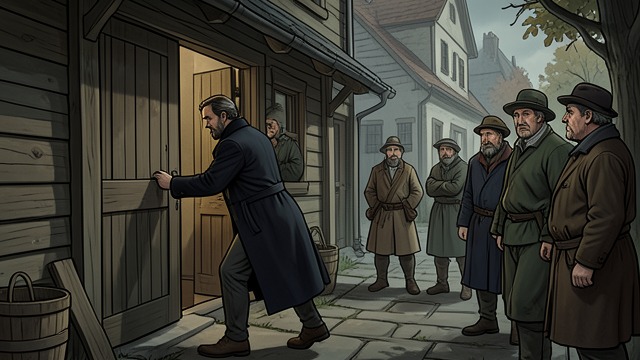
A Village Judged Idle
Residents treated as suspects
Young Edmund Jordan searches homes and speaks of disorder while the villagers’ own customs are ignored. Their poverty and informal life are interpreted as evidence of backwardness.
The heir’s men classify people by usefulness and obedience.
Judgment serves a plan
The language of discipline legitimizes the future reorganization of land. Those who resist can be described as criminals rather than participants in a customary economy.
Communal Life Dispersed
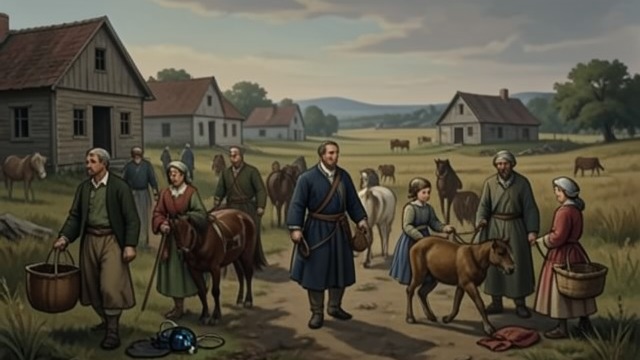
Communal Life Dispersed
A social order erased
The families depart with their animals and possessions, leaving homes and fields without their customary workers. Their flight follows both coercion and violence.
The estate’s transformation begins with the disappearance of its existing population.
Progress measured by absence
To Young Edmund Jordan, empty land is easier to reorganize. To Walter Thirsk, it is a world emptied of voices, work, and attachment.
A Burned Promise
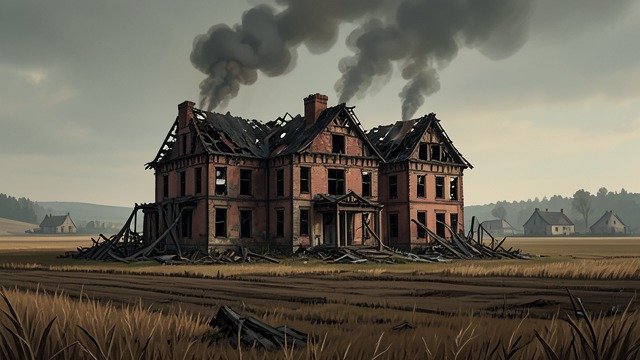
A Burned Promise
Estate and charts destroyed
Walter Thirsk burns the manor and the maps associated with the sheep plan. The fire destroys the physical center of the proposed improvement but does not restore the community.
Philip Earle’s death makes the destruction a mourning act as well as a rebellion.
No simple restoration
Winter wheat remains in the earth, but the people who would harvest it are gone. The novel separates hope in the land from any easy belief that progress can be reversed without cost.
At the harvest feast
After Young Edmund Jordan arrives
During Young Edmund Jordan’s search
The afternoon the families leave
At the ending, as Walter Thirsk prepares to leave
