
Animals as Witnesses to Human Order
HarvestThis flow follows the animals through the novel as measures of affection, subsistence, violence, and the instability of human claims.
increasing Bearing strength in each event
 decreasing
Bearing strength in each eventdecreasingAnimals in the Commons
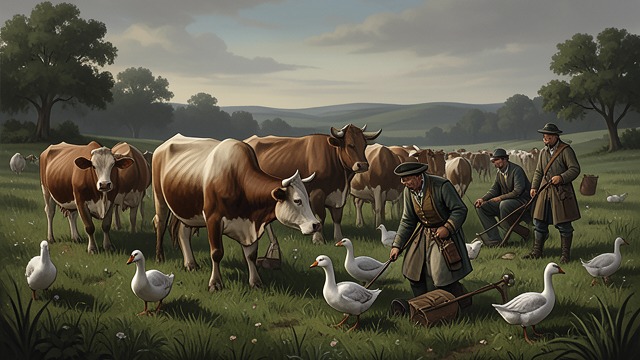
Animals in the Commons
Shared livelihood
Cattle, geese, pigs, and birds participate in the village’s seasonal economy. Their grazing and feeding are arranged around harvest, common use, and household need.
Animals are not scenery: they are food, labor, property, and companions.
A negotiated world
Human customs make room for different species, though not without conflict over grain and pasture. The planned enclosure will reorganize this relationship as well as human work.
The Doves Accused
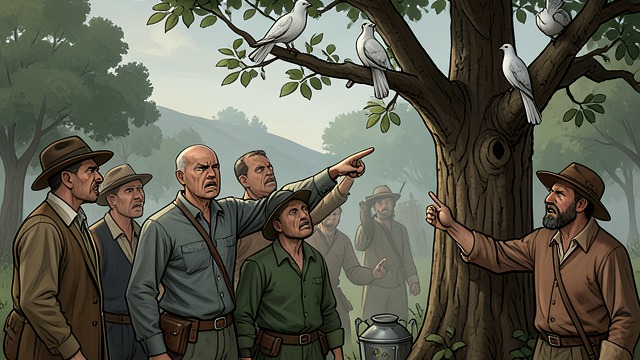
The Doves Accused
Birds blamed for scarcity
The villagers resent the Doves for eating fallen grain they believe belongs to gleaners. The young men’s anger at the birds helps prompt the dangerous Moonball prank.
The actual fire kills the very birds the prank was meant to displace.
A claim over food
The episode shows how hunger makes animal behavior part of a human argument about rights. The Doves become scapegoats before the newcomers do.
Willowjack’s Place
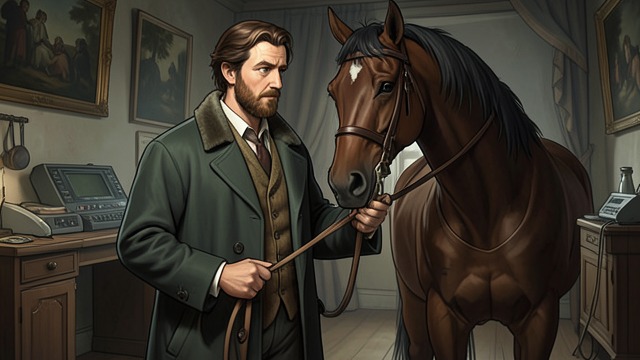
Willowjack’s Place
More than property
Willowjack is Charles Kent’s cherished mare and a reminder of Lucy Kent. Her familiar presence connects the manor’s private grief to the village’s daily life.
The villagers recognize that Charles Kent loves her, even while they do not fully share his attachment.
A vulnerable bond
When she is killed, the act is understood as an attack on Charles Kent as well as on a valuable animal. The murder becomes a turning point in the estate’s response.
A Killing That Cannot Be Claimed
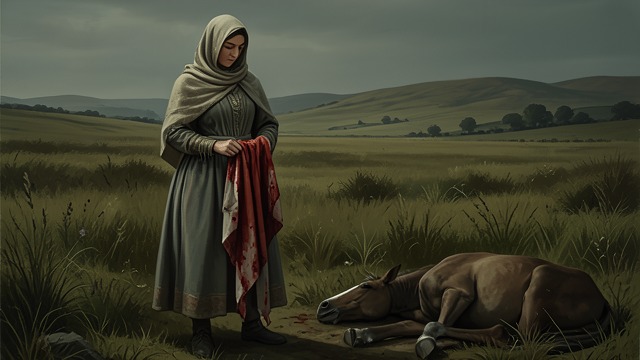
A Killing That Cannot Be Claimed
A mare murdered
Mistress Beldam kills Willowjack while she sleeps, retaliating after her family’s suffering. The bloodied shawl later connects her to the death, though Charles Kent conceals the truth.
Young Edmund Jordan treats the killing as a chance to display authority.
Human justice and animal loss
The mare’s death cannot be undone by punishment or explanation. The beloved animal becomes entangled in a conflict that neither she nor the other animals can understand.
Animals Left Behind
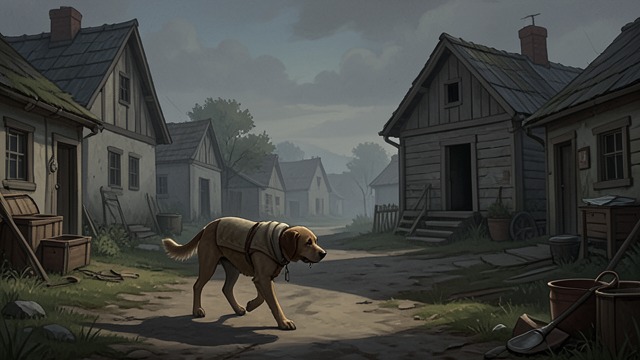
Animals Left Behind
Abandoned care
As families flee, some animals are taken while others remain to forage. Walter Thirsk notices the ordinary duties of feeding, tethering, and tending collapsing alongside the village.
The estate’s emptiness is measured in unattended creatures as well as empty houses.
A world beyond ownership
Animals continue to eat, wander, and seek shelter after human arrangements fail. Their needs outlast both the community’s customs and the owner’s plan.
During the harvest and gleaning period
The harvest’s final morning
Before the mare is killed
The night following the older man’s death
After the villagers depart
