
The Unbuilt Church and Local Faith
HarvestThis flow traces a community that maintains sacred customs without a church or resident priest, then loses the shared ground those customs require.
increasing Bearing strength in each event
 decreasing
Bearing strength in each eventdecreasingFaith at the Pillory
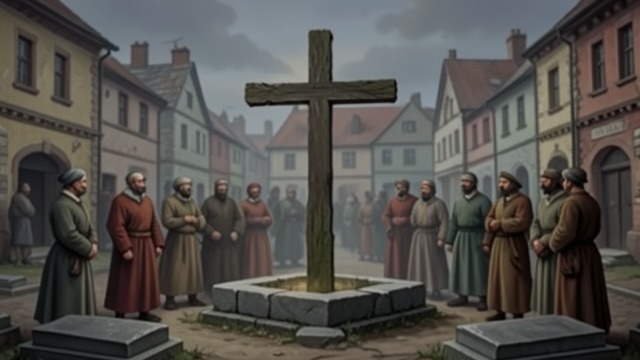
Faith at the Pillory
A sacred space without a church
The Village has graves, a foundation stone, and plans for a church that has never been built. Charles Kent uses the pillory-cross for weddings, baptisms, and funerals.
The villagers practice religion through inherited rites and local need.
Independence and distance
They do not reject faith outright, but live at the edge of organized religious authority. Their rituals are practical, communal, and shaped by the land.
Harvest Blessed by Custom
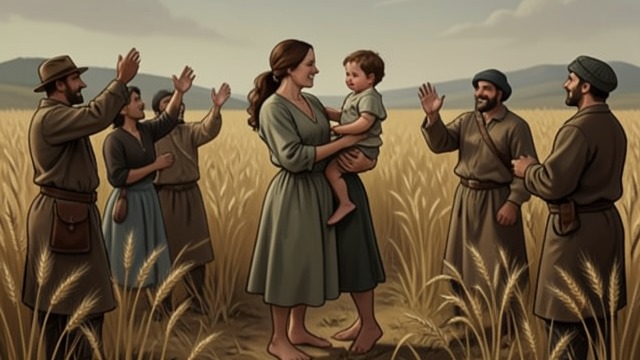
Harvest Blessed by Custom
Ritual in the field
The Gleaning Queen’s first steps bless the harvested field, and the villagers cheer when Lizzie Carr finds barley. Their gratitude is directed as much toward soil and labor as toward divine authority.
The day’s rite connects provision with shared effort.
A local sacred calendar
The practice makes religious meaning out of annual work. Its force comes from participation rather than a priest or completed church.
A Cross Used as a Prison
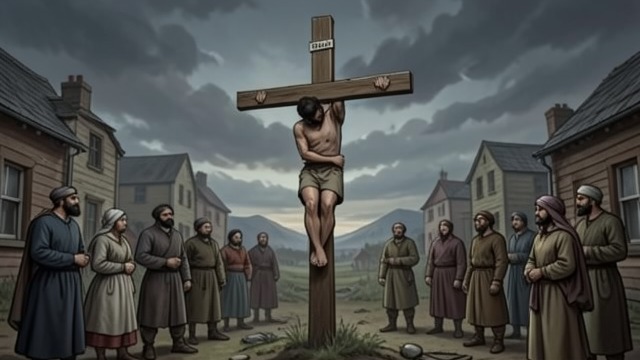
A Cross Used as a Prison
Ceremony becomes punishment
The pillory that serves as a village cross is used to confine the newcomers. The wooden object holds civic, sacred, and punitive meanings at once.
The sentence appears normal to the villagers until it ends in death.
A desecrated custom
The community’s own sacred ground becomes the location of neglect. Its religious symbolism cannot stop the violence committed in its name.
The Empty Church Ground
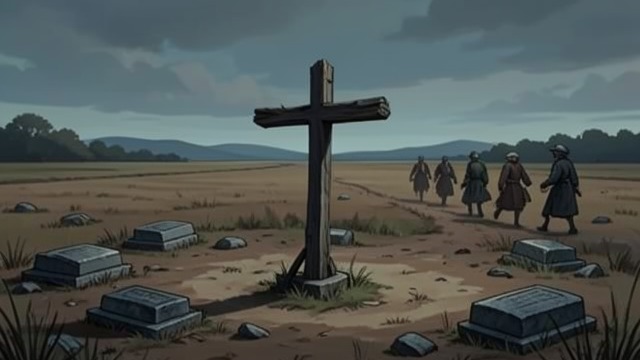
The Empty Church Ground
Ritual without a congregation
The village’s graves and foundation remain after families depart. There is no community left to gather for harvest thanks, marriages, or mourning.
The pillory is later chopped apart during the Beldams’ escape.
The limits of inherited forms
Religious symbols cannot preserve justice when their caretakers fail to act. The empty ground holds the record of custom, guilt, and a community that has vanished.
A Private Farewell
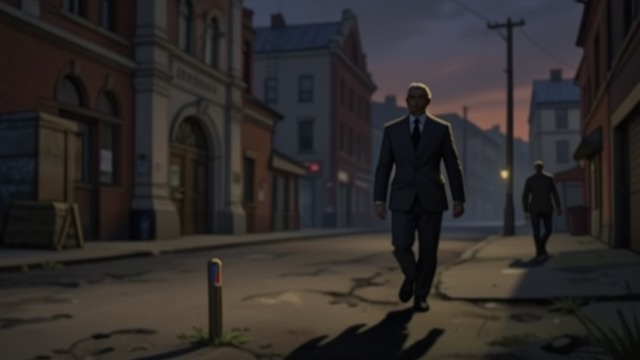
A Private Farewell
No communal rite
Walter Thirsk leaves without a priest, a gathering, or a formal blessing. He marks the boundary himself and carries the memories of his dead and departed neighbors.
The act echoes the community’s old practice of beating the bounds.
Sacred meaning remade
The journey turns a local custom into a private farewell. Faith persists as memory and gesture even after the community that gave it form has disappeared.
Before the newcomers arrive
On Gleaning Day morning
The first morning after the strangers arrive
After the villagers have left
At Walter Thirsk’s final departure
