
Charles Kent’s Dispossession
HarvestThis flow follows Charles Kent as inheritance law strips him of his estate and forces him into an uneasy accommodation.
increasing Bearing strength in each event
 decreasing
Bearing strength in each eventdecreasingA Widower Without Heirs
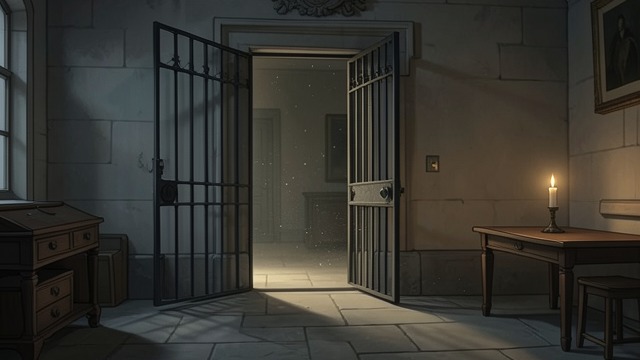
A Widower Without Heirs
Loss within the manor
Lucy Kent and the couple’s infant daughter died in childbirth. Charles Kent has no child who can inherit through him.
His grief has already changed the manor’s rhythms, leaving it quieter and less cared for than when Lucy Kent lived there.
A hidden legal weakness
Lucy Kent’s inheritance is subject to a provision favoring male heirs by blood. Charles Kent’s position as her husband may not be enough to retain the estate.
The Cousin’s Claim
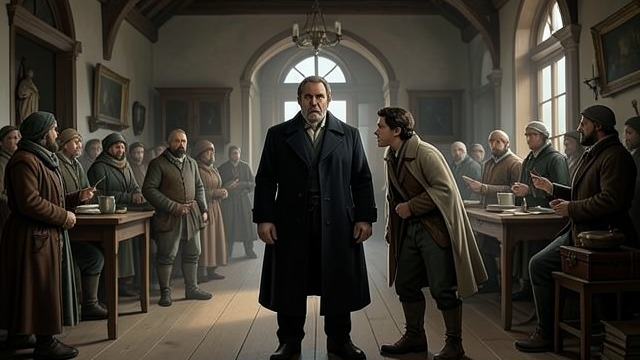
The Cousin’s Claim
The will explained
Philip Earle tells Walter Thirsk that Young Edmund Jordan has a blood claim to the estate. The planned sheep transformation is not Charles Kent’s preferred project but the heir’s demand.
The disclosure explains Charles Kent’s anxiety during the feast.
Friendship under pressure
Walter Thirsk understands that his old friend’s authority is slipping away. The manor’s personal loyalties cannot override inheritance law.
An Heir Takes Command
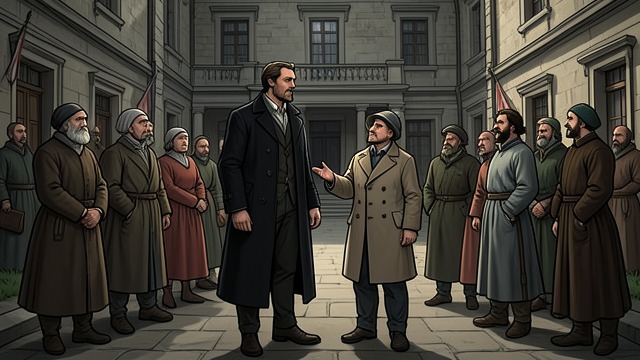
An Heir Takes Command
Public authority shifts
Young Edmund Jordan arrives, searches homes, and speaks as the effective magistrate. Charles Kent stands beside him with visible deference.
The villagers see their familiar landowner reduced to a subordinate in his own manor.
A changed relationship
The cousins are bound by family but divided by policy and power. Charles Kent can still argue, but his decisions no longer govern the estate.
A Bargain for the Captives
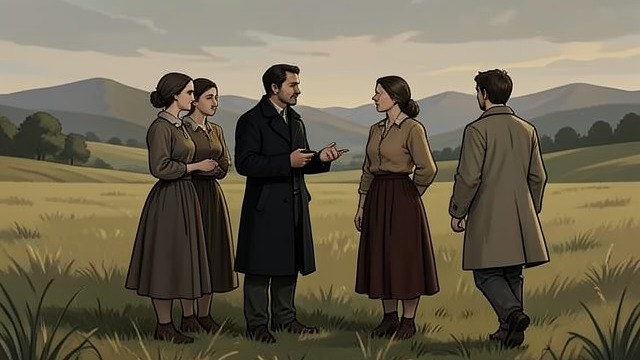
A Bargain for the Captives
A plea for mercy
Charles Kent asks that Kitty Gosse, Anne Rogers, and Lizzie Carr be released. Young Edmund Jordan agrees to escort them away rather than continue their punishment.
The agreement is tied to Walter Thirsk staying behind as an estate agent.
A costly concession
Charles Kent protects several lives but cannot save the village’s land-use customs. His intervention is compassionate and politically limited.
A Final Farewell
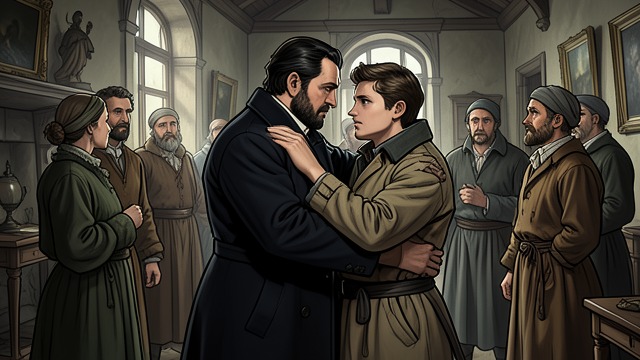
A Final Farewell
The estate left behind
Charles Kent embraces Walter Thirsk and admits that the village has been lost. He accepts that he is leaving the manor and the land he once governed.
His grief encompasses both personal dispossession and the erasure of a way of life.
A cryptic signal
Before riding away, Charles Kent gives Walter Thirsk a small, ambiguous gesture. It suggests that resignation need not be the last word, though the novel leaves its meaning open.
Before the present harvest
During Philip Earle’s boundary walk
After the death of the older newcomer
The morning Young Edmund Jordan prepares to depart
At the departure, before the village burns
