
Philip Earle’s Brief Belonging
HarvestThis flow traces Philip Earle’s movement from hired surveyor to trusted companion and ultimately to a victim of the violence he witnesses.
increasing Bearing strength in each event
 decreasing
Bearing strength in each eventdecreasingThe Smiling Surveyor
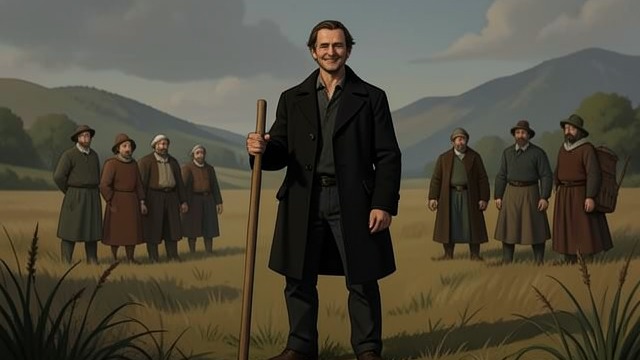
The Smiling Surveyor
Measuring the estate
Philip Earle surveys the land for Charles Kent, recording fields, woods, lanes, and homes. His limp and ready smile make him an object of village curiosity.
The villagers joke about his appearance while suspecting that his measurements may threaten their security.
A divided reception
His work seems precise and detached, yet it will help shape the future of the community. He enters the story as both observer and instrument of change.
The Fiddler at the Feast
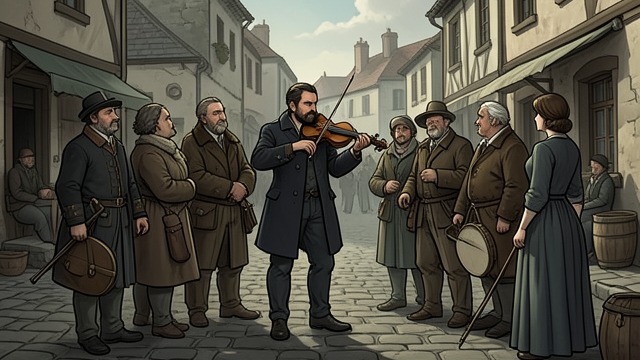
The Fiddler at the Feast
A different skill
Philip Earle joins the village piper with his fiddle and gradually takes over the tune. His music draws people into dancing and temporarily makes him part of their celebrations.
The performance reveals an artistic ability that his official role does not show.
A fragile welcome
The dance ends when Mistress Beldam appears at the door. Philip Earle’s attention to her and the villagers’ uneasy response expose how thin the evening’s hospitality is.
The Companion on the Bounds
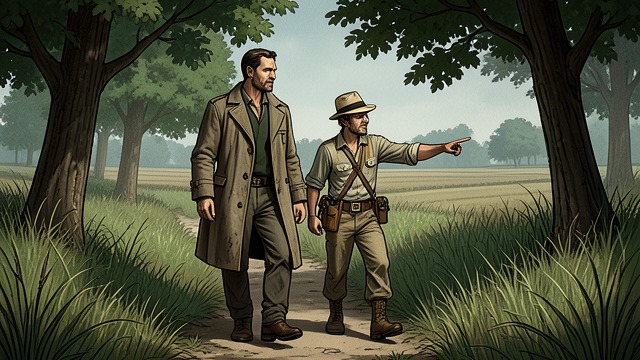
The Companion on the Bounds
Shared observation
Philip Earle asks Walter Thirsk to guide him around the estate. He listens to plant names and place descriptions, treating the walk as a chance to understand the landscape.
Walter Thirsk recognizes his own former wonder in the surveyor’s enthusiasm.
A trust formed
Philip Earle reveals the heir’s claim and the planned enclosures. Their friendship deepens through shared knowledge, but the confidences also place Walter Thirsk in danger.
A Map of Two Futures
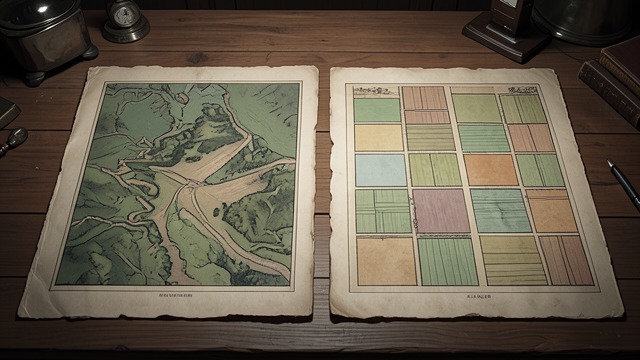
A Map of Two Futures
Landscape translated
Philip Earle paints a version of the existing estate and another of the planned sheep fields. Walter Thirsk sees the first map as beautiful but flattened, and the second as orderly but emptied of its former face.
The charts make political change visible as a rearrangement of color and boundary.
An incomplete account
The maps can show adjacency but not labor, duration, or lived experience. Their beauty does not cancel the violence of what they propose.
The Body in the Attic
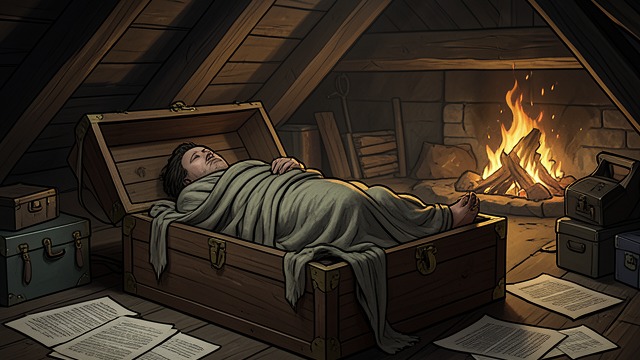
The Body in the Attic
An unseen killing
Walter Thirsk finds Philip Earle’s body hidden in an attic chest. The surveyor has been stabbed repeatedly, but the killer and the timing remain uncertain.
His death is discovered as the Beldams’ fires threaten the manor.
A lost companion
Walter Thirsk cannot carry him to the marsh or establish what happened. He burns the manor with Philip Earle among its remains, giving the maps and their maker a tragic end.
On the final harvest day
The harvest-feast evening
The morning of Gleaning Day
Later that afternoon, in the manor scullery
During the village fires, near the ending
