
The Derby Brothers’ Recklessness
HarvestThis flow tracks the young men’s prank, concealment, and eventual flight from the consequences of their actions.
increasing Bearing strength in each event
 decreasing
Bearing strength in each eventdecreasingA Harvest-Night High
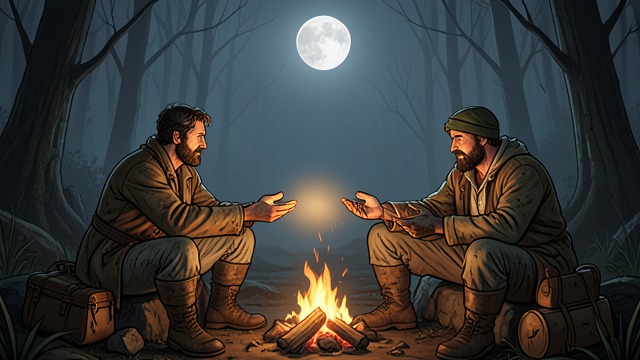
A Harvest-Night High
Foraging and intoxication
Christopher and Thomas Derby and Brooker Higgs return from the woods carrying fairy caps and a Moonball. Walter Thirsk recognizes that they may already have eaten the mushrooms.
Their laughter and finds suggest a night of reckless confidence after hard labor.
A dangerous idea
They resent the Doves that feed on gleaned grain. The dry Moonball offers a means to frighten the birds, but its danger is greater than they understand.
A Prank Becomes Arson
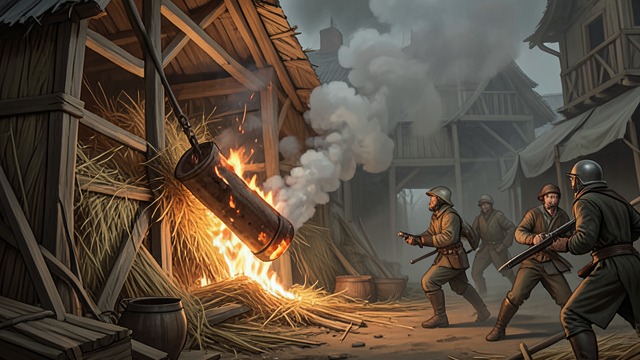
A Prank Becomes Arson
Fire spreads
The men carry a smoldering Moonball into the dovecote. Dry chaff, nesting material, and timber turn their attempt to drive off birds into a major fire.
The Doves die, the hay is lost, and Walter Thirsk suffers a severe burn helping to save it.
Concealment begins
The perpetrators join the firefighting effort and help direct suspicion toward strangers. Their fear of punishment outweighs their sense of responsibility.
The Stranger as Scapegoat
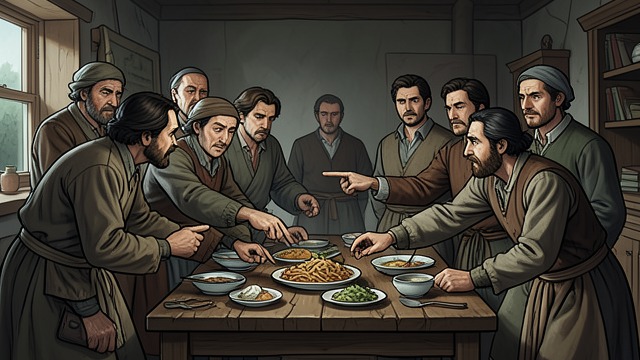
The Stranger as Scapegoat
A false trail
Brooker Higgs points to the newcomers’ meal remains as evidence that they stole a bird. The villagers accept the story despite evidence that the bones do not belong to a Dove.
The Derby brothers and Brooker Higgs avoid confessing while an innocent family faces an armed crowd.
Silence compounds harm
Their cover story helps lead to the pillory sentence. What began as a prank becomes entangled with a stranger’s death and the village’s later collapse.
Guilt at the Feast
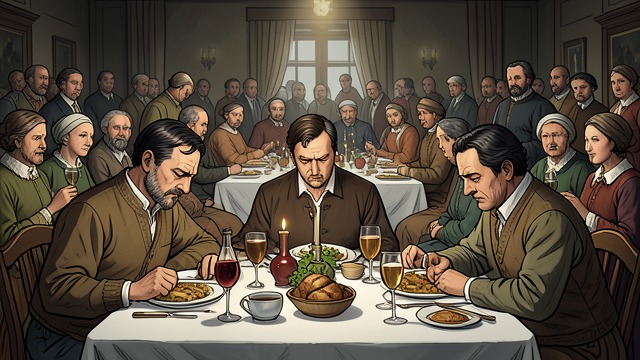
Guilt at the Feast
A silent admission
The villagers suspect the young men were responsible, yet neither the perpetrators nor Walter Thirsk speak openly. At the feast, the three sit apart, visibly uneasy.
The community prefers an unjust punishment to the shame and risk of exposing its own sons.
Cost of concealment
The silence preserves the celebration for a moment but increases the moral burden on everyone. The newcomers remain in the pillory, beyond the feast’s warmth.
Flight Before Reckoning
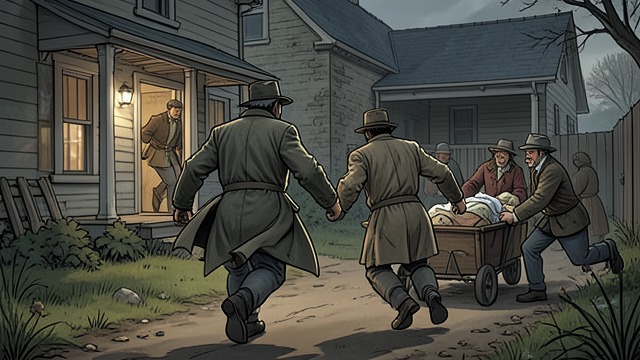
Flight Before Reckoning
Sons leave first
Christopher and Thomas Derby and Brooker Higgs disappear with bundles before their families depart. Their absence signals that they expect the estate’s authority to punish them.
Their families later follow, carrying what they can rather than waiting for arrest.
Consequences outlive the prank
The young men escape immediate judgment, but their actions helped destroy the community they leave. The novel offers no account of their later fate.
After the final sheaf is cut
Before dawn on the next morning
At the newcomers’ shelter, later that morning
The evening after the newcomers are punished
The night the villagers’ women are detained
