Amarillo
Hayden's TimbreAmarillo functions as the remote crisis point of Timbre Simons’s kidnapping storyline: the city’s small airport and police station become the places where her safety is confirmed, her account is investigated, and her reunion with Hayden Devillier and Crew Devillier begins. It is not a settled home or a site of belonging, but a temporary threshold between captivity and return.
Amarillo as a Crisis Location
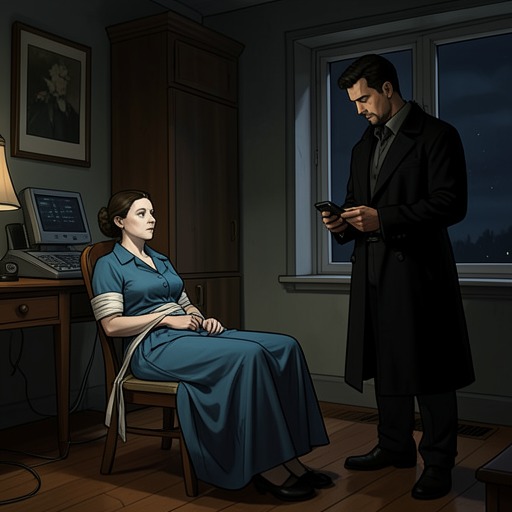
Amarillo enters the narrative when Timbre Simons reaches the city after an ordeal that has left the people close to her fearing that she may have been harmed. She apparently calls 911 when the bus stops and tells authorities that she has been kidnapped. Police take her to the station for questioning, making Amarillo the first institutional setting in which her condition can be verified and her account formally heard. The report is alarming but also reassuring: Timbre is alive and physically safe, even though the circumstances require police attention.
The setting gains importance through contrast. Timbre’s earlier housing insecurity places her in unsafe environments, including a homeless shelter where she returns late from work and where only one guard sits at the desk. Amarillo, by contrast, is presented through emergency response and controlled transit: a police car, a station, an airport, and a waiting aircraft. The city therefore represents neither ordinary security nor permanent refuge. It is a guarded stopping place where danger has been interrupted but the larger threat has not yet been emotionally resolved.
The Rescue Flight
Once Hayden Devillier learns that Timbre is in Amarillo, he immediately offers to retrieve her or put her on a plane. Ryan Powell answers with a more direct expression of the family’s resources, deciding that their own plane should be sent. The decision extends the support network that Hayden, Ryan Powell, and Peri Powell had earlier planned to build around Timbre. Their concern had already centered on finding her a safer job and residence, especially because her late-night bar shifts made the shelter dangerous; Amarillo turns that long-term protective concern into an urgent recovery mission.
Crew Devillier insists on going as well. Hayden had been trying to protect Crew from the emotional impact of the day by letting him play a mindless video game with Tucker Powell, while Peri Powell and Nanny kept the other Powell children together during the commotion. Crew’s decision to accompany Hayden shows that Timbre’s safety has become personal to him, not merely an adult family matter. The flight to Amarillo consequently carries both romantic and familial stakes: Hayden is going for the woman he loves, and Crew is going for someone who has become part of his emotional world.
The Airport Reunion
The decisive Amarillo scene occurs at the small airport. From the plane’s window, Hayden sees Timbre standing beside a police car. The sight confirms that the police have found her and that she is waiting in a condition that allows her to return, but the distance between the aircraft and the ground still holds the suspense of the kidnapping plot. The attendant lowers the stairs while Hayden and Crew wait for her.
Timbre then moves toward the plane faster and faster until she is running. Hayden slips past the woman in his way and takes the stairs two at a time, converting the airport from a site of separation into a place of physical reunion. He embraces and kisses her before stopping to examine her for injuries, asking whether her captors hurt her. The sequence gives Amarillo its central narrative image: a police car marks the end of immediate uncertainty, while the plane and its descending stairs provide the route back to the people who have been waiting for her.
Connections and Narrative Significance
Amarillo gathers several strands of the novel’s chosen-family structure. Timbre’s survival is first handled by public authorities, but her return is organized by Hayden, Ryan, Peri, Crew, and the household staff. That movement from police questioning to family retrieval shows how institutional intervention and personal care operate together. The Powell family does not treat Timbre as an isolated victim to be processed and left behind; it spends money, arranges transportation, preserves the children’s safety during the crisis, and sends a plane to bring her home.
The city also completes a larger pattern in Timbre’s arc. Earlier, Hayden and his extended family tried to help her leave the shelter without stripping her of independence. Timbre repeatedly worried about living off other people, while Peri reassured her that the family regarded assistance as a response to bad luck rather than charity. In Amarillo, the logic of accepting help becomes unavoidable: after the police locate her, the safest next step is not solitary self-reliance but a flight arranged by the people who have chosen to stand beside her.
Amarillo’s significance is therefore transitional and relational. The city is where the kidnapping is reported, where Timbre’s survival is confirmed, and where the rescue journey ends in Hayden’s embrace. Its lasting meaning comes less from local description than from what happens there: fear changes into recognition, isolation into reunion, and an uncertain police report into Timbre’s physical return to the family that has made room for her.