Timbre starts working at The Bar
Hayden's TimbreTimbre starts working at The Bar at the point when economic collapse has reduced her choices to survival. After losing her office job, watching her roommate Caylor leave for Los Angeles, and selling her car to pay the last of her monthly bills, she lives in a shelter with almost no money and only one month of phone service remaining. The bar job therefore matters not as a career ambition but as an immediate means of staying housed, fed, mobile, and capable of rebuilding a life.
Causes and Background
Timbre’s entry into The Bar follows a rapid downward spiral. She once had a job, an apartment with a roommate, a car, and an ordinary degree of independence; after being fired, she could find nothing better than minimum-wage work. Caylor’s sudden move to Los Angeles removes the housing arrangement that had kept her afloat, while selling the car leaves her dependent on public transportation. In the shelter, Timbre hopes that the situation will be temporary, but her need is concrete rather than abstract: she must find work that pays more than minimum wage and begin saving for a place of her own.
Jenna becomes the practical bridge between homelessness and employment. When Timbre asks whether The Bar is hiring, Jenna says that employees are always leaving and promises to recommend her, then writes down the address. The location is reachable by a bus running directly in front of the establishment, making the job possible even after Timbre has sold her car. That detail gives the employment a wider significance: transportation, housing, food, and wages are interdependent conditions of survival, and the shelter’s support helps Timbre turn a precarious opportunity into an actual application.
Applying and Being Hired
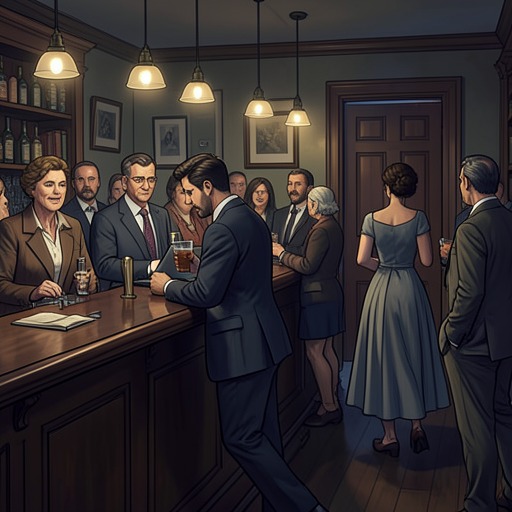
The Bar initially appeals to Timbre through its distinctive atmosphere. In the middle of the afternoon, only a few patrons are drinking, but the dark room is decorated with signed T-shirts, flags, and dollar bills that preserve traces of earlier customers. She reads the place as a bar with attitude and likes it before learning what the work will demand. She introduces herself to Ford Turner, the manager, and explains that she has waitressing experience, along with experience handling food, bussing tables, and washing dishes, although she has never worked in a bar.
Ford offers her a cocktail-waitress position after the previous waitress quits. His attention to her breasts makes the interview uncomfortable, and the employment terms make the bar’s gendered economy explicit. She must wear shorts and a tight T-shirt supplied by The Bar; Ford tells her she may tie, split, or cut the shirt and openly connects the amount of visible skin with the size of her tips. Timbre recognizes that the arrangement makes her body part of the product being sold and compares it uneasily to prostitution. Nevertheless, bills take precedence over her preferred career, and she decides that maximizing each night’s earnings is the short-term goal.
The immediate trial shift changes her prospects from uncertainty to income. Ford asks whether she can work that night, and Timbre accepts because she will have money in her pocket the following morning. He tells her to return at five, with Jenna there to train her, and says the job will be hers if the evening goes well. She leaves with two new shirts and the knowledge that she has secured instant cash as well as a small paycheck twice a month. Her mood improves immediately, not because the work is comfortable, but because a wage restores a measure of agency.
Work at The Bar
Timbre’s first shift exposes the gap between the quiet afternoon interview and the labor demanded by the establishment. She does not expect the room to be crowded on a Tuesday and is puzzled that Ford has scheduled another waitress when Jenna could apparently handle the sparse clientele alone. The apparent slack is deceptive. Jenna instructs her to stop worrying about the band members and concentrate on the customers, then assigns her a section as patrons begin arriving. Timbre takes orders, carries drinks, and delivers them through a steady flow of people for the rest of the night.
The work converts her body and time into income but leaves her physically depleted. By last call, her feet are screaming, and one of her first intended purchases is a better pair of tennis shoes. She wipes down tables and throws empty containers into recycling bins, taking some relief from the fact that The Bar serves only nuts and pretzels rather than a larger menu requiring more food handling. The shift ends with cleaning, not simply serving, and the exhausted body records the hidden cost of the money she needs.
Her schedule reorganizes her entire life. She regularly goes to bed around three in the morning, returns to the shelter between three and four depending on closing crowds, showers, and sleeps until late morning or noon. Working on her feet makes her sleep so deeply that ordinary disturbances would not wake her. Jenna shares her days off, giving Timbre a reliable companion after other so-called friends withdraw upon learning that she lives in a shelter. The two women plan outings around a food budget that is nearly zero; Timbre saves almost everything toward independent housing, buys practical work shoes first, and depends on shelter meals and Ford’s habit of paying for a meal during each shift.
Connections and Consequences
The Bar supplies more than wages. Jenna’s recommendation gives Timbre employment, friendship, and a social foothold at a moment when her former network has largely disappeared. The workplace also becomes a recurring point of contact with Hayden Devillier and Assured Distraction, whose performances make Friday and Saturday nights the bar’s most profitable but least available shifts for Timbre. Her need to work those nights later makes dating Hayden difficult: he understands that she earns the most money on weekends, while his responsibilities to Crew Devillier make weeknight plans difficult as well. Their romance is therefore shaped by the labor schedule rather than existing outside it.
The job eventually becomes part of Timbre’s route toward greater stability. When she later interviews at 13 Recordings, Hayden supports her before she enters, and Peri Powell and Cash offer her the position on the spot. She learns computer systems and office routines under Johnna’s guidance, finding the new work easier in some respects than learning the names and faces of everyone who passes through the company. The contrast does not erase The Bar’s importance: bar work is the transitional labor that keeps Timbre moving until a job better suited to her skills becomes available.
The workplace also places her within the protective and domestic network surrounding Hayden, Crew, and the Powell family. After Timbre moves into the Powell family pool house, Hayden, Crew, and Tucker Powell appear at her table with homework spread across it and food cooking on her stove, an image that contrasts sharply with the shelter and the bar’s transactional atmosphere. Yet the security remains vulnerable. Krissy Thompson later abducts Timbre, renders her helpless, and threatens to force her out of Austin and Texas, using Crew and Hayden as leverage. The threat reveals how far Timbre has traveled from the precarious independence represented by her first paycheck: her survival is no longer only an economic problem but also a matter of bodily safety and attachment.
Narrative Significance
Timbre’s work at The Bar is a hinge between collapse and reconstruction. It presents employment as both exploitation and rescue: Ford’s dress code turns female appearance into a revenue mechanism, while the same job provides cash, a schedule, a friendship, and access to the social world in which Timbre’s future relationships take shape. Her labor is not romanticized; the sore feet, late nights, limited food, transportation constraints, and careful savings make its material demands visible.
The event also establishes Timbre’s defining capacity for practical endurance. She does not treat accepting help or taking undesirable work as proof that her life has ended. She uses the bus, the shelter, Jenna’s recommendation, Ford’s trial shift, and every available wage to create a next step. Later, the Powell family’s support and her job at 13 Recordings expand that foundation, but The Bar remains the first institution to offer her a concrete route out of homelessness. In that sense, starting there is not a minor employment detail: it is the first durable movement from free fall toward chosen stability, even as the job’s schedule and objectifying conditions continue to shape what stability costs.