
Restraint and the Human Bond
Heart of DarknessThis flow follows the novel’s changing tests of restraint, from hunger and work to the limits of personal conduct.
increasing Bearing strength in each event
 decreasing
Bearing strength in each eventdecreasingMarlow’s Standard of Efficiency

A Proposed Safeguard
Against Brute Force
Marlow argues that conquest without an idea is simply violence in the service of appetite. He treats sincere devotion to a purpose as the only possible redeeming element.
Practical Competence
He also presents efficiency as a restraint that protects people from the worst consequences of power. The idea of doing a task properly stands against empty talk and arbitrary destruction.
A Standard Under Pressure
The story repeatedly tests both claims. Company practice and Kurtz’s rise ask whether public ideals or practical habits can restrain human appetite.
Hungry Crew Members

Restraint Under Hunger
Severe Need
The African crew had endured prolonged hunger, with little opportunity to obtain food. Their hardship was worsened by the Company’s indifference to the practical value of their wages.
An Unexpected Fact
Marlow found it remarkable that they did not attack the whites aboard. He rejected easy explanations such as fear or superstition and treated their restraint as a serious moral puzzle.
Humanity in Extremity
The episode shifted attention from abstract judgments about savagery to conduct under pressure. The hungry crew demonstrated a self-command that Marlow did not assume in the better-fed passengers.
The Helmsman’s Work
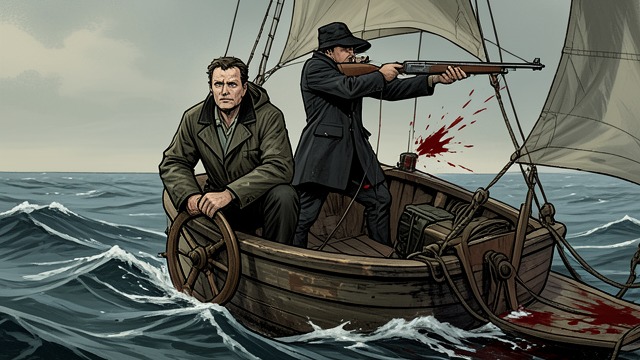
Work Amid Violence
A Demanding Role
The helmsman had to guide the steamer through hazardous water. His task required attention and coordination at the precise moment the attackers struck.
A Fatal Failure of Control
He abandoned the wheel to fire a rifle and was fatally wounded. Marlow immediately had to assume control of the vessel as danger continued.
Limited Restraint
The scene showed how quickly fear could overwhelm training. It also contrasted the helmsman’s impulsive act with Marlow’s effort to keep the boat moving and the crew alive.
Kurtz Beyond Restraint

Authority Unchecked
No External Limits
Far from European oversight, Kurtz accumulated power over people and trade. The station’s distance made his will more influential than any ordinary rule.
Violence and Appetite
The heads on stakes showed that Kurtz’s conduct had gone beyond commercial ambition. He lacked the restraint that could have limited his desires even when no one could compel him.
A Human Capacity
Marlow did not treat Kurtz’s collapse as belonging to an entirely separate kind of person. The absence of restraint exposed a possibility within human nature rather than a foreign exception.
Marlow’s Chosen Silence

Restraint in Speech
Truth Ready to Speak
Marlow knew Kurtz’s final words and understood their force. The Intended’s grief made the truth’s consequences immediate.
The Lie Chosen
He told her that Kurtz had spoken her name. The answer restrained his own impulse to disclose the cry and protected the woman from a painful reversal.
Ambiguous Mercy
The lie can be read as compassion or as a further evasion. Marlow’s choice shows that restraint may spare another person while also preserving a false account of the past.
During Marlow’s opening reflection on conquest
During the fogbound river passage
During the river ambush
When Marlow discovers the posts at the Inner Station
During his final conversation with the Intended
