“The last word he pronounced was—your name”
Heart of Darkness“The last word he pronounced was—your name” is the answer Marlow gives The Intended when she asks for Kurtz’s last words. Its decisive significance lies in what it conceals: Kurtz’s final utterance was “The horror! The horror!”, but Marlow substitutes her name, preserving her idealized belief in him while leaving the truth unspoken.
The Phrase as a Consoling Answer
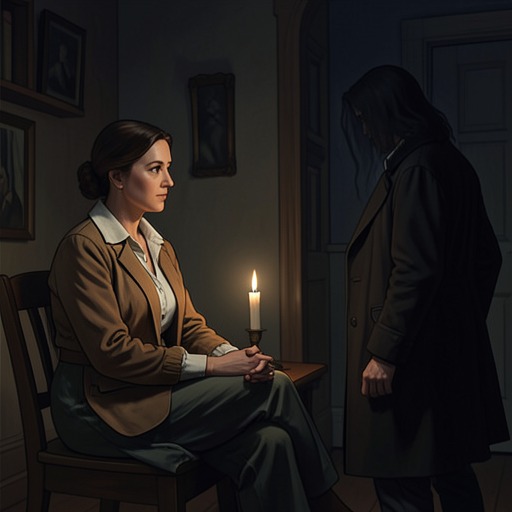
Marlow delivers the line after The Intended, heartbroken, asks him to repeat Kurtz’s last words because she wants something to live with. She insists that she loved Kurtz, and the request turns a question about his death into a demand for a sustaining memory. Marlow hesitates: he is close to telling her that the words have not disappeared but are being repeated by the dusk around them. Instead, he gathers himself and answers slowly, “The last word he pronounced was—your name.”
The sentence gives The Intended the assurance she is seeking. She sighs, cries out that she knew it, and hides her face in her hands as she weeps. The exchange makes the phrase more than a report about Kurtz’s death: it becomes a carefully chosen substitute, one that allows her to hold onto the love and elevated image she has preserved.
The Truth It Replaces
The actual words named in Marlow’s recollection are “The horror! The horror!” He hears them in the dusk as a persistent whisper that seems to swell menacingly around the room. Their presence makes his answer a direct act of concealment: rather than repeat Kurtz’s judgment, Marlow gives The Intended a final word shaped to her grief.
The contrast is sharpened by her certainty. She responds to Marlow’s claim as confirmation of what she already hoped, while the reader knows that the remembered words are different. The lie therefore succeeds between the characters even as the narration exposes it. Its emotional effect is immediate comfort for The Intended; its cost is that she receives neither Kurtz’s actual last words nor Marlow’s account of what they mean.
Marlow’s Conflict Over Lying
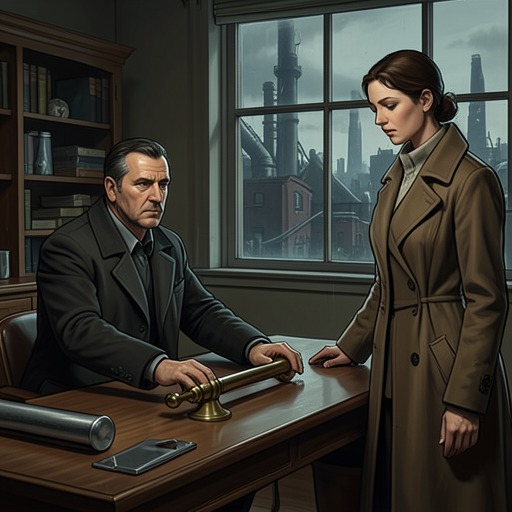
The choice sits uneasily with Marlow’s stated aversion to lies. Earlier, at the Central Station, he says that lying appalls him and carries for him a taint of death; yet he admits that he allowed a young man to imagine he had influence in Europe because he thought the pretense might help Kurtz. That earlier evasion anticipates the final one: in both cases, Marlow departs from his own refusal of falsehood in relation to Kurtz, but the later lie is addressed to someone whose attachment makes the truth especially painful.
After The Intended accepts his answer, Marlow thinks of whether he has denied Kurtz the justice he was due, then acknowledges that he could not tell her. His inability to speak the truth is not presented as simple indifference: the scene stages a choice between the dead man’s actual words and the consolation his fiancée asks for. The sentence resolves that immediate encounter in her favor, but leaves Marlow burdened by the knowledge of what he withheld.
The Frame and the Limits of Telling
Marlow’s earlier reflections on narration make this final substitution part of a larger problem of communicating experience. He says that it is impossible to convey the life-sensation that gives an epoch its truth and meaning, and that people live as they dream, alone. That reflection does not make his lie equivalent to the limits of storytelling; rather, it places the final exchange within a narrative already concerned with what can be told, what remains inaccessible, and what a listener can bear to hear.
After Marlow falls silent, the Director remarks that they have lost the first of the ebb. The Frame Narrator sees a black bank of clouds across the offing and the waterway darkening beneath the overcast sky. The book’s closing image carries the scene’s unresolved tension outward: Marlow has given The Intended a comforting sentence, but the truth he withheld remains audible to the reader, while the frame itself settles into darkness.