Kurtz’s fiancée
Heart of DarknessKurtz’s fiancée, referred to as the Intended, is presented through Marlow’s account rather than through a scene narrated from her own perspective. Her connection to Kurtz reaches into his final words and his family life, while Marlow’s admission that he used a lie to lay the ghost of Kurtz’s gifts to rest places her at the center of his decision to withhold the truth.
Identity and Representation
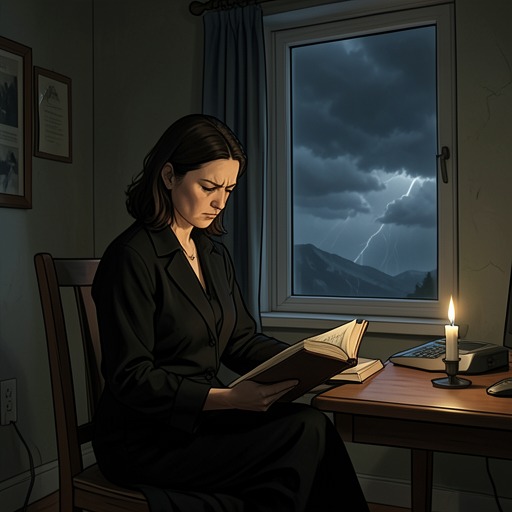
The Intended is identified by her relation to Kurtz, not by a personal name or an independent account of her life. In Marlow’s retrospective narration, she is associated with the women he says should remain in a world of their own, protected from the worsening world of men. That claim belongs to Marlow’s framing, not to a statement from the Intended herself: the text offers no direct speech from her in these passages. Her position is therefore both intimate and mediated—she matters deeply to the men’s account, but is not given a voice within it.
Marlow’s description makes this idealized separation uneasy. He contrasts the sheltered world he assigns to women with Kurtz’s immersion in the wilderness, where Kurtz’s appetite for ivory and his claims of possession have become inseparable from his decline. The Intended is invoked as part of that contrast, not as someone shown choosing or endorsing the distance between their worlds.
Connection to Kurtz and His Family
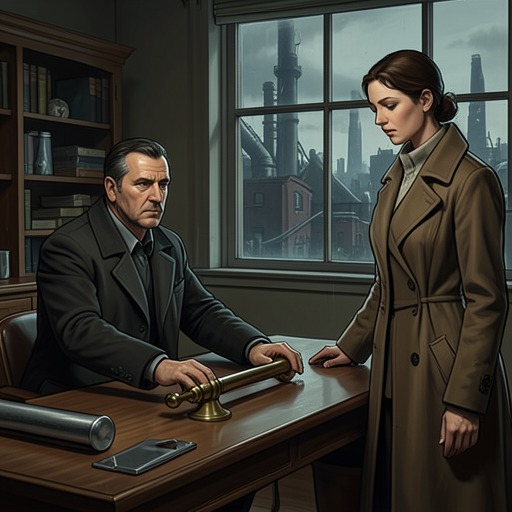
Marlow recalls Kurtz invoking the Intended while gravely ill, alongside claims over his ivory, station, and river. The repeated possessive language makes the invocation revealing: Kurtz places her among the things he calls his own. Marlow hears in this catalogue not simply an expression of attachment but evidence of the scale of Kurtz’s possessiveness and of the wilderness’s hold over him. The Intended is absent from the scene, yet her name becomes part of the final pattern through which Marlow interprets Kurtz.
The account also connects her to Kurtz’s family beyond the engagement. After returning to the sepulchral city, Marlow reports that Kurtz’s mother had recently died and had been watched over by the Intended. This brief detail places her in the family’s domestic aftermath, but the passage gives no account of her own response to either death and does not describe her relationship with Kurtz’s mother further.
Marlow’s Lie and Narrative Significance
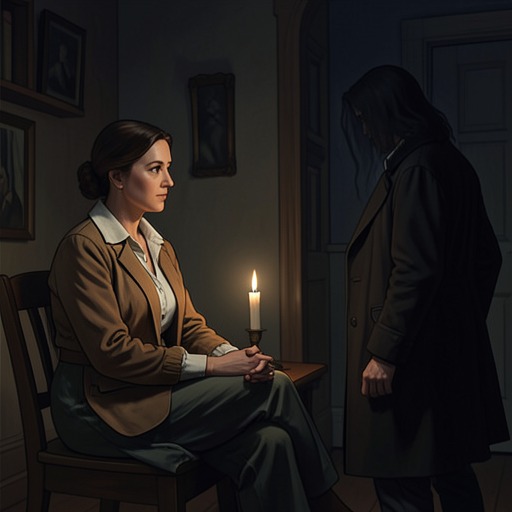
Marlow abruptly confesses that he laid the ghost of Kurtz’s gifts at last with a lie. The admission makes the Intended more than the distant object of Kurtz’s last recollections: she is also the person toward whom Marlow directs his concealment. He frames women as needing protection from the harsher world, and his lie follows that logic, though the account also exposes the cost of speaking for someone who has not been allowed to speak for herself.
The Intended consequently remains a figure formed by competing male accounts: Kurtz’s possessive invocation and Marlow’s retrospective decision to withhold the truth. The narrative gives her importance without supplying an independent view of her beliefs or desires. That gap limits what can be claimed about her, while making the act of representing—and protecting—her part of the novel’s larger concern with truth, silence, and the stories told after Kurtz’s death.