Kurtz's moral corruption
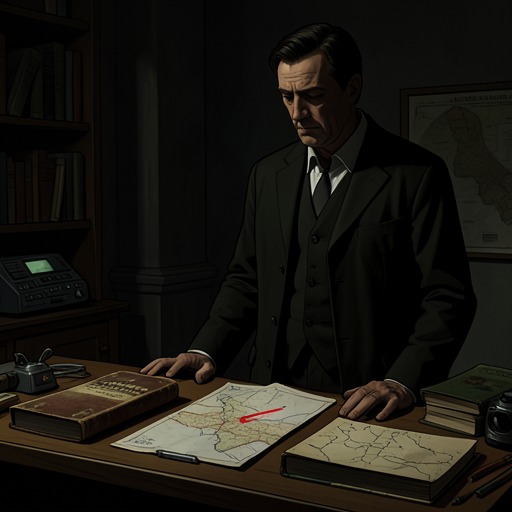
Heart of DarknessKurtz's moral corruption emerges through a stark contradiction: he speaks as though he were defending what is rightfully his, yet his claim to ivory and Marlow's memories of his pleading, threats, and desires expose a self-serving moral logic. The story does not present that corruption as a simple, fully explained transformation. Instead, it makes Kurtz's conduct legible through the distance between his words and actions, and through Marlow's uneasy effort to describe a man who was once, to him, little more than a name.
A name before a man
At the Central Station, Marlow hears of Kurtz but cannot form a definite image of him. Kurtz is associated with ivory and with the remote interior, yet seems no more substantial than a word; Marlow compares his belief in Kurtz's existence to believing in inhabitants of Mars without knowing what they look like. This distance matters: before meeting Kurtz, Marlow already understands him through reports and expectation, not through direct knowledge. The moral meaning of Kurtz's reputation is therefore unsettled from the beginning.
The station's human ambitions sharpen that uncertainty. Marlow sees that the arrival of Kurtz has unsettled both the manager and the man who expects to become assistant-manager. Against their calculations, Marlow sits beside his wrecked steamer, while the forest and river appear immense, silent, and difficult to comprehend. He can imagine ivory coming from the interior, but Kurtz still carries no settled moral identity. The contrast makes the coming encounter seem less like the confirmation of a reputation than a test of what that reputation can conceal.
The wilderness and the limits of judgment
On the river journey, practical danger repeatedly commands Marlow's attention. He must find the channel, watch for hidden banks and sunken stones, avoid snags that could tear open the steamer, and secure wood for the next day's steaming. He describes the river as a place where a traveler can lose the world he once knew; its stillness feels less like peace than an implacable force. Yet these immediate tasks also keep him occupied with what he calls the surface, while the inner truth remains hidden. The landscape supplies pressure and uncertainty, not a complete explanation for Kurtz's choices.
The shore's cries and movement provoke another kind of uncertainty. Marlow rejects the easy assurance that the people there are inhuman: what unsettles him is the recognition of their humanity and the possibility of a remote kinship. He argues that principles and the outward acquisitions of civilization may fail under pressure, and that a person needs a deliberate belief and a voice of his own. His reflection gives the story a measure against which Kurtz's conduct can be considered, but it does not turn the wilderness into an excuse. Marlow himself continues working, repairing the leaking steam-pipes and steering the steamer; the encounter becomes a moral pressure he must register while carrying on with immediate duties.
Ivory and the language of justice
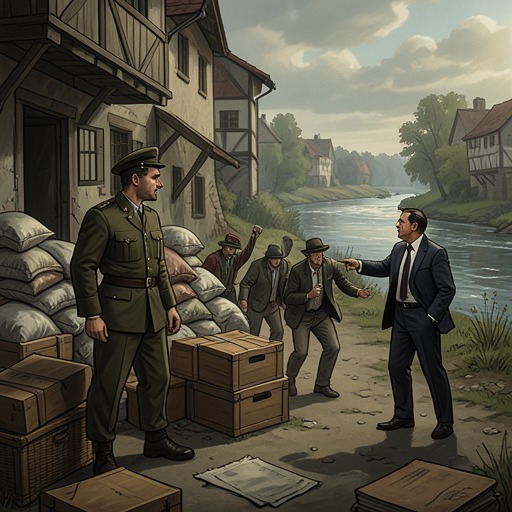
Kurtz's most revealing defense concerns a lot of ivory. He insists that it belongs to him because the Company did not pay for it and because he collected it at personal risk; he anticipates that the Company may claim it, then asks Marlow what he ought to do. His conclusion is, "I want no more than justice." The appeal sounds measured, but its circumstances expose the self-interest beneath it: the argument treats the ivory as a personal possession and frames resistance to the Company as a question of fairness. The language of justice does not undo the possessiveness it is made to defend.
Marlow's recollection places this claim beside a larger record of behavior: Kurtz's abject pleading, his threats, and the colossal scale of his desires. Those details complicate any attempt to read the ivory dispute as an isolated grievance. Kurtz can present himself as the wronged party, but Marlow remembers a soul marked by meanness, torment, and anguish as well as by eloquence. The gap between Kurtz's polished claim and the remembered violence of his desires is central to the account of his corruption; eloquence makes his self-justification audible without making it trustworthy.
Memory, isolation, and the final frame
Marlow also insists that experience cannot be conveyed intact. He says that it is impossible to transmit the subtle truth of a period of one's life and that "We live, as we dream—alone." This limit shapes the account of Kurtz: Marlow can bring back particular words, gestures of pleading, and remembered threats, but cannot offer a complete explanation that closes the moral question. The uncertainty is not simply a lack of evidence; it is part of the way the story represents judgment under extreme conditions.
At the narrative's close, Marlow falls silent while the listeners remain still. The Director notes that the first of the ebb has been lost; beyond him, a bank of clouds darkens the waterway, which seems to lead toward an immense darkness. The ending does not resolve Kurtz's conduct into a single lesson. Instead, the darkened river carries the story's unresolved unease back into its frame: Kurtz's claim to justice remains audible, but so do the desires and harms that make that claim morally compromised.