Johnny Kleintjes
Heart of the HunterJohnny Kleintjes is a former intelligence leader of the South African liberation struggle, an exile, and a specialist in intelligence and computers known as Umtkakathi, or wizard. His history binds political commitment and technical skill to the novel’s contested archive: he secretly retained intelligence material during the 1994 integration process, and his attempt to carry information to Lusaka places his daughter, Thobela Mpayipheli, and the pursuit of a missing hard disk in danger. His execution there makes him both a victim of the intelligence contest and the absent figure around whom its most consequential uncertainties gather.
Identity and political background
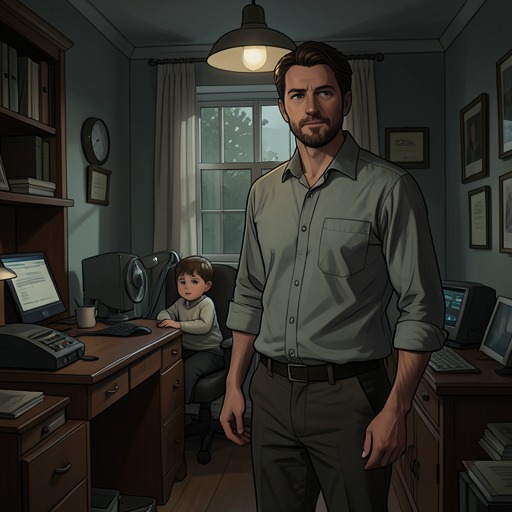
Kleintjes studied mathematics and applied mathematics at the University of the Western Cape but did not obtain his degree. Political activity, restrictions, and pressure from the Security Police of the previous regime interrupted his studies. He went into exile in 1972, too late to belong to the generation described as the mgwenya of the Sixties, and established a reputation at the African National Congress and MK offices in London. He married in 1973. From 1976 he received East German training at Odessa and specialized in intelligence. His facility with computers earned him the name Umtkakathi, meaning wizard.
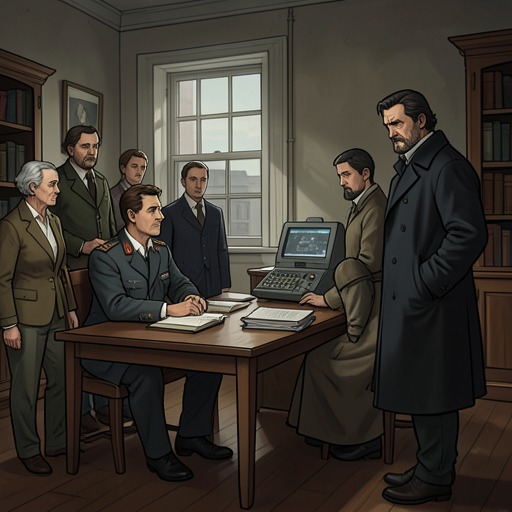
The novel presents him as more than a technically capable former operative. His work belonged to the intelligence structures of the South African liberation struggle: he is described as a former leader in those services and as a retired intelligence officer from MK, the former military arm of the African National Congress. Yet his later decisions are shaped by the instability of the transition into integrated intelligence institutions. He recalls a period in which orders seemed strange and politically unacceptable, people were obstructing one another or protecting their careers, and distrust ran across both sides of the former divide.
The files he kept and the trust he placed
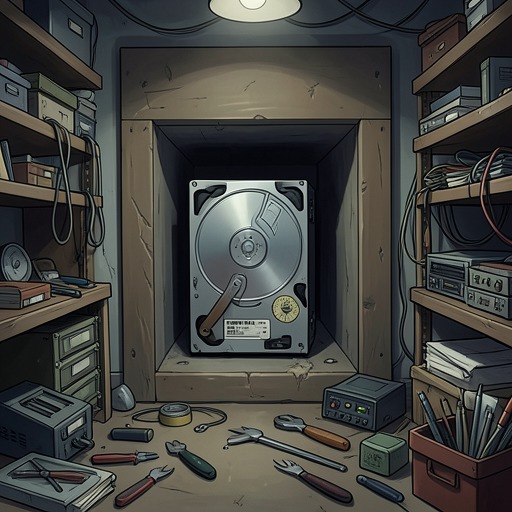
Kleintjes responded to the troubling orders by making backups of some intelligence material. He brought data home on hard disks and sometimes worked through the night. Monica says she kept out of this work, but his decision to preserve the material becomes crucial after his disappearance: the account later distinguishes between fabricated information prepared for an operation and intelligence he had allegedly hidden during the 1994 integration process. The distinction leaves open what the disks contained and who was seeking them.
His preparation for danger was personal as well as political. Several weeks before the events that bring her to Thobela, Kleintjes visited Monica at work for the first time and gave her a piece of paper bearing the name and contact number of someone he trusted completely. He told her to contact Tiny Mpayipheli if anything happened to him. Monica also explains that her father had repeatedly said Thobela was the only man he trusted. The instruction turns an old relationship into a practical safeguard: when Monica is later threatened and needs help delivering a disk, she follows the contingency her father had prepared.
The evidence of their friendship extends beyond the emergency contact. A recollection suggests that Kleintjes knew Inkululeko personally and considered him a friend, though the speaker marks this as a belief rather than confirmed fact. Kleintjes’s ties therefore cross the boundaries between old comradeship, intelligence work, and the newer, unsettled institutions. Those connections help explain why he can be recruited, watched, and used as a channel, but they do not make him master of the competing plans around him.
Retirement and the Lusaka mission
Janina Mentz tells the Director that she involved Kleintjes in her operation and, in the Director’s words, brought him out of retirement. A surveillance photograph taken nineteen days before Mentz presents it shows him leaving the American Embassy. After his visit to the consulate, the Central Intelligence Agency reacts as Mentz expects: it warns him not to make direct contact again because the building is being watched. Mentz arranges for his phone to be monitored. A week before her explanation to the Director, a call from the agency serves as cover for a meeting at the Art Museum in the Gardens, where Kleintjes is asked to take information to Lusaka.
The mission is surrounded by competing interpretations. Mentz and her colleagues think Kleintjes may have acted on his own initiative and that the hard disk he took was empty or filled with pointless data. The Director, however, questions the apparent logic of the approach: if Inkululeko, the alleged South African double agent, works for the Central Intelligence Agency, why offer to buy intelligence from Kleintjes? Mentz later suspects that Thobela has the real hard disk. These statements do not settle what Kleintjes carried; instead, they separate the operation’s apparent information from the potentially valuable material he had secretly preserved.
A report on Operation Safeguard frames Kleintjes’s recruitment as a deliberate move by the operation’s source, who used a retired intelligence officer from MK. The report also says the unknown operatives were not after the fabricated Kleintjes data but were suspected of seeking the intelligence he had allegedly secreted during the 1994 integration process. Its account describes Kleintjes’s daughter being blackmailed after the killings of Len Fortenso and Peter Blum and forced to bring a particular hard disk to Lusaka. Because Monica was physically challenged, she asked Thobela, a former friend and colleague of her father, to make the journey on her behalf. The chain of coercion turns Kleintjes’s private archive into a threat that reaches his family even after he can no longer protect it.
Execution and the unresolved archive
In Lusaka, the leader of the operation takes seven minutes and five thousand American dollars to bribe the manager of the Republican Hotel and identify the room where Kleintjes is being held. He is found executed. Two disks lie on his lap, and the word KAATHIEB has been cut into his chest with a sharp instrument; the report glosses the word as Arabic for liar. A separate description dwells on the deep red cuts, presenting the inscription as a brutal accusation rather than an explanation of what happened. The disks and the message make his body a final, coerced document, but neither reveals which information he possessed or who ultimately controlled it.
The uncertainty survives his death. The report says the specific hard disk is still missing, while Mentz’s suspicion that Thobela has the real one remains a suspicion. Kleintjes’s execution thus closes his personal story without resolving the central question attached to his files. His life and death expose the cost of treating intelligence as both political inheritance and bargaining material: the person who tried to preserve a record is made its courier, his daughter is threatened to retrieve it, and the evidence left at his death remains insufficient to establish where the most important disk went.
Narrative significance
Kleintjes is largely reconstructed through testimony, surveillance images, operational reports, and the decisions of people who trusted or recruited him. This mediated presence suits a character whose defining work involved hidden data and whose posthumous importance depends on information that cannot be verified. His intelligence skill makes him useful to competing forces; his caution in preparing Monica with Thobela’s contact suggests that he anticipated danger, but the evidence does not establish that he understood the later operation or its lethal outcome.
The contrast between the empty or pointless disk proposed by Mentz’s team and the allegedly secreted files sought by the unknown operatives keeps the distinction between cover story and archive unresolved. Kleintjes’s technical gift, once a means of service and preservation, becomes inseparable from surveillance, manipulation, and physical coercion. His final appearance—two disks on his lap and a word carved into his chest—concentrates the novel’s conflict between what an intelligence operation claims to know and what its surviving evidence can actually prove.