Lawrence Mpayipheli
Heart of the HunterLawrence Mpayipheli, a reverend from Alice, is a man of peace whose deepest wound is the loss of closeness with his only son, Thobela Mpayipheli. His account of their family’s history sets Lawrence’s pastoral ideals against Senzeni’s militancy and Thobela’s emergence as a warrior. At the novel’s end, Lawrence is again in Alice, tending his garden, when two motorbike riders arrive and awaken the possibility of his son’s return.
Identity and Background
A state agent’s file identifies Lawrence’s son as Thobela Mpayipheli, born on 10 October 1962 in Alice in the Eastern Cape, to Lawrence and Catherine Zongu. The file also supplies an address in Mitchell’s Plain, but the personal history Lawrence gives the agent reaches further back than official records: to a family shaped by poverty, cultural inheritance, and competing understandings of duty.
Lawrence and his younger brother Senzeni were sons of a tribal chief from the Kat River Valley. As boys, they herded cattle, learned Xhosa culture by the fire, and heard the history of their people from their elders. They also underwent Xhosa initiation before, in Lawrence’s account, it became an exploitation of the poor. Their shared upbringing did not make them alike. Lawrence remembers himself as the tall, lean, clever elder brother and a peacemaker, while Senzeni was shorter, muscular, impatient, and drawn to fighting stories. The brothers’ opposing temperaments would become a family divide, not merely a difference in character.
A childhood fight gave Lawrence an early understanding of his own aversion to violence. Provoked into defending his status as a chief’s son, he found himself unable to raise his fists against the other boy. He describes recognizing the other’s pain before it was inflicted and wanting to heal rather than harm. That response points toward the life he later chose: with help from a church bursary and encouragement from his mother, he studied, married, and became a disciple among his own people in the Kat River Valley. Senzeni, by contrast, became a disciple of Freedom, following political developments and the Rivonia trials and standing as the family’s expected warrior and future chief.
A Father Divided from His Son
Lawrence interprets Thobela’s character through both inheritance and faith. He believes the boy received the presence and judgment of his grandfather Mpayipheli, as well as Lawrence’s tall build, long stride, and facial features. Those resemblances led people, including Lawrence himself, to assume that Thobela had inherited his father’s peaceful nature. Lawrence later came to see that assumption as a mistake: in his telling, Thobela also carried the heart of a hunter and the warrior nature associated with ancestors far back in the family line.
At first, Lawrence responded to the possibility of that difference with love and protection. He recognized signs in his son, feared their consequences, and tried to wrap him in a safe domestic life. He later judged that his love had blinded him and that he had failed to understand the test his son represented. The separation began, he says, with small household differences and widened over time, like ripples spreading across still water. His account does not present the estrangement as a single rupture; it accumulates through missed understanding between a father committed to peace and a son whose inclinations Lawrence increasingly associated with conflict.
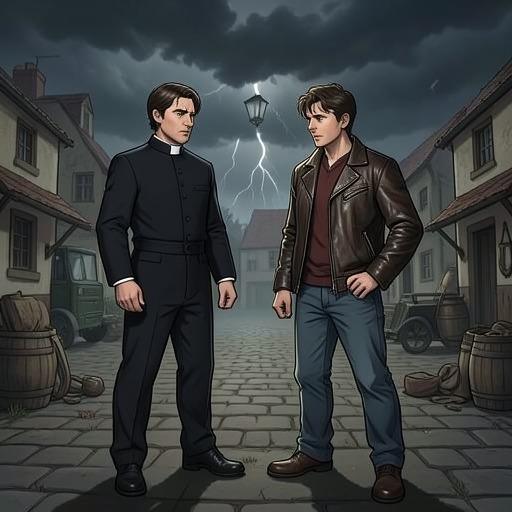
The decisive intervention came in 1976, during the Soweto uprising, when Thobela was fourteen. Senzeni, forbidden the house because Lawrence feared his influence, came secretly at night and took the boy away. He later told Lawrence that Thobela would return when he had become a man. During three months away, Thobela underwent initiation and was taken to places where Xhosa blood had been shed. When uncle and nephew returned, Lawrence felt that they no longer knew one another. For two years they lived under the same roof as strangers: Thobela kept to his own paths, quiet and secretive, while Lawrence remained unable to restore their former closeness.
Thobela’s Departure and Lawrence’s Account
In 1979, Thobela left home to go to war. The previous evening he had unusually said goodnight; by morning his bed was unslept in, some clothes were gone, and his room was empty. Senzeni told Lawrence that the boy had gone to fight. Lawrence’s anger at his brother and grief at being unable to father his son became entangled with his struggle to understand God’s place in the family’s division. He had been called to shepherd his people, he says, yet found himself with a son he imagined as a wolf among the flock. Later, he came to regard the experience as a humbling test, but that changed interpretation did not undo the loss.
The family history reaches the reader through Lawrence’s conversation with Dalindyebo, a state agent who comes to his home in Alice to ask about Thobela. When she identifies the subject of her questions, Lawrence’s face changes; he pauses for a long time, sits as though weighed down, and asks after his son’s welfare. Dalindyebo gives him vague answers to spare him distress. Lawrence makes coffee and sets out rusks and biscuits before beginning his account. It takes nearly fifteen minutes for him to find the start of the story; at first his words come haltingly, then gather into a sustained telling that seems to carry both confession and a plea for absolution. The delay and emotional force make his testimony more than background information: the history of Thobela is also Lawrence’s reckoning with his own love, choices, and perceived failure.
The Possibility of Return
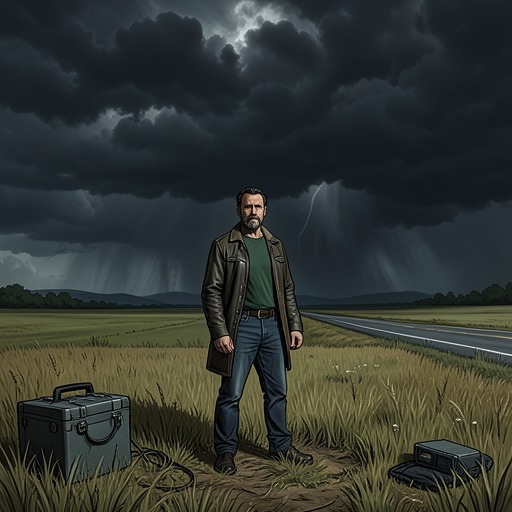
At the close of the novel, Lawrence is searching among his tomato plants for ripe fruit when he hears a motorbike and stands up. Two riders approach: a large man and a little boy. He thinks it cannot be, and prays briefly, but waits for them to remove their helmets before deciding whether he is certain. He is already preparing to call his wife across the back yards of Alice. The scene does not show the identification or reunion completed; it ends with Lawrence suspended between hope and the need for proof.
That unresolved arrival gives new weight to the long separation Lawrence has described. Thobela has imagined a different life with Miriam Nzululwazi and Pakamile Nzululwazi, a beginning away from poverty, crime, and the violence that has shaped his past. Lawrence cannot know, in the garden, whether the arriving riders mean that the family can be gathered again. His waiting is therefore both intimate and emblematic: a father who once watched his son leave now stands ready to recognize him, while the narrative leaves recognition just beyond the final moment.