Luke Powell
Heart of the HunterLuke Powell is the CIA’s senior officer in Southern Africa, operating under the public cover of an economic attaché at the American consulate in Cape Town. His dealings over Johnny Kleintjes and the hard drive headed for Lusaka reveal a practiced spy who guards what he knows, while his secret intelligence relationship with Janina Mentz connects him to the South African intelligence operation he is also trying to navigate.
Identity and Cover
Powell’s official title is Economic Attaché of the American consulate in Cape Town. Within the intelligence community, however, his actual rank and responsibility are widely understood: he is a Senior Special Agent in charge of the CIA in Southern Africa, with a remit extending across the region south of the Sahara. The gap between his diplomatic designation and his operational authority gives him room to move through official settings while remaining a consequential intelligence actor.
The novel presents him as a seasoned, recognizable presence rather than a faceless institution. He is African-American, jovial, somewhat plump, and round-faced, with grey at his temples and a Mississippi accent. His large gold-rimmed spectacles are a decade out of fashion and mortify his teenage daughter. These ordinary details lend his professional persona a domestic edge, but they do not make him transparent: when faced with a difficult exchange, his kind face can reveal nothing of the battle behind it.
An Intelligence Service in Contention
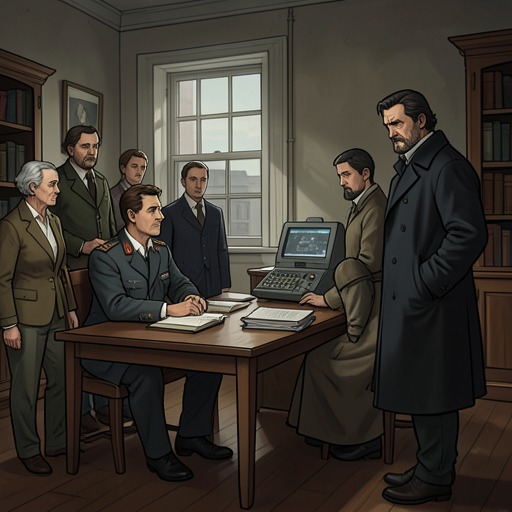
Powell’s appearances take place amid a contest in which South African and American agencies each seek to understand what the other knows. When the Director asks whether the alleged South African double agent Inkululeko works for Powell, he also asks why Powell would offer to buy intelligence from Johnny Kleintjes. The question exposes an apparent contradiction in the American position, but Powell does not resolve it; he only shakes his head. The exchange establishes the limits of what the novel confirms about his operation. The allegation is put to him, and his silence keeps the relationship between Inkululeko, Powell, and the proposed purchase unsettled.
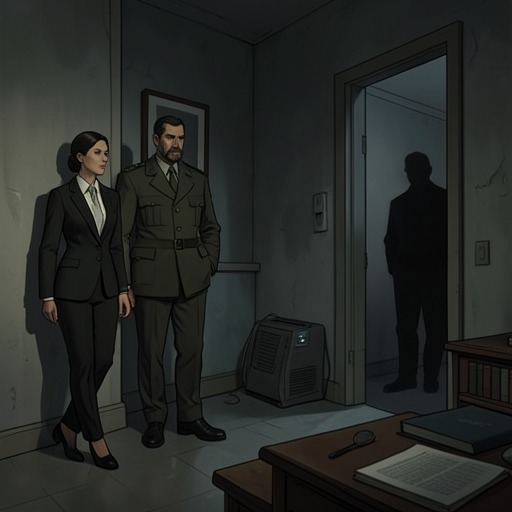
A photograph makes the conflict more concrete. Janina Mentz shows Powell a black-and-white image of Johnny leaving the front door of the American consulate. Powell recognizes the scene and responds with a brief acknowledgment; Mentz’s reply signals that the photograph is not incidental evidence but a point of mutual recognition. She has brought proof that Johnny entered the consulate, while Powell understands that she has brought it to confront him with what the South Africans know. Neither needs to lay out the entire intelligence picture for the other to grasp the stakes.
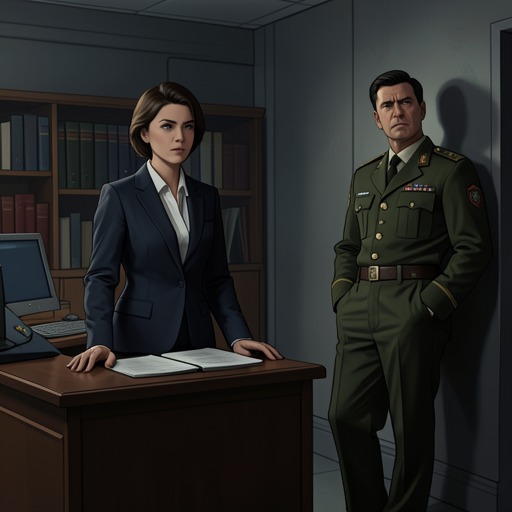
When the Director presses him about the apparent failure of the American operation, Powell admits only that they are still trying to find out. The narration frames him as a professional spy whose expression conceals the humiliation of acknowledging that the operation has gone wrong. His composure is therefore both a tool and a constraint: he can meet questioning without surrendering information, but his polished manner cannot erase the fact that the Director sees a botched job.
Johnny Kleintjes and the Lusaka Stakes
Powell’s connection to Johnny becomes more urgent when the Director raises the “mutual Lusaka problem.” The Director knows that Thobela Mpayipheli is heading there with a hard drive containing unknown material and argues that Powell, unlike the South Africans, knows what happened to Johnny. Powell describes Johnny as having been intercepted, a carefully limited account that confirms his knowledge of the event without identifying the parties responsible or explaining what happened next.
The exchange turns immediately from information to jurisdiction. The Director asks Powell, as a personal favor, to stay away from Lusaka. Powell challenges the premise that South Africa has priority there; the Director answers that the American side has already botched the job and must now get out of the way. The hard drive, Johnny’s fate, and the prospect of competing operations in Lusaka make Powell more than an observer of the pursuit. He is an interested actor whose knowledge may matter, but whose freedom to intervene is contested by the South African service.
Janina Mentz and the Private Channel
Powell’s relationship with Janina Mentz reveals another side of his intelligence work. Over eight months, she sends him information through secret channels, and his responses repeatedly praise her as brilliant, priceless, and wonderful. Janina remembers those affirmations while considering the danger of exposure: her identity as a traitor may be secured, and the consequences could reach her as well as others. Powell’s words have made her feel recognized, but the clandestine exchange places her in a precarious position that praise alone cannot protect.
Their connection carries both personal warmth and operational weight. Powell’s appreciation is not merely a comment passed in a public meeting; it arrives as part of an ongoing, concealed flow of information. Through Janina, his influence reaches into the South African unit, while her work for him creates a vulnerability inside her own professional world. The novel does not present the private channel as a simple friendship or disclose all its terms. Instead, Janina’s recollection makes clear that Powell’s approval matters to her even as the political risks of serving him grow.
Narrative Role
Powell’s defining characteristic is controlled partial disclosure. He recognizes Johnny in a photograph, acknowledges that the American operation has failed to find out what happened, calls Johnny intercepted, and refuses to settle the question about Inkululeko. Each admission sharpens the situation without closing it. His restraint keeps him difficult to read, but the consequences of his earlier choices and ongoing contacts are visible in the disputes that follow.
He also gives the intelligence conflict a personal scale. Behind the title of economic attaché stands a senior agent with a daughter, a dated pair of spectacles, a regional remit, and a secret channel to Janina. Yet the intimate detail does not soften the larger contest: Johnny is missing, the hard drive is moving toward Lusaka, and the Director is trying to keep Powell out of the way. Powell’s place in the story rests in that tension between recognizable individual and guarded representative of American power.