Miriam Nzululwazi
Heart of the HunterMiriam Nzululwazi is the emotional center of the home Thobela Mpayipheli hopes to return to: a loving partner to him and a constant, protective mother to Pakamile Nzululwazi. Her ordinary routines—meeting Thobela after work, preparing for the school day, and making sure her son is never left waiting—give the novel’s pursuit plot a human measure of what is threatened. When intelligence agents detain and interrogate her, memories of earlier police violence turn confinement into terror. Her attempt to leave an unlocked interview room ends in a fatal fall, making her death both a personal catastrophe and a consequence of the authorities’ mishandling of a frightened woman.
Home, partnership, and daily life
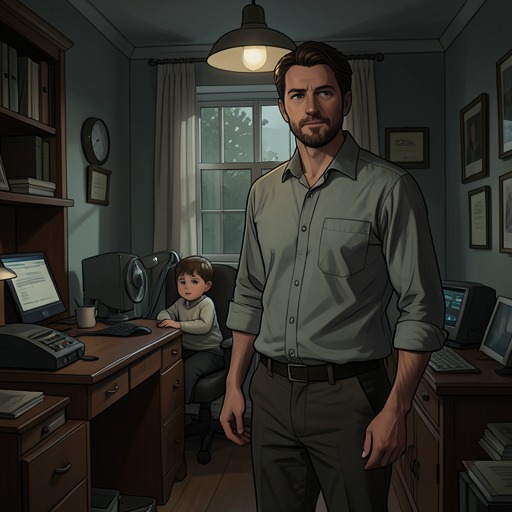
Miriam’s family life is introduced through small rituals repeated with care. At the end of the day, seven-year-old Pakamile waits at a street corner and runs beside Thobela’s Benly for the final thirty metres to the driveway. The boy waits solemnly until Thobela removes his helmet and lowers his tin workbox, then receives a sweep of the big man’s hand over his head and a greeting. His smile and embrace turn the arrival into a daily moment of happiness. Inside, Miriam is occupied with cooking, washing, or cleaning; she kisses Thobela and asks about his day. The scene establishes not simply a household but a pattern of mutual welcome, with Miriam’s domestic work and affection forming part of the home’s stability.
That stability is also audible in the family’s mornings. While rinsing Pakamile’s porridge bowl, Miriam remembers that before Thobela came, preparing for the school bus and her commute on the Golden Arrow into the city had been a silent, almost morbid rush. Thobela changed the atmosphere: he rose at dawn with energy, made coffee, carried steaming mugs to the bedrooms, and sang as he went, even when he was not in tune. His absence therefore removes more than a partner’s presence. It takes away the good humour that had become part of the household’s daily rhythm.
Miriam’s bond with Thobela is grounded in the life they have built rather than in complete knowledge of his past. In an interview, she says that he told her he had lived another life and done things he wanted to forget. She believes that, in the country’s circumstances, involvement in such matters was not difficult to understand, and says he would have told her more if she had asked. She has chosen not to press him: he is good to her and her son, and there is love in the house. Her account defines intimacy as trust and present conduct, not as a demand that every earlier part of a life be disclosed.
The threatened family and Miriam’s testimony
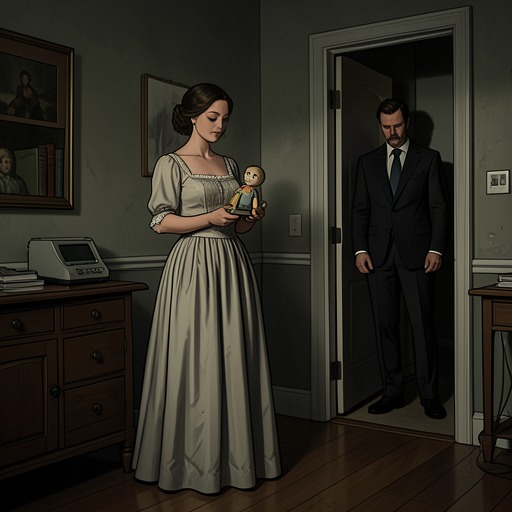
The threat to that life becomes visible when another woman is present in the small room as Miriam rises from an armchair to greet Thobela. The account records tension in Miriam, but does not identify the visitor in that moment. Later, the scene at the kitchen window gives her anxiety a more intimate form: she and Thobela can see Pakamile standing in the vegetable garden, and she observes that she never told him men go away; now he will learn for himself. The child’s presence makes the possible separation immediate. It is not an abstract danger to a fugitive’s household but a change a seven-year-old must try to understand.
Thobela answers by recognizing that his choice remains his own. He admits that he had said he could refuse, insists that nothing has changed, and tells Miriam he must choose the right way and act as an honourable man. His words place responsibility with him, while Miriam’s concern keeps the consequences for the family in view. Their exchange gives their partnership a moral dimension: affection does not erase the cost of his decision, and neither does the danger absolve him from choosing what he believes is right.
The novel also presents Miriam through an official record: an interview conducted by A.J.M. Williams at 21 Govan Mbeki Avenue in Guguletu on 23 October at 22:51. Her testimony is concise, but it preserves her own understanding of Thobela and the relationship. Later, when Allison Healy tries to persuade her that she supports Thobela, Miriam remains stern and guarded, answering few questions and avoiding others with a shake of the head. She eventually explains that Thobela is helping a friend and condemns what is being done to him. Her caution does not amount to indifference; she speaks only after deciding that Allison is on his side.
Detention and the return of earlier fear
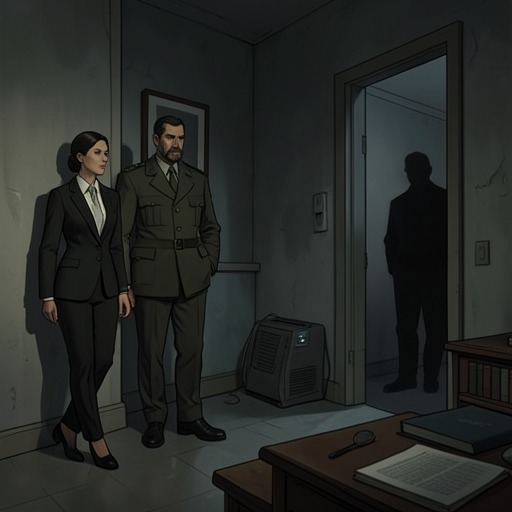
Miriam’s detention brings an older trauma into the present. Fifteen years earlier, she had endured a terrible night in the Caledon Plain cells. During the later interrogation, her hands grip the chair arms while her gaze seems unable to register the wall before her. She remembers a woman in the cell screaming without end, and a red-faced policeman forcing his way through the crowded, perspiring bodies with a truncheon raised over his head. The memory is specific and bodily: the scream had seemed to penetrate marrow and bone. Her fear in the interview room is therefore not a vague apprehension but a response shaped by a prior experience of confinement and police violence.
Janina Mentz tries to establish trust by addressing her directly and asking how she can convince her that the authorities want to help Thobela. The personal use of his first name is deliberate, an effort to reach Miriam through the bond she has already described. Yet the circumstances give the reassurance little power against the fear brought back by detention. Vincent Radebe, meanwhile, leaves the interview room and knows he must find the right words when he returns. The delay and uncertainty around the interview deepen the sense that Miriam is confined within an operation whose agents are not fully able to manage its human consequences.
As the pressure builds, Miriam imagines Pakamile waiting for her. She remembers that in six years she has never been late to collect him, and pictures the other children being fetched one by one while her son is left behind without knowing what has happened. Her tears begin in fear, then gather the possible loss of her home with Thobela: its love, security, and former perfection. The scene joins the two attachments that define her life. She fears both the immediate distress of her child and the destruction of the companionship that made their household feel safe.
Escape, death, and its aftermath
After an exit from the interview room, Miriam discovers that the handle will turn and the door will open. Shock makes her close it again; she returns to the chair and watches the door, her heart beating as she considers the possibilities. Later she suddenly stands, opens it, and goes out, closing it quietly behind her. The movement is brief and deliberate in its physical detail, but the evidence does not establish a settled plan or explain exactly what she intends. It does establish that she leaves while distressed and without an escort.
Radebe sees her below as he is about to go back through a fire door. She is suspended between the building and the drop, her legs swinging out over empty space and back toward the lower platform. Their eyes meet, and he sees fear in hers. Her body swings past the sixth-floor platform and falls without a sound. Later accounts describe the fatal fall as five storeys; the novel’s immediate scene gives it no speech or last words. The result is abrupt, while the preceding scenes make clear how much fear and family loss have accumulated before it.
Janina eventually states that Miriam is dead. Radebe accepts responsibility in a formal admission, saying his gross negligence in failing to lock the interview-room door allowed Miriam to leave without an escort in a disturbed state of mind and directly resulted in her fatal fall from the fire escape. His later statement also says that he is unsuited to the career and objects to the infringement of the basic human rights of both Thobela and Miriam. He cannot understand how the national-security purpose of the operation could justify its means. The admission makes his failure explicit, while also locating her death within a wider breakdown of judgment and responsibility.
Miriam’s death reaches Pakamile as the loss of his mother, and reaches Thobela as the destruction of the home he has left behind. Later, Allison Healy says that the authorities will call the fall an accident. The official description cannot contain the fuller chain of events the novel has shown: detention, recalled violence, fear for a child, an unlocked door, and an unescorted exit. At a later gathering, Allison watches Thobela carry his grief for Miriam with grace. Her perception of him has changed from fear of his past toward tenderness, formed in part by hearing how he met Miriam and how their love and companionship grew.
Narrative significance
Miriam is neither merely a domestic refuge for Thobela nor a source of information for the authorities. The novel gives her independent judgment: she knows that Thobela has a past he regrets, declines to interrogate him about it, and measures him by the care he shows her and Pakamile. Her reserve with Allison and her distress in custody likewise register responses to particular circumstances, rather than reducing her to a single function in the pursuit plot.
Her death is the story’s sharpest contrast between the intimate and the institutional. At home, reliability is measured in coffee carried to bedrooms, a greeting at the driveway, and six years of arriving on time to collect a child. In custody, the unlocked door and absent escort turn a preventable failure into a fatal fall. The loss makes the operation’s claims of purpose answerable to its treatment of actual people, while leaving those closest to Miriam to live with what the operation has taken. Her presence continues through that absence: in Pakamile’s separation from his mother, in Thobela’s grief, and in Allison’s altered understanding of him.