Operation Safeguard
Heart of the HunterOperation Safeguard was a disinformation operation designed to protect the identity of Inkululeko, a valuable source inside the South African government, by staging a hunt for that source. Janina Mentz developed the plan with the Central Intelligence Agency, using Johnny Kleintjes and a fabricated hard disk to create a credible trail. What began as a controlled intelligence exercise instead became a chain of deaths, public deception, and competing efforts to seize the disk. Its significance lies in the gap between the operation’s carefully managed appearance and the consequences that its designers could neither contain nor fully explain.
Origins and the source
The operation grew out of the position of Inkululeko, a source recruited by the Central Intelligence Agency in 1996 after tentative signals at an embassy function. The source’s stated motive was disillusionment with the South African government’s continued support for states the report characterized as rogue. The recruiter regarded that explanation with suspicion, but the source subsequently proved valuable. In the surrounding narrative, Inkululeko is Janina Mentz: an intelligence official who could provide access from inside the new government while maintaining a separate, secret relationship with the American agency.
The code name carried its own disinformation value. Inkululeko is a Zulu word meaning freedom, and earlier decades had seen persistent but unfounded rumors that a Zulu-origin mole inside the African National Congress and SACP Alliance passed information to both the Central Intelligence Agency and the apartheid government. The report stresses that the Central Intelligence Agency had no reliable source inside the movement at that time, and that intelligence from Eastern Bloc entities had kept acquiring such a source a low priority. In 1996, the source proposed the name precisely because it could revive those suspicions; the report notes that she was of European extraction and had no Zulu ties.
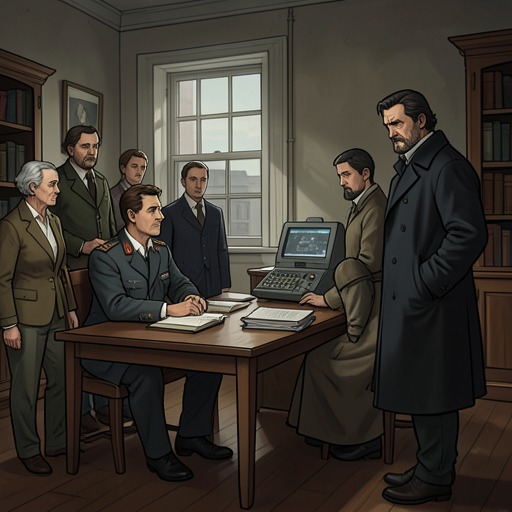
In 2000, the source’s importance increased when she was recruited as Chief of Staff: Operations for the newly created Presidential Intelligence Agency. The agency was established amid longstanding rivalry among the National Intelligence Agency, South Africa's Secret Service, and Military Intelligence (South Africa). Its staff came from outside the intelligence services, with The Director the sole exception and a veteran of the African National Congress and Umkhonto we Sizwe. The source’s new position gave her additional institutional reach, but it also placed the operation inside an intelligence structure already marked by competition and suspicion.
Design and intended deception
Inkululeko’s immediate problem was a transcript of the Mohammed interview in her sole possession. Suppressing it could become incriminating because both the police, to a lesser extent, and the interviewer knew something about it; that knowledge might surface later. The proposed answer was not simply to conceal evidence but to redirect suspicion away from the source through a disinformation initiative. The plan’s central paradox was that the source would appear to be the target of an investigation she had helped devise.
For that purpose, Inkululeko recruited Johnny Kleintjes, a retired intelligence officer from Umkhonto we Sizwe. He was a plausible intermediary from both South African and American perspectives: he had overseen MK and African National Congress intelligence computer systems before 1992 and later led the integration of systems belonging to the former apartheid government’s intelligence agencies. Persistent rumors held that he had retained sensitive files discovered during that process, including evidence of misconduct by both sides and a list of double agents and traitors. The report says he had apparently deleted the files only after making backups and securing them for possible future use. His history made him credible, while the prospect that he still possessed the missing data made him useful to the source.
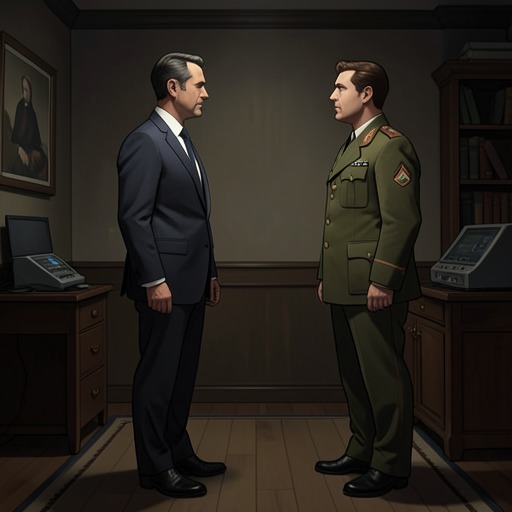
Under Inkululeko’s orders, Kleintjes was to prepare a hard disk containing fabricated intelligence about the source’s identity and approach the United States Embassy asking to speak with the Central Intelligence Agency. The agency would respond as expected: it would tell him not to return to the embassy, take his contact details, and arrange a meeting in Lusaka, Zambia, where the data could be examined. If the material seemed credible, the intended purchase price was $50,000, given in the plan as about R575,000. In parallel, Inkululeko recorded Kleintjes’s embassy visit and began surveillance of him, ensuring that the apparent investigation of the source had a documented trail.
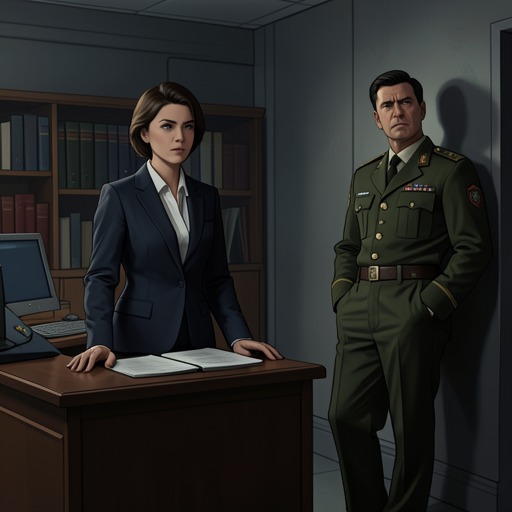
The plan also offered Inkululeko an internal political advantage. She intended to report the operation directly to the Minister of Intelligence, bypassing her immediate superior, whom the report describes as a strong candidate for the identity of Inkululeko. The Minister would then have grounds to suspend him while the matter was investigated. Because Mentz was next in line for his position, the report recognizes that this could elevate her into the National Intelligence Coordinating Committee. The operation thus joined source protection to a contest over institutional authority; its design was directed both outward, at the Central Intelligence Agency’s response, and inward, at the hierarchy that might expose the source.
Execution and breakdown
The operation appeared to proceed according to plan after Kleintjes visited the United States Embassy and contact was established for a meeting in Lusaka. Because Safeguard was considered controlled, the Central Intelligence Agency assigned only two people to the Zambia leg: Len Fortenso and Peter Blum, agents from its Nairobi office. Luke Powell supervised from Cape Town and later accepted responsibility for what followed. Fortenso and Blum confirmed that they had arrived in Lusaka after a chartered flight from Nairobi. That was the last contact the office received from them. Their bodies were found on the outskirts of the city two days later; the report records that they had been killed by gunfire.
The source’s deception had therefore secured the intended channel for the staged sale, but the deaths of the two agents turned a managed exercise into an unresolved loss. The report identifies the operation as not having gone according to plan, while its account of the meeting’s initial execution says that events had proceeded as intended. The contrast marks the moment when apparent control gave way to consequences the operation could not explain. The evidence supplied here does not establish who killed Fortenso and Blum or why; the report instead emphasizes that the office had limited the assignment to two agents because it believed the operation’s controlled nature made a larger deployment unnecessary.
Exposure and aftermath
Later, after Mpayipheli’s involvement in Operation Safeguard became public knowledge, the Central Intelligence Agency requested records from former East German Ministry for State Security files to check suspicions dating to 1984. Those records confirmed that Thobela Mpayipheli, also known by the code name Umzingeli, had assassinated Marion Dorffling. The Central Intelligence Agency’s response was to seek to settle the score: two specialized agents from its London office were sent to deal with the matter. This transformed Safeguard’s aftermath into another pursuit, one in which the original hard disk and the identity of the source remained entangled with a separate history of covert violence.
The London agents later went to Northern Botswana after a tip from Inkululeko. They acquired a vehicle and saw a Presidential Intelligence Unit Reaction Unit member waiting in ambush for Mpayipheli. Botswana authorities arrested that member; the agents waited by the road through the night but failed to intercept Mpayipheli or recover the hard disk. After returning to Cape Town, they received an urgent contact signal from Inkululeko, who used her car’s indicator in her home driveway to indicate that she wished to communicate. She supplied an address where Mpayipheli was apparently recovering from wounds sustained during his cross-country flight and gave the Central Intelligence Agency three hours before the Reaction Unit was expected to reach the same place. Even with that warning, the agents’ earlier failure to secure the disk remained unresolved.
Safeguard also became a struggle over how the state’s actions would be understood publicly. Mentz argued within the intelligence operation that the disk contained information about a high-level mole and that protecting the state required professionalism rather than sympathy. As news of Mpayipheli’s flight spread, the Minister of Intelligence worried that each broadcast made him seem more heroic while the government appeared authoritarian, and demanded a public-relations solution. The proposed counter-narrative emphasized his former links to organized crime, violence and intimidation, unexplained money, and repeated obstruction of the state. It framed the case as a choice between a dangerous fugitive and responsible former liberation fighters who had chosen to help build the nation.
The Minister later presented the operation as lawful under the 1994 National Strategic Intelligence Act and said that the planned operation had not required involving civilians. In her account, efforts had been made to avoid civilian involvement, but events had gone wrong; a civilian had died, possibly by her own hand, and the precise circumstances remained unclear. She promised an official inquiry and disciplinary proceedings if officials were found responsible, as well as care for the young dependent. This public explanation sits beside the operation’s documented use of fabricated information, surveillance, and a staged hunt. Safeguard’s central irony is not simply that a deception was exposed: the machinery built to direct suspicion and control risk helped set in motion consequences whose causes and responsibility remained contested.