Otto Müller
Heart of the HunterOtto Müller is an East German instructor and former mentor to Thobela Mpayipheli, remembered both for their unusual personal bond and for teaching him to think strategically. Nearly twenty years after their training, Müller’s lesson about changing a pattern helps Mpayipheli decide how to act when the authorities’ pursuit threatens to make his choices predictable.
Identity and Training
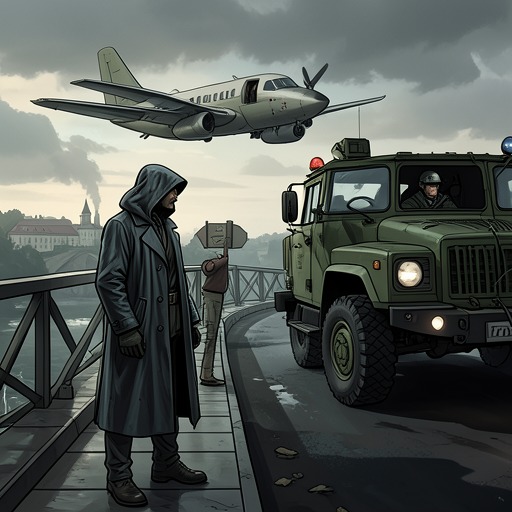
Müller taught Mpayipheli when he was one of ten operators; the others came from Eastern Bloc countries including Poland, Czechoslovakia, and Romania. The narrative recalls Müller as an East German Ministry for State Security man associated with Odessa. His appearance is strikingly described: fine, almost feminine features beneath a grotesquely bald head. He spoke English with a heavy German accent and a stilted manner.
Mpayipheli was the first Black student Müller had taught. The difference between them did not prevent a connection. Müller was fascinated by his student, while Mpayipheli met the instructor’s formality with a deliberately comic imitation of German speech. Müller laughed at the performance and praised Mpayipheli’s attitude, recognizing a quality that the younger man did not yet understand in himself.
A Bond and a Lesson
The recollection presents the relationship as more than a transfer of professional knowledge: there was a bond between Müller and Mpayipheli. Müller taught him to think through game theory, explaining the Nash equilibrium as a condition in which neither player has reason to change strategy. In a contest such as chess, he warned, concentrating only on the opponent’s moves traps the thinker inside the opponent’s pattern. The alternative is to examine one’s own strategy and find a way to alter the balance.
That teaching gave Mpayipheli a compact principle for action: be the actor rather than the reaction. Müller’s lesson is practical rather than merely theoretical; it urges the operator to consider possibilities, control his own choices, and disrupt the expectations that make an opponent’s strategy effective.
Influence During the Flight
Müller returns to Mpayipheli’s mind on a night road in the Karoo, nearly two decades after the instruction. At that point, reports describe Mpayipheli as armed and dangerous, although he has no pistols. Faced with the uncertainty of whether a pump attendant has reported him, Mpayipheli begins to consider the possibilities and feels the tension of the pursuit. The remembered voice of his former instructor redirects that anxiety toward strategy.
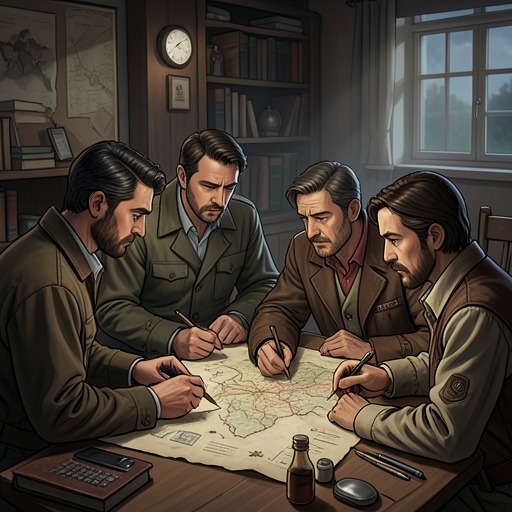
The lesson does not give Mpayipheli the information he needs to choose a new route: he knows the pursuers expect him to follow the N1, but he still needs a road map to discover his options. Its importance lies instead in how it frames the problem. To escape the pattern, he must first learn what alternatives are available. Müller’s influence thus resurfaces as a method of thought at a moment when Mpayipheli is trying to avoid becoming merely a predictable response to the hunt.