Pakamile Nzululwazi
Heart of the HunterPakamile Nzululwazi is Miriam Nzululwazi’s son, a child whose everyday life with Thobela Mpayipheli gives the novel a measure of tenderness amid flight, surveillance, and loss. He is not simply the person the adults mean to protect: his routines, questions, and attachment to Thobela show what is at stake when that ordinary life is broken. The vegetable garden, the atlas, and the empty place where his mother should be form a small, intimate history of care—and of its sudden disappearance.
Home and Daily Life
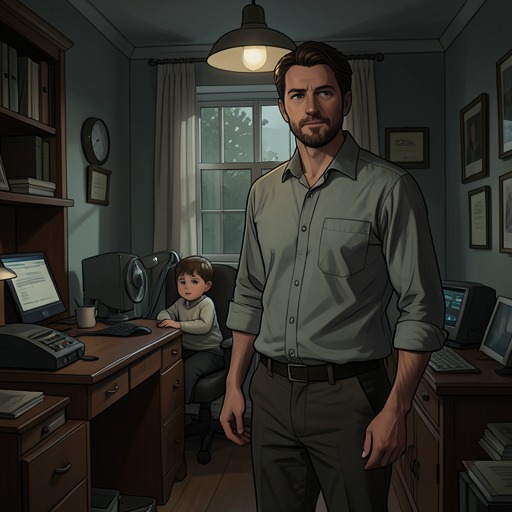
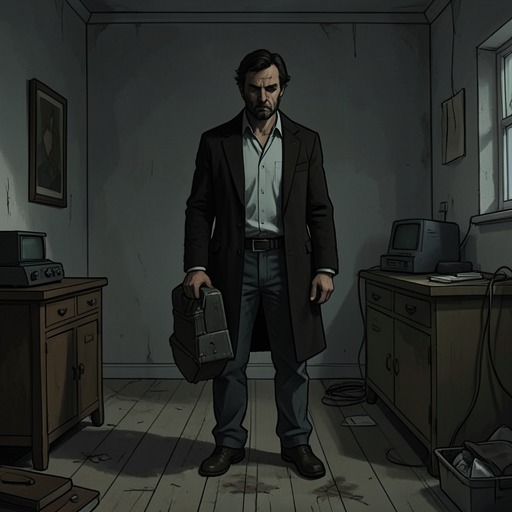
In Guguletu, Pakamile waits at a street corner for Thobela to return from work, then runs beside his motorcycle for the last stretch to the driveway. He watches Thobela remove his helmet and lower a metal workbox, receives the familiar greeting, and embraces him. The welcome is part of a repeated evening pattern: Thobela goes inside to Miriam, who is occupied with household work, while Pakamile waits for his clothes to be changed and for their next activity together. Their shared phrase for it is going to the farm.
The farm is a vegetable garden in the yard, and its small daily changes give Pakamile and Thobela a common project. They inspect sweetcorn forming cobs, runner beans, carrots, squashes, butternuts, and watermelons. When they pull an experimental carrot, Thobela judges it too small; Pakamile rinses it later to show Miriam and eats it raw. They check for insects and signs of disease on the leaves. Thobela does most of the explaining, while Pakamile listens with solemn attention. Miriam’s joke about the runner-bean variety called Lazy Housewife joins the family’s work to its humor and conversation.
The garden is one expression of Thobela’s imagined future for the three of them. He hopes that he and Miriam can take Pakamile to the Cala River Valley and begin again, away from the poverty, crime, and exhausting work that shape their present. That plan is not yet a reality, but the boy’s participation in the garden makes the projected future concrete: it is pictured not as an abstract escape but as a life in which Pakamile can grow, learn, and be cared for.
Learning and Attachment
The family’s evenings also include books and maps. At the kitchen table, Thobela and Pakamile study a large blue atlas and National Geographic. Miriam sits a little apart with needlework in her lap. On one evening they read about Chile, with Thobela reading the English text and translating it into Xhosa paragraph by paragraph so Pakamile can learn English. They then locate the country in the atlas and turn to a more detailed map. Their sessions usually stop after two pages, because Pakamile’s concentration is short unless the subject is a frightening snake or another predator. His education is thus both deliberate and responsive to what captures his attention.
Pakamile’s trust in Thobela is evident in the way he expects their routines to continue. When Thobela returns to the kitchen after speaking with Monica Kleintjes, he goes first to see the boy. Pakamile is on his small bed with a schoolbook and asks whether they are going to the garden that day. The question carries the confidence of a child who expects an ordinary promise to be kept. It also gives the approaching departure a domestic measure: before Thobela leaves to help an old friend, he must explain his absence to the person most accustomed to his daily presence.
Thobela tells Pakamile that he will be away for a day or two and asks him to look after Miriam and the vegetable garden. Pakamile accepts the responsibility and asks whether Thobela will bring him cake. The exchange is affectionate and practical, but the boy’s attention is also drawn to the blue sports bag by the door. The objects around him register what he cannot fully control: the atlas and garden belong to shared routine, while the packed bag signals that routine is about to be interrupted.
Separation and Uncertainty
Miriam’s detention turns the household’s dependable schedule into a source of distress. In the interview room, she imagines Pakamile waiting at school for her to collect him, as she has done every day for six years, and fears that he will be the one child left behind. Her fear rests on the steadiness of their bond: he has not had to wonder whether his mother will come. She also grieves the family life she shares with Thobela, including the evenings in the garden and at the kitchen table. Pakamile is not present in the room, but the prospect of his waiting gives her separation a concrete and immediate cost.
When Miriam fails to arrive at the Guguletu Pre-school and Child Care Centre, a worker reports that a man identifying himself as Vincent Radebe has come to take Pakamile, claiming there has been an accident. Radebe cannot tell the boy that his mother is dead. Instead, he says she has to work late and has asked him to look after Pakamile. The explanation offers temporary reassurance while leaving the child without the truth or a clear account of what has happened.
Radebe takes Pakamile to his flat and tells him that he will return the next day. At McDonald’s, he asks whether the boy has other family in Cape Town. Pakamile says he has none. When Radebe asks about Lusaka, Pakamile explains that Thobela showed it to him in the atlas and calls Thobela the cleverest man in the world. The detail links the child’s faith in Thobela to their reading together, while Radebe’s questions expose how isolated Pakamile may be from familiar relatives in the city. At the flat, Radebe makes up a bed for him and puts on television, but Pakamile says he does not want to watch even as his eyes remain fixed on the screen.
Care, Disclosure, and Return
Radebe later brings Pakamile to Allison Healy. At a meeting involving the Minister, the child clings to Allison’s hand and says he wants to stay with her rather than be left with the Minister’s secretary. The secretary offers to tell him a story, but the moment makes clear that reassurance from an unfamiliar adult cannot immediately replace the security he seeks. The group arranges for a child psychologist, familiar women from the day-care centre, and Child Welfare personnel to be present when the news is broken. The plan recognizes that telling Pakamile about the tragedy requires care from people and places he already knows.
Radebe’s written admission later establishes the extent of his intervention: without official authorization, he took Miriam’s six-year-old son into his care and kept him overnight, then handed him to personnel of the Cape Times the following day. He says he acted alone. The account makes Pakamile’s movement between adults more than an incidental rescue detail; it is also part of Radebe’s breach of the operation and his attempt to act on his own judgment. For Pakamile, however, the central fact is that decisions about his care are made around him while he is separated from both parents.
The story returns to the question of Pakamile’s safety at the Waterfront, where Thobela demands to know where the boy is and insists that he be brought there the next morning. The threat attached to the demand is directed at the hard disk, but the exchange places Pakamile at the center of a high-stakes negotiation between adults. Later, when Thobela sees him, the emotion of the moment nearly overwhelms him. The reunion is conveyed through recognition and feeling rather than an account of everything Pakamile has endured.
The closing image carries Pakamile and Thobela by motorcycle to the garden of Thobela’s father, Lawrence Mpayipheli, in Alice. Lawrence is among tomato plants when he hears the engine and sees a large man and a small boy arrive together. The sight makes him hope that the visitors are the people he thinks they are. It does not resolve every loss in Pakamile’s life, but it answers the earlier image of a child waiting in vain with a return to a garden and a family threshold.
Narrative Significance
Pakamile’s character is built through repeated acts of ordinary attention: waiting at the driveway, listening to Thobela’s lessons, inspecting vegetables, asking for cake, and expecting his mother to collect him. These details establish that the threatened life is not an idea but a network of habits and relationships. When the routines disappear, the loss is measured in the questions he continues to ask and the familiar adults he can no longer count on reaching him.
His closeness to Thobela also gives the adult’s choices a personal scale. Thobela speaks of honour and of choosing a different life, while Pakamile’s trust rests on what he does each day: returns home, shares knowledge, and tends the garden beside him. The boy’s admiration is explicit when he praises Thobela’s intelligence, but it is also shown in his readiness to follow him into the garden and learn. At the end, Pakamile’s presence beside Thobela turns the hoped-for return into a visible possibility. The garden that began as a daily lesson becomes an image of continuity after separation.