The South African liberation struggle (the Struggle)
Heart of the HunterThe South African liberation struggle (the Struggle) reaches across generations in the novel: it draws Thobela Mpayipheli from his family into armed resistance, binds him to comrades such as Johnny Kleintjes, and leaves its consequences in the lives of veterans and their children. Its legacy is not presented as a single, settled victory. Political freedom coexists with material hardship, and memories of resistance continue to shape choices long after the fighting.
Historical Setting and Inheritance
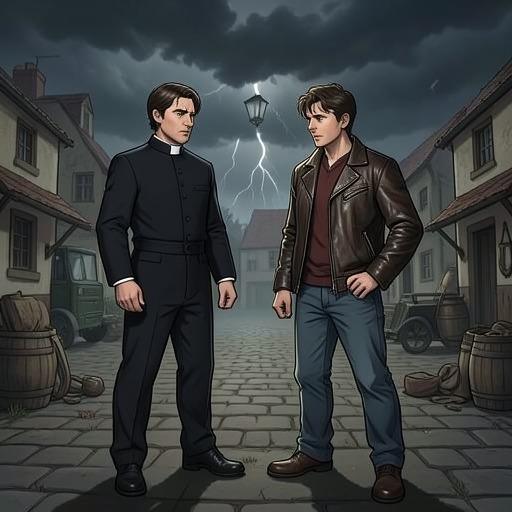
The history begins in the Ciskei, where Thobela and the narrator grew up in the Kat River Valley. Both were fourteen in 1976, a year marked in their account by the Soweto uprising and a sense that change was coming even to their remote valley. Thobela was a natural athlete and the son of a Dutch Reformed Mission Church minister, with family connections to Xhosa royalty. The novel places his political formation within a particular family and community rather than treating it as an abstract national history.
That family already contained opposing ideas about how to meet conflict. Thobela’s father, Lawrence Mpayipheli, was remembered as a thoughtful peacemaker; his uncle, Senzeni, as impatient, fiery, and drawn to battle. Their different temperaments had roots in childhood, in poverty and pride, shared Xhosa traditions, and initiation. The contrast anticipates the divide that the liberation struggle would open between a father seeking peace and a son drawn toward armed resistance.
Thobela’s Recruitment and Departure
In 1976, during the period of the Soweto uprising, Senzeni came secretly to take fourteen-year-old Thobela away. Lawrence later recounted that his brother had been forbidden from the house because of his influence. Senzeni had Thobela initiated and took him to places where Xhosa people had been killed. They were gone for three months. When they returned, father and son no longer recognized one another in the same way; they lived as strangers for the next two years.
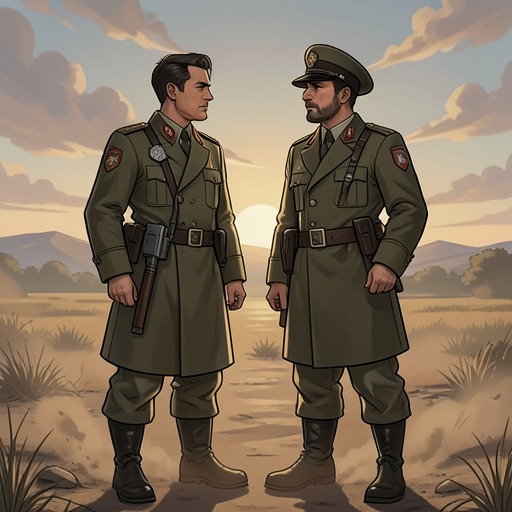
Thobela left for the war in 1979. The evening before, he said goodnight to his father, an unusual gesture; the next morning his bed was unslept in and some of his clothes were gone. Senzeni told Lawrence that his son had gone to fight, precipitating a bitter family quarrel. In later messages, Lawrence heard that Thobela had been noticed by the movement’s leaders and had gone abroad to learn how to fight for his country. Another account identifies Russia and Germany among the distant places where he served as a soldier. These details make the struggle both local and international: it begins with a child taken from his home and leads him far beyond it.
Exile, Comradeship, and Military Service
The effects of the conflict extend beyond those who fought. Johnny Kleintjes and Thobela had been together in the liberation struggle, a shared history that endured as a bond between them. When Johnny’s daughter, Monica Kleintjes, later asked Thobela to carry something to her father in Lusaka, the request rested on that earlier comradeship. Monica’s life also bears the mark of exile: she was born in London to an exiled family and grew up there. The political struggle thus appears not only in combat and recruitment but in the displacement and continuing relationships of families living across borders.
Thobela understands his obligation to Johnny as a debt of honor. When Miriam Nzululwazi reminds him that he has said he can no longer live by violence, he agrees that refusing the request is possible and that his choice must be his own. He nonetheless argues that honoring a comrade is part of the same moral life as caring for Miriam and Pakamile and earning a lawful, nonviolent living. Their disagreement gives the struggle’s legacy an intimate form: an old allegiance presses against Thobela’s attempt to build a different life with his family.
Freedom and Its Unfinished Promise
The novel also asks what victory delivers to those who fought for it. Orlando Arendse explains that an unemployed veteran might turn to a drug baron after committing his life to a struggle whose reward was supposed to be freedom. Freedom, he observes, does not itself feed people or provide a house or a car; townships can remain impoverished even after political change. His account connects Thobela’s service to the limited opportunities of the new South Africa without reducing his later choices to circumstance alone.
The contrast is sharpened by the different legacies of service. Thobela is described as a veteran who fought for others, but the novel also presents a family history in which a man broken under questioning by the security police disclosed names and places. His son, Captain Tiger Mazibuko, remembers that history through his father’s shame and violence at home. These histories prevent the past from becoming a simple division between heroic fighters and villains: resistance, repression, betrayal, and their consequences enter family life in different ways.
Memory and the Work of Rebuilding
The struggle persists through what characters remember and transmit. Lawrence’s account turns his son’s departure into a wound of separation and self-reproach; the narrator’s recollection returns to their shared childhood in the Kat River Valley and the charged atmosphere of 1976. Miriam Nzululwazi’s earlier detention after she joined a wage protest also returns years later when she is questioned by intelligence agents. Her fear in the present is linked to an earlier encounter with police custody, showing how political repression can remain active in memory after the immediate event has passed.
Against this inheritance, Thobela imagines a fresh beginning with Miriam and Pakamile and hopes that a person who rejects a life of predation might help shift the balance toward rebuilding. The hope is tentative rather than triumphant. The novel’s account of the South African liberation struggle holds together the courage and comradeship that shaped Thobela, the family and social costs of his departure, and the unfulfilled material promise confronting veterans afterward. Its history continues not as a finished chapter but as a pressure on the choices people make in the present.