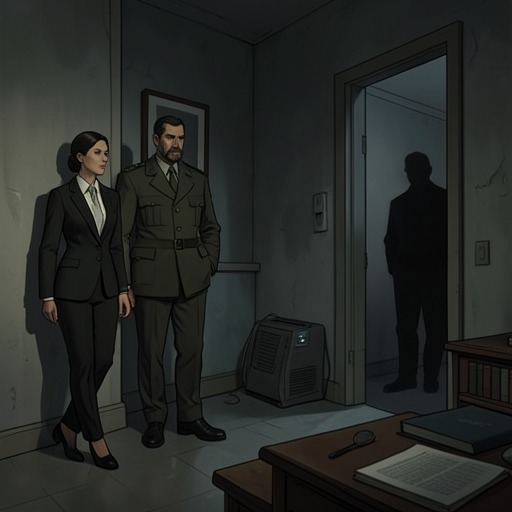
Thobela Mpayipheli
Heart of the HunterThobela Mpayipheli is a trained assassin whose former identity as Tiny and operational name Umzingeli shadow a later attempt to abandon violence. The novel makes that change more than a change of name: after a life shaped by clandestine killing, he decides that his past cannot be undone but that he can choose what to do next. His flight across southern Africa tests that decision, while his final encounters bring both the old fighter and the man seeking another life back into view.
Identity and Background
Mpayipheli’s history begins in the South African liberation struggle and extends into the Cold War intelligence world. A retrospective account says he enlisted at seventeen. While other recruits received general infantry training in Tanzania and Angola, he was selected for specialized instruction in the Soviet Union and East Germany. The same account describes the Soviet KGB’s interest in his training and says East German intelligence later took him on. A separate CIA assessment identifies him as an MK soldier lent by the African National Congress/SACP alliance to the Soviet KGB and the East German Ministry for State Security as a specialist in covert killing. These accounts establish the exceptional reach of his training, while also presenting his life through the assessments and labels of intelligence agencies.
The record of his violence is severe. One CIA summary calls him a ruthless Cold War assassin responsible for at least fifteen deaths; another says the agency had information from Russian and Eastern European sources that led it to conclude, or strongly suspect, that he was responsible for a particular murder. The qualified language matters: the account distinguishes between what the agency knew and what it believed. Mpayipheli is therefore introduced not only through his own actions but through an intelligence apparatus that tracks, classifies, and interprets him.
Before he became Thobela, he was called Tiny. An account of his earlier role describes Tiny as the crew’s firepower and physical intimidation: he rode shotgun, was an exceptionally capable sharpshooter, and was remembered as strong and dangerous. Later, Mpayipheli understands the rejection of that name as part of a deliberate break with his past, like shedding a skin that remains behind as a reminder. Thobela, by contrast, is his christening name. The difference between the names marks an attempted self-reinvention, but the old identity never disappears entirely.
The Hunter and the Trained Fighter
Umzingeli, meaning “the hunter” in Xhosa, was Mpayipheli’s code name. A friend recalls having suggested it, and remembers him as a friend rather than only as the feared figure described in operational files. The name condenses the contrast at the center of Mpayipheli’s history: the hunter is both a highly trained operative and a person who may later choose a different purpose. Near the end, the old name is spoken again in a confrontation, showing that it remains available to others—and to Mpayipheli—even after he has tried to leave it behind.
His training gives him a disciplined way of reading danger. On a Karoo road, under pressure, he recalls instruction from Otto Müller, an East German instructor who taught him about game theory and the Nash equilibrium. The lesson is that players who have no reason to change their chosen strategies remain in equilibrium; merely second-guessing an opponent does not break it, because anticipation is already part of the strategic contest. The memory does not turn the passage into a tactical manual so much as reveal how training persists inside him: faced with uncertainty, he reaches for a framework learned long before his attempt to live differently.
That practiced alertness is visible in a crowded passenger scene. Mpayipheli reads the agents’ conduct as evidence that they want to remove him quietly rather than cause a public disturbance. When one reaches for the sports bag, he notices the opening of the man’s jacket and the pistol grip inside. He takes the weapon and turns the agents’ plan against them, while nearby passengers remain unaware of what has happened. The episode displays the speed and precision that made him valuable to intelligence services, but also the continuing cost of being able to respond to danger by returning immediately to the skills of the past.
From Assignment to Flight
In another encounter, Mpayipheli stands behind an American in the crush of the Métro, while his thoughts are far away on the Transkei coast, where great waves break. The contrast places distance between the crowded present and a remembered landscape. When he addresses Marion Dorffling, his words declare that he knows who his enemy is and that the assignment has been accepted and committed to memory. The exchange frames assassination as a task prepared through study and identification, not as an impulsive act.
Later, a bald man appears in a doorway and Mpayipheli fires. He dismantles the weapon and packs it away in forty-seven seconds; in the same moment, he recognizes that he cannot continue waging war in this way and that there is no honour in it. The brief interval is consequential because the efficient completion of the act does not settle the question of what kind of person he will be. Instead, technical competence and moral rejection occupy the same scene: he can still perform the work, but no longer accept its justification.
Mpayipheli’s later identity as a fugitive motorcyclist is bound to a favor for a friend. An observer describes him as having evaded the law across two thousand kilometres to help that friend. This journey is not presented simply as escape from the consequences of his past; it places his capacities at the service of a personal obligation. At a petrol station in Petrusburg, he recognizes the growing signs of anxiety in himself, breathes deeply, and brings them under control. He pulls in as two F 650 GS riders leave, then hears the attendant remark on seeing him that he is Black, like the speaker. The brief exchange situates the conspicuous fugitive within an ordinary public encounter without resolving the attention his appearance attracts.
When asked why he left Orlando, Mpayipheli’s change is treated as the central question: what happened, and what changed? His departure is thus a break requiring explanation, not merely a new stage in the same career. On another occasion he states plainly that he is finished with fighting, violence, shooting, beating, and hatred, especially hatred. The declaration gives a name to what the earlier act of firing had already exposed: his refusal concerns not only the physical acts of violence but also the animosity that sustains them.
Relationships and Recognition
Mpayipheli’s identity is shaped by people who remember, trust, or depend on him. A young person explains that their father had said more than once that, if anything happened to him, they should seek Mpayipheli because he was the only man the father trusted. The statement gives his reputation a counterweight to the intelligence files: the same man associated with lethal work is also regarded as someone to whom a family can turn. The passage does not erase the danger of his past; it establishes that personal trust exists alongside it.
A friend looking at a photograph identifies Mpayipheli as a friend, with a faint smile. The recollection differs sharply from the descriptions of him as a natural-born threat or a ruthless assassin. In another intimate moment, Zatopek van Heerden sits beside him on a flight to Cape Town and holds his hand. Earlier, after a night spent confronting his own justifications, Mpayipheli goes to Van Heerden’s room before six in the morning and tells him that he is finished. Van Heerden’s response appears to underestimate the possibility of change, prompting Mpayipheli to ask whether he is believed. Their exchange makes the decision to change relational as well as private: he announces it to someone whose judgment matters to him, and asks that the possibility be taken seriously.
Mpayipheli’s response to a later confrontation also reveals how readily his former identity can be summoned. He recognizes Tiger Mazibuko by matching the voice and rage to the man approaching him from a shopping-centre entrance. In a separate close encounter, his opponent carries a knife. Mpayipheli says Umzingeli, then lowers his voice and says Mayibuye. The moment joins the name of the former hunter to a phrase associated with his older political world, without making either one a simple guide to what he has become.
Change and Narrative Significance
After sleeping and waking, Mpayipheli fights again, this time against his own self-justification and rationalization. The passage links that struggle to the dead left behind by his past, from whom a different desire emerges: he would be a farmer, a nurturer. He does not imagine that a new occupation can erase what happened or blot out who he was. His claim is narrower and more demanding: he can determine where and how he goes from here, step by step, as a task lasting a lifetime. The decision is grounded in responsibility rather than absolution.
The following morning, he wakes Van Heerden and says he is finished. His astonishment at being underestimated carries the vulnerability of the moment: the former assassin knows that declaring change cannot by itself make others believe it. The farmer he imagines is not a recovered innocence but a future chosen in full awareness of the past. That distinction gives his transformation its force while leaving its completion uncertain.
The story’s later images refuse to reduce him to either identity. After an encounter across the border, he ensures that the Oryx has landed beyond the border by checking a road sign. With the Rooivalk helicopters turned back and the route between Lobatse and Gaborone quiet, he makes the men lie face down and struggles to get the BMW GS upright. Fever and painkillers leave him moving through the task by a mental checklist. The scene retains the fugitive’s practical discipline, yet places it in the service of getting onward rather than returning to an intelligence mission.
Near the end, an observer sees Mpayipheli being carried on a stretcher and wonders what the assassin looks like, recalling that Miriam Nzululwazi had wept in her arms and that he had crossed two thousand kilometres to help a friend. On the flight back to Cape Town, Van Heerden sits beside him and holds his hand. Then Mpayipheli sees Pakamile, who sees him in return, and emotion threatens to overwhelm him. The novel brings the public image of the assassin, the private bond of friendship, and the response of a child into the same closing movement. Umzingeli remains part of his history, but the ending gives equal weight to the connections and future he has tried to protect.