Thobela Mpayipheli and Miriam Nzululwazi: partnership and shared home
Heart of the HunterThobela Mpayipheli and Miriam Nzululwazi’s partnership gives Thobela a home and a possible future beyond violence, but it also exposes the human cost of the obligations that draw him back into danger. Their life together is built through ordinary acts of work, affection, and care for Miriam’s son, Pakamile. When Thobela leaves to repay a debt of honour to Johnny Kleintjes, the couple’s shared commitment is tested by a choice he considers necessary and Miriam fears will take him from the family for good.
A shared home and its daily rituals
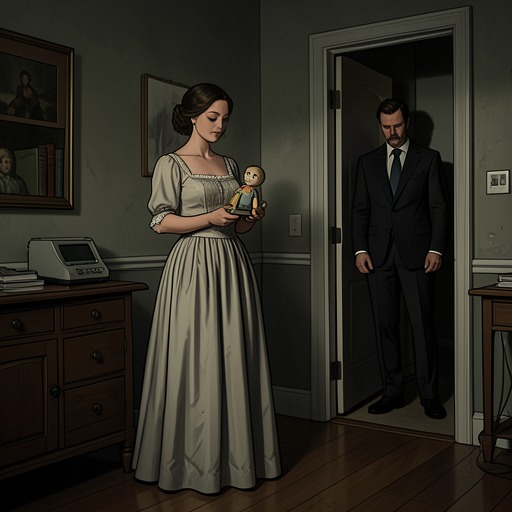
Thobela’s road home runs through the traffic toward Guguletu and Miriam Nzululwazi. At the end of the working day, Pakamile waits at a street corner and runs beside Thobela’s small Honda Benly for the last stretch to the driveway. Thobela takes off his helmet, sets down his tin workbox, greets the boy, and sweeps a hand over his head. Pakamile’s embrace and smile turn the return home into a daily source of happiness. Inside, Miriam is occupied with cooking, washing, or cleaning; she kisses Thobela and asks about his day. Their shared life is presented not as an abstraction but as a repeated pattern of work, welcome, and attention.
The garden extends that domestic routine into a shared project between Thobela and Pakamile. Once Thobela has changed, the two go out to inspect the vegetables and discuss what has grown. They check sweetcorn, beans, carrots, squashes, butternuts, and watermelons, look for insects and disease, and sometimes test a carrot before it is ready. Thobela explains what he sees while Pakamile listens with solemn concentration. Miriam notices how deeply attached the boy is to him; Thobela recognizes that the feeling is mutual and that his love embraces Miriam and Pakamile together. The garden makes visible the future they are trying to cultivate: patient, shared, and rooted in a home.
Miriam and Thobela live together, as Miriam confirms when questioned. Her understanding of their partnership does not depend on knowing every part of his past. She knows that he has another life and has done things he wants to forget, and that he once belonged to Umkhonto we Sizwe. She says she does not want to know the details of his criminal past because he would have told her if she had asked. What she trusts is the person he is at home: good to her and to her son, in a house where there is love. Her refusal to demand a full account of his history is part of the relationship’s intimacy, but it also leaves the danger of that history unresolved.
The debt that interrupts family life
The couple’s most consequential conflict begins when Thobela tells Miriam that he owes Johnny Kleintjes. She reminds him that he had said he could no longer live his former life and had finished with it. Thobela agrees that he had meant what he said: he believes he can refuse, and that accepting or declining is his choice. Yet he decides that repaying Johnny is necessary to remain an honourable man. In his view, honour includes his lawful, non-violent work and his responsibility to Miriam and Pakamile, but it also requires him to meet a debt to a man who matters to him. The conflict is not a rejection of the family so much as a collision between two obligations that Thobela cannot reconcile without leaving.
Miriam fears what the departure will mean for Pakamile as well as for herself. From the kitchen window they can see the boy standing in the vegetable garden. She says she never told him that men go away, and now he will learn it for himself. Thobela promises that he is coming back. When Miriam reminds him of his earlier pledge to leave violence behind, he answers that choosing the right course is difficult but remains his responsibility. She says she does not want to lose him and adds that Pakamile cannot afford to lose him either. Her fierce embrace gives the disagreement its emotional force: she understands what Thobela believes he owes, but the family will bear the risk of that decision.
As he prepares to travel, Thobela holds Miriam close and says he will have to stay overnight in Johannesburg before he can fly to Lusaka the next day. She does not comment on the money he asks about; she holds him tightly instead. He promises to call from the hotel. At last she steps back, kisses him, and asks him to come back. The farewell repeats the earlier tension in a quieter form: both know that his promise expresses his intention, not a guarantee that the journey will leave their shared life unchanged.
Separation, grief, and the imagined return
Thobela’s journey takes him away from the household whose routines have given him a different sense of himself. On the road beyond Touws River, he calculates fuel stops and the distances to Laingsburg and Beaufort West, then considers the long route toward Bloemfontein. Even amid those practical decisions, his thoughts turn to the possibility that people can change. He imagines taking Miriam and Pakamile to the Cala River to begin again, away from poverty, exhausting work, crime, and corruption. This hope makes the separation more than a pause in domestic life: Thobela is trying to carry the possibility of a future home with him while travelling through a world that repeatedly puts him in danger.
That future remains vulnerable to the risks of his route. The pursuit by two helicopters drives him toward a dense rainstorm; the weather reduces his visibility, but the helicopters eventually fall behind. Later, concealed beneath a bridge, he worries that the hours lost will make the journey to Lusaka harder. He has a passport but no papers for the BMW R 1150 GS, and crossing national borders may require time-consuming bargaining or a more dangerous attempt to evade the official crossings. These episodes do not change the reason he left, but they sharpen the distance between his promise to return and the circumstances he cannot control.
While hidden in the back of Koos Kok’s Chevrolet El Camino, Thobela thinks about the self-control that kept him from acting on an almost irresistible impulse. He imagines telling Miriam that he is safe and telling Pakamile stories about the journey. The thought of sharing those experiences with them shows that the relationship remains present even when neither can know what is happening to the other. His inward account also connects the family he longs to return to with his developing belief that a person’s nature need not dictate how it is used. He has begun to imagine a different life with them, even as the journey continues to draw on the capacities formed by his violent past.
Miriam’s death and Thobela’s reckoning
The relationship’s decisive loss is disclosed when Allison Healy tells Zatopek van Heerden that Miriam is dead. Thobela is not present in that exchange, but the news defines what he has lost and transforms the meaning of his earlier assurances to return. Allison later condemns him for leaving a woman and child to pursue a journey across the country, fearing that Pakamile may be left without either parent. Her anger registers the consequence of Thobela’s departure from the family’s perspective: his debt and mission have become inseparable from the possibility of permanent absence.
Thobela’s grief is also visible in the way others come to understand him. At a meal in Van Heerden’s kitchen, Allison sees him in a convivial domestic setting, eager for the food and comfortable among friends. She recalls that he had spoken of meeting Miriam and of the love and companionship that grew between them. Her perception changes: the man whose past had frightened her now appears as someone carrying grief with restraint. The scene’s ordinary pleasures—food shared at a table, conversation, and music in the sitting room—echo the domestic world Thobela had built with Miriam, while making clear that it cannot be restored by simply returning to it.
When Thobela speaks with Van Heerden, he reflects on how repeated disappointments have stripped away his illusions about other people and himself. He recognizes that he had felt alive and purposeful during the journey, and had initially experienced that feeling as a betrayal of Miriam and Pakamile. He comes to a different conclusion: the danger lies not simply in what he is, but in what he uses his abilities for and in allowing others to use him. This does not undo his departure or Miriam’s death. It does, however, connect his loss to a new determination to choose how he acts rather than accept other people’s purposes as his own.
Family bonds beyond the separation
Miriam’s death does not erase the attachment that shaped Thobela’s idea of a future. His hope of taking her and Pakamile to the Cala River was rooted in a wish to give the boy a different life, and his recurring thoughts of telling Pakamile about the journey show how strongly he continues to imagine himself as part of the child’s world. Later, as Thobela’s friend, Van Heerden helps him after Thobela is found wounded near the Mpandamatenga turn-off and taken to Kasane. Van Heerden explains that he is acting because Thobela is his friend. That assistance enables the story to move toward Thobela’s attempt to claim Pakamile, a pursuit that follows the loss of Miriam rather than replacing her.
Near the end, Thobela and Pakamile arrive together at the vegetable garden in Alice, where Lawrence Mpayipheli is choosing ripe tomatoes. Lawrence hears the motorcycle and waits to recognize its riders. The return places Pakamile once more beside Thobela and brings the child back to the garden that had represented their shared daily life with Miriam. It cannot restore the family as it was: Miriam is dead, and the return comes after separation, danger, and grief. But it carries forward one part of the life she and Thobela had made—the bond between Thobela and her son, and the possibility that care and belonging may survive the loss that destroyed their hoped-for shared future.