Thobela’s rejection of violence and search for atonement
Heart of the HunterThobela’s rejection of violence is not a claim that his past can be erased, but a decision to stop allowing it to dictate his future. His path turns on a contradiction: loyalty once made him an effective servant of successive causes and employers, while the honour he carries from that life eventually gives him grounds to refuse the way he has been fighting. Change, in this account, is neither instantaneous nor innocent. It is a choice that must be made repeatedly, with the knowledge that its consequences cannot undo what came before.
Loyalty and the decision to stop
Thobela’s history is described as a sequence of total commitments. First came the Business, then the African National Congress and the South African liberation struggle. When that struggle ended and left him without support, he took his abilities elsewhere and served Orlando Arendse with an irreproachable work ethic. The pattern matters: he is not presented as someone who has always stood outside violence, but as someone whose loyalty repeatedly attached his formidable capacity to a cause or person that could use it.
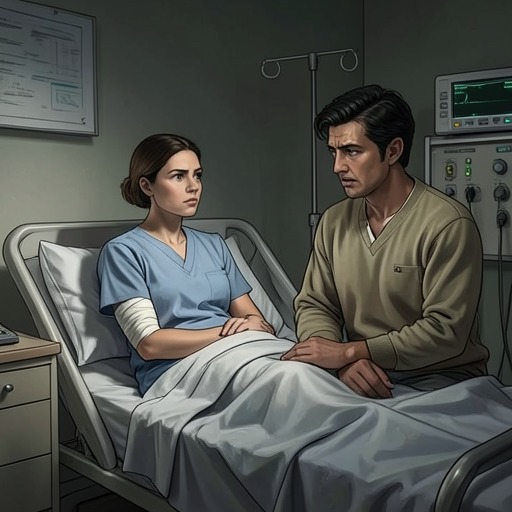
The break does not arrive with a clear explanation. Zatopek van Heerden recalls that they were both in hospital after being wounded, and that just before six one morning Thobela came to his bed and said he was finished with violence and fighting. Van Heerden remembers the seriousness and emotion behind the announcement, but cannot identify exactly what had changed inside his friend. That uncertainty is important. The decision is unmistakable; its precise cause remains partly beyond another person’s understanding. Thobela’s renunciation begins not as a neatly accounted-for conversion, but as a conviction he must make real through what follows.
Honour tested by violence
The limit of Thobela’s former way of fighting becomes explicit in a later encounter. When a man appears at the door, Thobela fires, then dismantles the weapon and packs it away. The sequence takes forty-seven seconds. Its brevity does not make the action a triumph: by the time the weapon is put away, he knows he cannot wage war in this manner and find honour in it. The decisive change is in his judgment of his own conduct. Skill and speed remain, but they no longer suffice to justify their use.
His alternative is expressed as a personal rule: an opponent must be able to see him and fight back. The principle is not an account of nonviolence in the absolute sense; it is a demand that any violence he undertakes be face-to-face and answerable. That distinction makes his transformation difficult rather than complete. He has not shed the warrior’s identity or the capacity to fight. Instead, he tries to impose a limit on how he will act, judging a method by whether it permits an opponent to meet him openly. The code restrains him, but it also shows how much of his former self remains present in the life he hopes to change.
The warrior’s code
This code has an earlier history. As a young man, Thobela learned from his uncle Senzeni about the history of the short stabbing spear and the dispossession of Xhosa history. Later, Thobela lays a shortened assegai before his masters and declares that he will wage war by looking his opponents in the eye and feeling their breath. The weapon is not simply equipment: he has made a scabbard to carry it against his body, close at hand. The choice makes his intended manner of combat physical and personal, a refusal of distance between himself and those he confronts.
The earlier declaration and the later judgment of the firearm belong to the same moral arc. Thobela has long sought a form of fighting he can regard as honourable; the later encounter exposes that a chosen weapon or code cannot by itself resolve the problem of violence. His realization that he cannot continue in the same way presses beyond technique toward a larger question: whether a life organized around fighting can be redirected at all. His aspiration to change therefore does not begin from a clean break with the past. It emerges from within a warrior’s code that both limits his violence and keeps him bound to it.
A future that cannot erase the past
Thobela’s later reckoning gives the decision its fuller weight. As memories open before him, he confronts the years lost to hatred, violence, and death, and longs to be free of their burden. The account does not treat that recognition as a cancellation of responsibility. He understands that he cannot undo what happened or blot out who he has been. What remains within his power is to determine where, and how, he goes from that point onward.
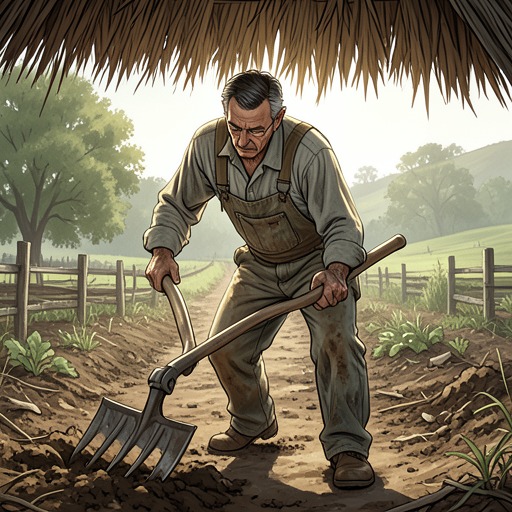
The future he imagines is pointedly different from his former work: he wants to be a farmer, a nurturer. The contrast gives his rejection of violence a positive direction. He is not merely trying to stop; he wants to cultivate and care for life. Yet the narrative marks this as a lifetime task, undertaken step by step rather than secured by a single declaration. After a night of thought, and having eaten a full plate of food, he goes to Van Heerden’s room before six the next morning and asks whether Van Heerden believes he can change. The question reveals both resolve and uncertainty: Thobela has chosen a direction, but needs to know whether another person can recognize that choice as possible.
Van Heerden already knows something of what Thobela has discovered under a bridge in the Free State. The ending preserves the tension between identity and agency: Thobela remains Umzingeli, yet being a hunter does not settle what he must become. His attempt at atonement rests on neither forgetting nor a promise that change will be easy. It rests on accepting the past as irreversible while continuing to choose a different use for the life ahead.