Transformation from violence to healing
Heart of the HunterTransformation from violence to healing is the difficult change Thobela Mpayipheli attempts after a life of fighting and lethal work: not a claim that the past can be undone, but a decision about how to live from here. Its measure is the distance between the child who wanted to make people better and the man who has learned to use violence. The narrative makes that distance visible through memory, through Thobela’s refusal of a particular kind of killing, and through his choice to imagine himself as a farmer and nurturer rather than a fighter.
The old life and the possibility of change
Thobela’s history is marked by successive loyalties. As Zatopek van Heerden explains, he first devoted himself to the Business, then to the African National Congress and the Fight; when that ended and left him unsupported, he put his abilities to use for Orlando Arendse. Van Heerden describes his service to Arendse as disciplined and complete. This sequence makes the problem more difficult than simply abandoning one employer or cause: Thobela has repeatedly given himself wholly to the work in front of him. His loyalty is also what makes him capable of choosing a different life once he believes that violence must end.
The decisive break begins after Thobela and Van Heerden are both hospitalized, beaten and shot. One morning, shortly before six, Thobela comes to Van Heerden’s bed and says that he is finished with violence and fighting. Van Heerden initially expects their familiar joking, but recognizes that Thobela is serious and that the decision matters deeply to him. The declaration is therefore more than a change of occupation. It marks an attempt to withdraw from the identity and habits that have organized his life.
Van Heerden remains cautious about what that declaration proves. He tells Allison Healy that Thobela believes he can change and believes he already has changed. The difference between intending change and having achieved it is central to the concept. Thobela’s transformation is a process under pressure, not a settled fact guaranteed by one solemn conversation. His friend’s assessment recognizes both the force of his decision and the uncertainty that still surrounds it.
Memory as reckoning
While riding along a hard-surfaced dirt road in the growing dark, Thobela keeps his speed down; the fall in the Karoo storm still troubles him. Much of his attention, however, has turned to Munich and his first assassination. He experiences the preceding day as a return of the past, as if an old part of his life has been reactivated. He lets those memories run rather than shutting them away, and understands this reliving as possibly part of healing, change, or closure—a way to reach an ending in his own metamorphosis.
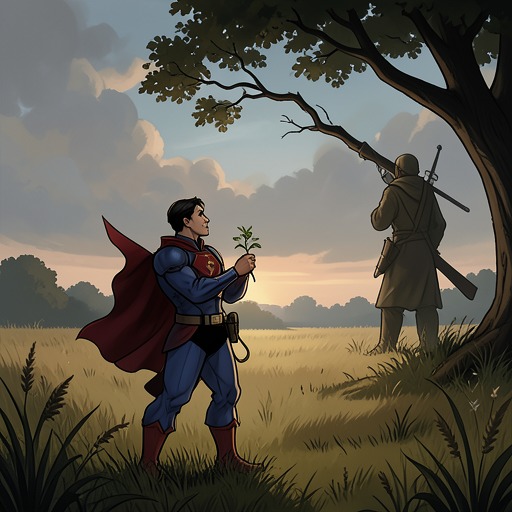
The memory brings him back to the moment when he is prepared to fire, then sees a woman and child in the rifle scope and is stopped by their appearance. In another recollection of the Munich killing, a man appears at the door and Thobela shoots him. As he dismantles the weapon and packs it away, he recognizes that he cannot wage war in this manner and that there is no honour in it. These recollections distinguish his rejection of violence from a simple claim that he has never been capable of it: the decision arises from confronting what he has done and what his methods have made of him.
Memory does not offer a clean escape from responsibility. Thobela sees the past return while he is still travelling through danger, and the road ahead does not erase what lies behind him. The narrative instead gives recollection a double function: it makes the former self present again, but also lets him examine it. Healing begins not with forgetting, but with the possibility of looking directly at the old life and refusing to treat it as the only life available.
A childhood purpose recovered
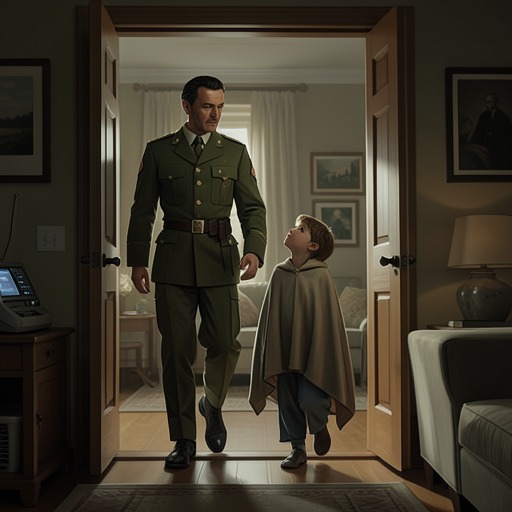
The novel connects Thobela’s hoped-for future to a childhood answer. When his father asks what he wants to become, eight-year-old Thobela says he wants to be a doctor because he wants to make people better. He has recently been seriously ill, and a doctor has cared for him and helped him recover. The memory supplies a concrete origin for the wish to heal: as a child, Thobela experiences care not as an abstract virtue but as something another person can do for him.
Years later, revisiting that scene changes how he sees his life. He recognizes the years lost and considers the possibilities of choices he did not make. The thought brings him face to face with the violence and death that have accumulated in his history, and with his desire to be free of them. His grief is not presented as proof that the damage can be reversed; rather, it opens the question of whether his remaining choices can be different.
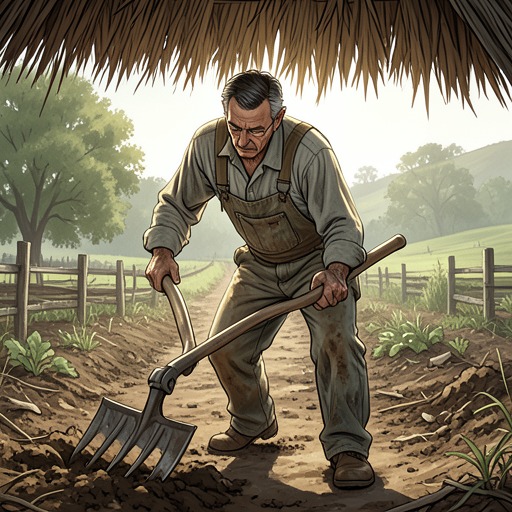
The answer he reaches is not that he can become a doctor after all. Out of the deaths behind him comes the desire to become a farmer, a nurturer. He knows he cannot undo what happened or blot out who he has been, but believes he can determine where and how he goes from this point. He treats this as a lifetime task to be undertaken step by step. That qualification keeps the proposed transformation grounded: a new intention matters, but it does not cancel the past or make change effortless.
Choice, friendship, and the work ahead
After sleeping, Thobela wakes and continues an inward struggle against the excuses and rationalizations that might preserve his former identity. He eats a full plate of food and thinks through the night. Before six the next morning, he goes to Van Heerden’s room and wakes him. When Van Heerden appears to underestimate his capacity to change, Thobela challenges that assumption. The exchange makes the decision relational as well as private: he tells a friend what he has concluded and tests whether that friend can recognize him as someone capable of becoming otherwise.
Van Heerden, in fact, already knows what Thobela has discovered the previous night under a bridge in the Free State. This recognition links the new resolve to an experience that has altered Thobela’s understanding of himself, without suggesting that another person can perform the change on his behalf. Van Heerden can witness and understand; the decision to live differently remains Thobela’s.
The name Umzingeli follows this reckoning, placing the identity associated with the hunter alongside the aspiration to nurture. The contrast does not settle into a simple replacement of one self by another. Thobela’s own terms are more demanding: he cannot erase the person he has been, but he can choose his direction, and the work will take a lifetime. Transformation from violence to healing therefore names an ongoing moral practice—one expressed in the refusal to continue fighting, in the return to an early wish to help others, and in the deliberate choice of a future organized around care.