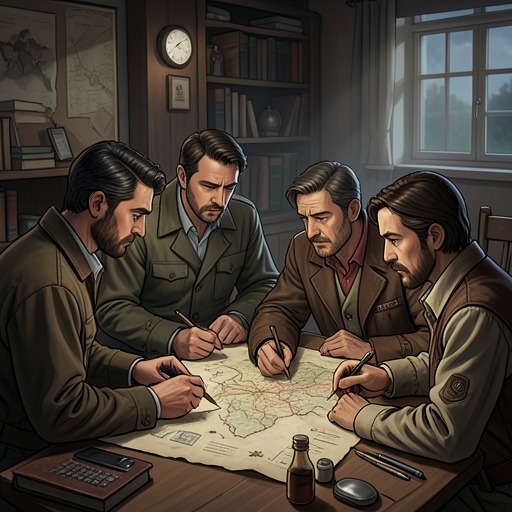
Zulu Dossier
Heart of the HunterThe Zulu Dossier is a collection of intelligence about Zulu nationalist ambitions and networks, including a suspected infiltrator inside the African National Congress. More than a catalogue of names, it holds evidence of clandestine political arrangements, weapons, and strategy. Its significance lies equally in what it records and in the unstable circumstances of its creation, preservation, and possible disclosure: intelligence personnel were deleting or concealing records even as the newly integrated services tried to consolidate their archives.
An intelligence file amid institutional upheaval
The dossier emerges from the disorder following the elections, when South Africa’s intelligence services were being brought together. Several branches inherited material from the apartheid regime as well as records associated with the African National Congress, including systems in Lusaka and London. The scale was immense: Monica Kleintjes describes a project to combine computer records amounting to roughly four or five hundred gigabytes, from public information to weapons systems, informants, and double agents. Her father, Johnny Kleintjes, was assigned to the work of creating a central database, deciding what to erase and what useful material to retain.
That consolidation was not a neutral act of filing. The transition brought agencies and personnel with different histories into a shared structure, while old habits of secrecy and competition persisted. A former colleague, Groenewald, testifies that some members of the team could not adjust to the new arrangements and that operational records disappeared. When Johnny realized material was being deleted, he began making backups; after a backup tape itself went missing, he took work home. His account places the Zulu Dossier within a wider struggle over which records would survive and who would control them.
Contents and political history
The dossier concerned a conservative nucleus within Zulu ranks that continued to seek an independent Zulu state. Its members had supported the former regime’s policy of separate development, seeing it as a route to sovereignty. Elements of that regime, according to Groenewald, had worked closely with them and made promises. The political settlement changed when F. W. de Klerk unbanned the African National Congress and permitted free elections, disrupting those earlier expectations and arrangements.
The file was not simply a membership list. Groenewald says it included names of members of the secret Organization for Zulu Independence, among them politicians, businesspeople, and academics. He identifies the University of Zululand as a recruiting ground and recalls that its History Department head had led the organization for years. The dossier also contained information about weapons caches, strategy, and plans. Together, these categories link political affiliation to resources and intended action, giving the file a reach beyond the identification of individuals.
Inkululeko and the limits of what is known
Among the dossier’s most consequential contents was the code name Inkululeko, explained as the Zulu word for freedom. Groenewald describes Inkululeko as an Organization for Zulu Independence member who had infiltrated the African National Congress years earlier and risen to a high level. He also reports talk that the same person worked for the Central Intelligence Agency during the Cold War, and a more recent rumor that the person continued assisting the Americans. The latter speculation is connected in the testimony to the government’s position on Libya and Cuba, but it remains rumor rather than confirmation.
The testimony does not identify Inkululeko. It establishes that the dossier contained the name and that Johnny had seen the relevant list; it does not establish the alleged operative’s identity, confirm every reported affiliation, or resolve whether the person was still active. The gap is central to the file’s narrative force: it offers enough detail to make the threat legible, but not enough to turn suspicion into a verified account. The name becomes a lead whose importance is clear precisely while its referent remains concealed.
Copies, custody, and missing records
Johnny’s backups were an answer to deliberate deletion, but they also created a parallel, uncertain archive. The account says that he began copying operational material and eventually took work home; it does not specify the dossier’s final location or whether a surviving copy contains all of its contents. His preservation effort therefore cannot be treated as proof that the record remained complete or secure. In a system where tapes could disappear and files could be erased, the survival of information was itself contested.
The novel presents this vulnerability against a broader institutional preference for tightly controlled information. Janina Mentz’s procedures, informed by Rajkumar’s warning that electronic records could be copied, distributed, or accessed by others, favored a single paper copy that could be signed out, transcribed, and filed under controlled conditions; digital tapes were deleted after transcription. This policy does not establish that the Zulu Dossier itself was processed in that way. Instead, it sharpens the contrast between formal attempts to limit access and the earlier evidence of backups, missing tapes, and records taken home. The archive is both a store of intelligence and an arena in which control can fail.
Knowledge, silence, and political risk
Johnny’s knowledge makes the dossier personally consequential. Groenewald says that Johnny had seen the list, yet when asked why he had not exposed its contents, he could not say. He connects the question to political murders and intimidation in KwaZulu, making the surrounding danger apparent without supplying a definitive motive for Johnny’s silence. The evidence leaves open whether he withheld the material from caution, obligation, uncertainty, or some other reason.
The dossier thus links private custody to public risk. Information intended to map clandestine networks could also expose people, compromise operations, or reopen conflicts inherited from the former regime. Its fragmented chain of preservation resists the idea that a government archive automatically produces a complete and authoritative history: some records were erased, others copied, and a crucial name remained unidentified. In the wider story, the Zulu Dossier is both a source of actionable intelligence and a record whose omissions and uncertain custody prevent its claims from being fully resolved.