Coming Out
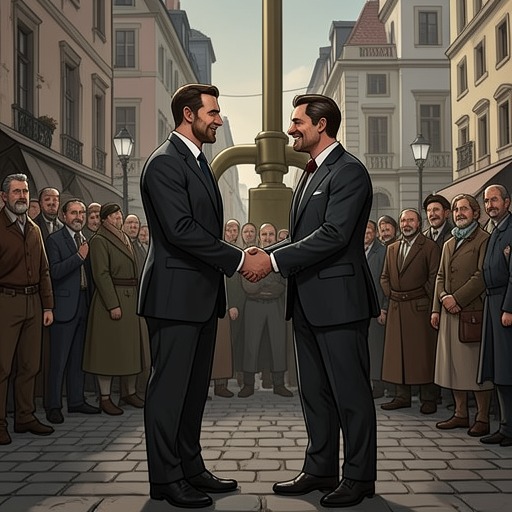
Heated RivalryComing out is not a single revelation in the novel but a series of decisions about what Shane Hollander can acknowledge, whom he can trust, and how much of his life he can afford to make visible. His private recognition of his attraction to men comes well before disclosure to others; even then, being gay is inseparable from loving Ilya Rozanov, his archrival. The gap between knowing himself and naming the relationship gives coming out its central tension: honesty offers connection, but professional hockey makes visibility feel dangerous.
Self-Recognition Under Pressure
Shane first accepts that he is comfortable having sex with a man and considers whether Ilya was simply the first man to make that possibility real for him. The thought does not immediately settle his identity. He still wonders whether he should return to dating women, discreetly seek another man, or allow the encounters with Ilya to continue without deciding what they mean. His uncertainty is not a denial of desire so much as a struggle to understand it without committing himself to a public label.
The setting makes even that private exploration feel consequential. Shane is a rising hockey player in Montreal, planning a career in a league where he has never seen an openly queer player. He has heard homophobic slurs on the ice and in the dressing room, and doubts that the NHL’s public posture of inclusion reflects the culture players actually face. He concludes that whoever comes out first would need exceptional courage, and decides that he cannot be that person. He also believes Ilya has as much to lose as he does, which turns mutual secrecy into both a practical safeguard and a bond between them.
The sport’s language makes the threat immediate rather than theoretical. When another player directs a homophobic slur at Ilya, Ilya answers with a shrug that acknowledges some truth in it. The exchange does not become a public declaration, but it exposes the narrow space in which a player can signal queer identity: even a partial acknowledgment is made under the cover of banter and insult. For Shane, keeping quiet is shaped by an environment that treats heterosexuality as the safe default and leaves the first openly queer player to bear a disproportionate risk.
Secrecy as Intimacy and Protection
For years, Shane and Ilya’s secrecy is sustained by the same rivalry that makes the relationship especially frightening to Shane. At an All-Star weekend, Shane keeps his distance partly because he fears revealing his feelings through a telling touch, and partly because he does not want the media’s fascination with the supposed hatred between them to intensify. The rivalry is useful to the league and to their careers, but it is also cover for the truth. Their public opposition conceals a private attachment while making that attachment harder for Shane to name: he sees being gay and being involved with his archrival as two distinct risks.
Their private routines show how secrecy can protect them and restrict them at once. In Boston, their meetings move from hotel rooms to Ilya’s penthouse. Shane had objected that someone might see him entering the building, but his deeper reluctance is that visiting Ilya’s actual home makes their encounters feel more personal. He repeatedly tells himself that he will end the relationship and return to his hotel; after an encounter, he hesitates among his clothes on the floor, then accepts Ilya’s invitation to lie beside him. The quiet tenderness of Ilya touching his hair and tracing the freckles on his face unsettles Shane because it exceeds the emotional distance he has tried to maintain.
Eventually, Shane tells Ilya that the difficulty is not only being gay: it is that the man he is involved with is his archrival. When he admits that their last time together felt nice, he gives language to the intimacy that their arrangements were supposed to keep contained. Even later, after both men have become more honest about what they mean to each other, the prospect of keeping the relationship secret until retirement frightens Ilya. Shane’s wish to bring Ilya into his real apartment and into all of his life marks a change in what secrecy can accomplish: it can no longer be treated as a neutral arrangement that leaves the relationship untouched.
Disclosure to Family and Teammates
Shane’s disclosure to his parents begins under circumstances he did not choose. His father arrives to borrow dishwasher tablets, finds Shane with Ilya, and is visibly shocked. Shane apologizes that his parents learned this way, then tells them that he is gay and introduces Ilya by name. His mother, Yuna Hollander, is watching Ilya as Shane speaks. The disclosure is therefore not a carefully staged coming-out conversation: Shane has to name both his identity and the relationship in the same unsettled moment.
His parents’ response is complicated but not wholly unexpected. They say they had suspected Shane might be gay, though they had not known for certain. His father’s question about whether Shane had ever let Ilya win reveals how thoroughly the secret has been folded into the public rivalry: even a parent who loves him can initially understand the relationship through the language of competition. Shane insists that no teammate knows and calls the relationship top secret. His father’s quiet recognition that Shane has carried the secret all this time makes the cost of concealment visible to the family, not just to Shane.
Yuna’s response changes the emotional balance of the room. After Shane admits that Scott Hunter’s public kiss with his boyfriend had made him want to try to be braver and let himself be happy, Ilya says the moment affected him too. Yuna then shifts from shock to problem-solving, asking what the plan is and treating herself as an ally. The scene connects public visibility to private courage: Scott Hunter’s example does not remove the danger, but it gives Shane a model that makes happiness seem like something he can actively choose.
Disclosure to teammates proceeds on a different timetable. Shane had already come out to his Montreal teammates the previous season, but had not told them about Ilya. Hayden Pike works out the relationship after noticing that Shane no longer meets his mystery man during Boston trips. When Hayden guesses that the man is Ilya, Shane feels fear and shame, but also relief, and confirms it. The distinction matters: telling teammates that he is gay does not automatically disclose whom he loves. Shane and Ilya keep their couplehood within a small circle of people they have chosen to include, and Hayden becomes part of that circle despite Ilya’s reservations.
The Unfinished Move Toward Public Truth
By the time Shane and Ilya confront the possibility of a wider disclosure, the relationship has lasted far longer than its recent discovery by Hayden might suggest. Shane’s anger at Hayden’s doubts makes clear that this is not a new affair but a bond kept secret for almost ten years. He recalls being frightened and alone as an eighteen-year-old attracted to a man who was also his greatest rival. His outburst gives the history of concealment a measure of its own: secrecy has not meant that the relationship was slight; it has meant that Shane endured its risks without being able to share them openly.
The novel does not present coming out as a clean passage from concealment to full public openness. Shane and Ilya want to keep their private lives their own and disclose only to people they choose, yet they also discuss telling everyone. They consider whether friendship, shared summers, visits during the season, and a charity could offer ways to be together in plain sight. Their uncertainty preserves the difference between being known by family or teammates and being publicly identified as a couple.
They set a press conference for the following morning and agree to wait two weeks before their teams next meet. The decision points toward a public step, but the conversation still circles the practical question of how their true relationship might be hidden or reframed. Coming out therefore remains a negotiation rather than a final threshold: each new disclosure enlarges the circle of trust, while the professional rivalry and the culture around hockey continue to shape what Shane and Ilya believe they can safely reveal.