Ilya Plans an Ottawa Move and a New Public Narrative with Shane
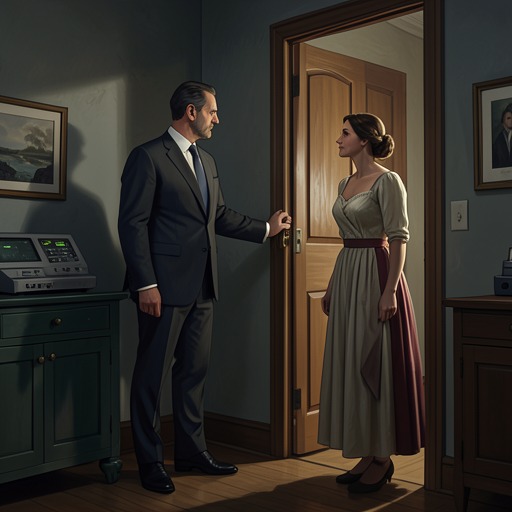
Heated RivalryIlya Rozanov’s proposal to consider a Canadian team prompts Shane Hollander to imagine a future that would preserve their rivalry on the ice while giving their relationship room to exist beyond it. Ottawa becomes the practical center of that vision: a possible destination for Ilya, a base for joint charitable work, and a way for the two men to reshape the public story built around their hostility.
A possibility spoken aloud
Ilya begins uncertainly, saying he does not know where he might go and is thinking perhaps of somewhere else. Then he tells Shane that he will be a free agent after the following season. The narration stresses that he has never said this aloud before and may not have fully formed the thought in his own mind. His announcement is therefore more than a contract detail: speaking makes a tentative possibility available for both of them to consider.
Shane immediately gives him his full attention and asks whether he would leave Boston. Ilya answers that he has been thinking about a Canadian team. He does not identify a destination or announce a decision; his proposal is still exploratory. But the possibility of leaving Boston and moving to Canada changes the conversation from abstract uncertainty to a question about where, and what such a move might make possible.
Shane’s Ottawa proposal
Shane has been thinking about Ilya’s suggestion throughout the day. He wakes the sleepy Ilya with a poke to the shoulder and proposes Ottawa. Ilya objects that playing there would be almost as bad as playing for Boston, since they would remain rivals. Shane accepts that point rather than promising to eliminate competition. His plan depends on keeping their teams’ rivalry while changing what the rivalry means away from the rink.
The choice has a practical rationale as well as a personal one: Shane says Ottawa desperately needs a star center, so there would be an opening for Ilya. He then suggests that they could change the narrative around them. Rather than continuing to perform as enemies who cannot stand one another and live to destroy each other whenever their teams meet, they could be rivals who no longer pretend to hate each other. Shane recognizes that the old story had been true for a long time; his claim is that it is no longer true now.
Shane also frames the rivalry as something that need not define the rest of their careers. Younger players will arrive and new rivalries will form, he observes, asking whether they must keep up their old public dance until retirement. The proposal does not ask either man to stop competing. It asks them to stop treating competition as a reason to conceal every sign of respect or connection.
A public story for working together
The plan gives the change in their public image a concrete vehicle. Shane proposes that he and Ilya start a charity benefiting both cities. Montreal and Ottawa, he points out, are two hours apart, making the collaboration and their proximity part of the same future. A charity would allow the press and fans to see them working together for a cause important to both of them, and to attribute their changed relationship to the respect developed through that work.
Even the public origin story is left flexible. Shane begins to suggest that they could say he approached Ilya, and Ilya counters that he could instead claim to have approached Shane. Their joking disagreement makes clear that the story would be constructed for its audience, not offered as a definitive account of who initiated the idea. The cause itself has not yet been chosen, but Shane insists the project would not be empty public relations: he has wanted to start a charity anyway, and says they can choose something that matters to them both.
Ilya punctures the polished explanation with a blunt joke about the private relationship it would leave unspoken. Shane responds with mock outrage and calls the idea great. The exchange sets the plan’s central contrast: the public would be told that shared work had produced mutual respect, while the deeper intimacy between the men would remain private. Their proposed narrative would not deny their rivalry; it would give observers a plausible account of why the rivalry no longer requires personal hostility.
A future beyond the rivalry
Ilya eventually concedes that the charity idea is not bad. Shane makes clear that their games would remain hard-fought and that he would still enjoy beating Ilya. Ilya’s snort registers the familiar competitive edge, but it does not undo the agreement in principle. The plan holds sporting antagonism and personal attachment together instead of requiring one to cancel the other.
The distance between Ottawa and Montreal matters for more than the public project. Shane emphasizes that Ilya would be in Canada and could eventually apply for citizenship. He then extends the imagined future past their playing careers: perhaps, when both have retired, they could be together for real. Ilya is stunned by how far ahead Shane is thinking and asks whether he truly sees that far into the future. Shane says that he does about this. The scene ends not with a contract, a chosen charity, or a settled public account, but with an openly stated hope. Ottawa is still a proposal; what has changed is that a future together has become something Shane is willing to plan for aloud.