Ilya Tells Shane About His Mother’s Death
Heated RivalryIlya’s disclosure about his mother’s death turns an unhurried conversation with Shane into the first telling of a childhood truth Ilya had never shared with anyone. It exposes the lie that concealed his mother’s suicide, including the fact that twelve-year-old Ilya found her, and makes Shane not merely the recipient of that knowledge but the person who holds him through its telling. The scene moves from family small talk to withheld grief, then lets an unexpected burst of laughter offer relief without undoing what has been revealed.
From Small Talk to the Question
The conversation begins in a pause rather than an argument. Ilya picks up a can of Coke from a chunk-of-tree table beside the bench, takes a sip, and hands Shane his ginger ale. They sit in comfortable silence for a long time. Against that quiet, Shane’s question about whether Ilya has talked to his family in Russia sounds abrupt. The narration suggests it has been on Shane’s mind for a while, and may not be the real question he wants to ask.
Ilya answers that only his brother is there now, adding bluntly that his brother “sucks.” Shane explains why he asked: his own parents are so great, and he wishes Ilya had that too. The comparison makes the subject personal before either man names the loss at its center. Ilya says that his mother was great. He knows the remark will lead somewhere difficult, but Shane asks how she died anyway. What began as a question about family becomes a question about the story Ilya has been made to carry.
The Official Story and the Truth
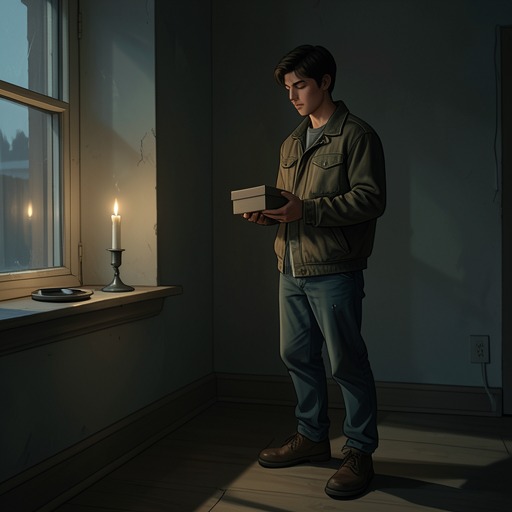
After almost fourteen years, the question still catches in Ilya’s throat. He gives Shane the version his father told everyone: an accident. The account is not one Ilya believes. He had been told it sternly, in language that demanded his understanding, but had known even at twelve that it was not true. His sardonic delivery makes the distance between the public explanation and his knowledge unmistakable.
When Shane repeats the word as a question, his hand closes around Ilya’s arm through the sleeve of his hooded sweatshirt. Ilya answers with a tight, humorless smile: his mother “accidentally swallowed a whole bottle of pills. Oops.” The flippant ending does not make the death sound trivial; its bitter sarcasm exposes how impossible the word “accident” has become for him. The bottle of pills is the fact the family’s explanation excludes, and Ilya’s phrasing forces the concealed truth into the conversation without softening it.
Saying What He Had Never Said
Shane asks how old Ilya was. “Twelve,” Ilya replies, before words emerge that he has never shared with anyone: “I found her.” His voice breaks on the last word. The disclosure is therefore not only a correction of the family story. It brings forward Ilya’s own place in the event: as a child who discovered his mother after her death, a fact he has kept unspoken until this moment.
Shane gets to his feet and hauls Ilya up with him, engulfing him in an embrace. He lets Ilya bury his face against his shoulder and holds him tightly. Ilya does not offer a neat explanation of his mother’s death or reduce her to it. He insists that she was not weak, describing her as amazing and also deeply sad; he connects that sadness to how hard his father was on her. His account holds admiration, grief, and anger together. He does not really cry: he quickly wipes the moisture from his eyes and breathes in Shane’s presence. The emotion registers in his broken voice, the brief moisture, and the need to be held as much as in what he can say.
Interruption, Relief, and Closeness
Shane tells Ilya that he is strong and incredible, then begins, “I—”. Ilya holds his breath. Before the moment can resolve into whatever Shane was about to say, a loon screams overhead. Both men lose control of themselves in laughter, clinging to each other as they shake. The laughter is described as a wonderful relief after the intensity of the disclosure; it interrupts the pain rather than disproving it.
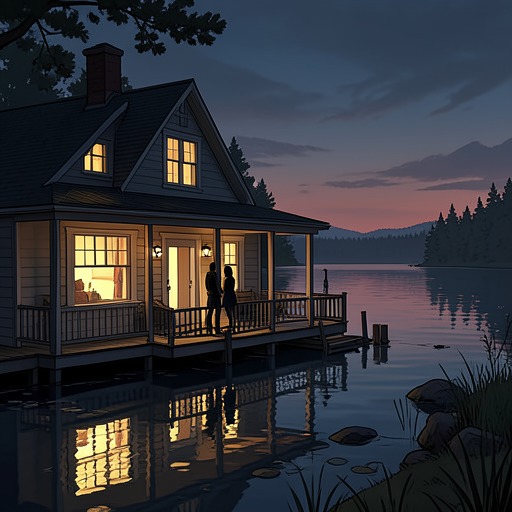
When they sit again, the arrangement has changed: Shane tucks himself against Ilya on the bench, his legs drawn up, and Ilya wraps an arm around him and kisses the top of his head. The physical comfort has become reciprocal. Ilya then asks whether there is more wood for the fire, returning them to an ordinary shared task after the conversation has altered what they know about one another. The fire is blurry to him, and everything around them smells of wood smoke; the smell makes him want a cigarette. These details keep the scene grounded in the immediate aftermath, where grief has not vanished but can coexist with touch, laughter, and the small practical question of tending the fire.
The disclosure marks a change in what Ilya permits Shane to know. He entrusts him with both the truth his father covered over and the most painful detail of his own childhood memory. Shane’s response is not another demand for explanation: it is an embrace, followed by words of reassurance and a closeness that continues after the laughter. The scene’s relief comes not from resolving the loss, but from Ilya no longer being alone with this particular truth.