Shane Repeatedly Tries to End His Relationship with Ilya
Heated RivalryShane Hollander’s repeated attempts to end his relationship with Ilya Rozanov expose the distance between the decision he believes he ought to make and the intimacy he cannot bring himself to refuse. What begins as a cycle of resolve, retreat, and renewed contact gradually becomes a more candid struggle over what their relationship means, what it risks, and whether secrecy can contain it indefinitely.
The Logic of Ending
After one encounter, Shane insists that the two of them are finished, and Ilya accepts the conclusion. Once they leave the shower, Shane strips the comforter from the bed and puts it in the washing machine, determined to leave the place as spotless as he found it. The practical cleanup gives his departure the air of an arrangement being erased. Yet later, waiting for the comforter to finish, he recognizes that the separation is already failing: he touches his lips, still recalling Ilya’s mouth, and understands that making plans to end things will not make him able to refuse what Ilya offers.
His proposed solution is not initially an honest conversation about desire. He considers selling the building and promises himself that, on future trips to Boston, he will stay in his hotel rather than slip out to Ilya’s penthouse. The plans are concrete, even drastic, but their purpose is avoidance: if Shane removes the places and opportunities that bring them together, he hopes he can escape the choice itself. His lingering physical memory of the kiss undermines that strategy even as he forms it.
Career, Secrecy, and Repeated Promises
The same reasoning returns as Shane begins his NHL career. At nineteen, he worries that continuing with Ilya could lead to a major scandal just as his professional future is beginning, and he cannot see how they could keep the relationship quiet. He tells himself that he is young, horny, and unusually lonely for a star athlete, and that Ilya’s availability does not oblige him to accept it. Satisfied with this decision, he imagines an easy refusal when Ilya next asks for his address. The confidence is part of the pattern: Shane treats a future refusal as if it has already happened, though the relationship has not actually ended.
At the end of another season, Shane waits several minutes before taking the elevator so he and Ilya will not ride down together. He again resolves that the next season will be different and that he will focus on hockey. The pause is a small act of concealment, while the promise attached to it is another attempt to turn distance into a clean break. The recurrence makes clear how little the resolution changes their underlying attachment.
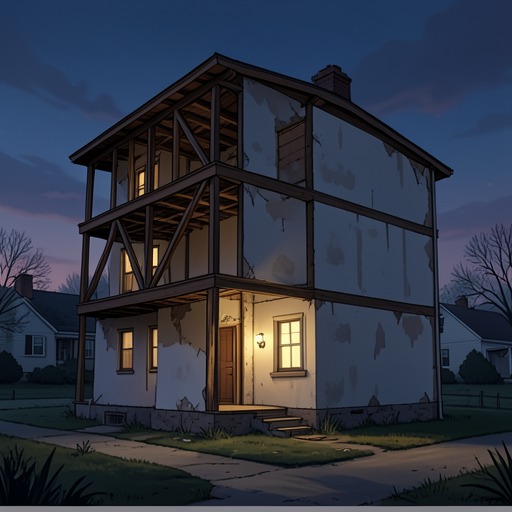
Six years into their pattern, Shane still arrives at Ilya’s Boston penthouse telling himself he will end things that night. Their Boston meetings had moved from hotel rooms to Ilya’s home the previous season. Shane had objected that entering Ilya’s building created a risk of being seen, a concern he still considers genuine. But he also recognizes a more intimate reason he never voiced: visiting Ilya’s actual home makes the relationship feel more personal. Hotel rooms and Shane’s investment property had seemed easier to keep separate from ordinary life; the penthouse unsettles that separation. By this point, he has lost count of how many times he has promised himself he will go back to his hotel instead of staying.
Intimacy Against Retreat
The difficulty is not only that Shane returns to Ilya’s home; it is that the encounters increasingly resist the emotional distance he tries to preserve. After one sexual encounter, Shane stands near his clothes on the floor, thinking that he should leave. Ilya pats the bed, and Shane lies beside him. Although they are not touching, Shane feels anxious when Ilya looks at him with a tenderness he finds difficult to face. Ilya’s fingers comb through his short hair and trace the freckles across his face; the touch feels soothing as well as intimate. Shane’s impulse to depart and his willingness to remain occupy the same moment.
At an All-Star weekend, Shane tries to keep his distance from Ilya for two reasons: he fears touching him in a way that might reveal too much, and he does not want to feed media interest in the spectacle of the supposed rivals playing together. He also does not want to change the public story. Their rivalry benefits the league and their careers, but, most importantly for Shane, it covers the truth. The role that seems to keep them apart therefore also helps protect the relationship that repeatedly draws them together.
When Shane explains what makes their situation difficult, he distinguishes being gay from being involved with his archrival. The secret is not simply a matter of concealing his sexuality; it is the particular exposure created by a relationship with Ilya, whose public identity is bound to Shane’s as a competitor. Shane also admits that their last time together had felt nice. The understated admission gives a name to what his repeated plans have tried to avoid: the relationship’s appeal is not only physical, and tenderness makes the prospect of ending it harder.
From Avoidance to Inclusion
A later shift comes when Shane apologizes for buying an entire building because he was nervous and explains that he had wanted to protect what they had. He acknowledges that he should have invited Ilya to his real apartment sooner, tells him that he wants him there, and says he wants him in every part of his life. This is more than another promise to change a location or avoid a meeting. It reverses the earlier impulse to keep intimacy confined to hotel rooms or investment property: Shane now offers access to his actual home and frames that invitation as a desire for a shared life.
The change does not make secrecy disappear. Ilya fears they may not be able to hide their relationship until they retire, and says he wants to tell everyone immediately. Later, after they have cleaned up and settled together under the blankets, Shane asks about two weeks. They have agreed to hold a press conference the following morning, two weeks before their teams are due to meet for a Saturday-night game. They consider whether it might become easier to hide in plain sight as friends who spend summers together, visit during the season, or start a charity together. These are possibilities they discuss, not outcomes already secured.
The repeated attempts to end the relationship thus mark a gradual change in Shane’s understanding of what he is trying to protect. At first, he imagines protection as removing himself, keeping the rooms clean, taking a separate elevator, selling a building, or refusing an address. Eventually he apologizes for that defensive architecture and invites Ilya into his real home. The movement is not from risk to safety: their concern about exposure and their public rivalry remain. It is from treating intimacy as something to erase toward acknowledging that he wants Ilya in his life, even without knowing how long their relationship can remain hidden.