Toronto
Heated RivalryToronto is where a CCM endorsement campaign turns Shane Hollander and Ilya Rozanov’s professional pairing into a private encounter. In July 2010, before Shane had played an NHL game, he arrived at a suburban rink for a shoot with a rival he had not seen since the World Juniors in January. The city’s role in the story is concentrated in this day and evening: an arranged commercial spectacle gives way to unscripted intimacy, while the secrecy surrounding their attraction remains a danger they both understand.
The promotional shoot
Shane’s CCM endorsement was lucrative, and he was excited about it until he learned that the company had also signed Ilya and planned to feature them together. The shoot took place on a Wednesday in July, in a dark, mostly empty rink in the Toronto suburbs. Shane was due at training camp in just over a month, and the scale of the production—the spotlights, cameras, and carefully staged atmosphere—felt to him less like an ordinary photo session than a movie set.
The day was divided between photographs and television footage. The players were photographed separately and together, then skated in CCM helmets and visors, showing off their stickhandling for about an hour. Their performance became more competitive than the assignment required. That rivalry gave the commercial its spectacle, but the encounter also placed the two young players in close company after months apart. Toronto thus marks not simply a work appearance but a meeting arranged by a sponsor whose campaign deliberately put them side by side.
From rink to hotel
After filming, the director thanked them, and the players went to the dressing room to shower and change. The rink’s communal shower, with opposing rows of showerheads along a corridor, made privacy impossible. Shane had hoped to finish before Ilya came in; instead, he was already under the water when Ilya took the shower almost directly across from him. Shane noticed the large bear tattoo on Ilya’s left chest and the gold crucifix on the chain he seemed never to remove. The commercial’s staged closeness had ended, but the physical proximity continued without cameras.
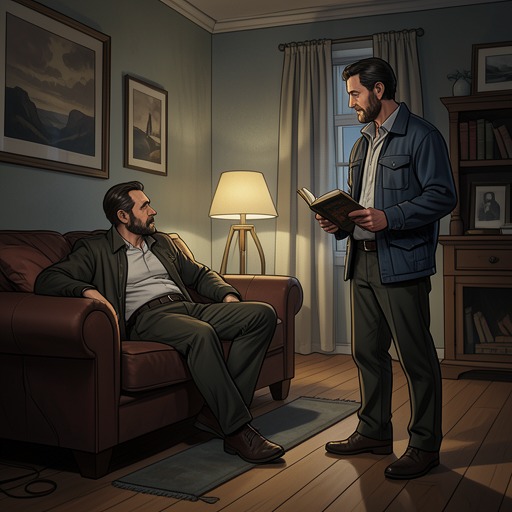
Later, Shane spent the evening in his hotel room anxiously considering whether to leave before Ilya knocked or stay and refuse to answer. At seven minutes past nine, after checking the peephole and confirming that Ilya was alone, Shane turned off the television and let him in. Ilya had made some effort with his appearance: he wore a black button-up shirt, left the familiar gold chain visible at the open collar, and had partly tamed his curls. The hotel room extends the Toronto encounter beyond the rink, from a shared professional obligation into a private meeting chosen by Shane.
Secrecy and significance
Toronto’s importance is sharpened by what Shane later understands about the risks of being openly queer in professional hockey. In Montreal, he fears rumors about his sexuality and knows that homophobic slurs are common on the ice and in the dressing room; he cannot imagine being the first openly queer NHL player. He also believes Ilya has as much to lose and will not expose him. That later understanding clarifies the pressure already surrounding their private encounter, without turning the Toronto shoot itself into a public disclosure.
Years afterward, Shane describes his fear of being attracted to his archrival when he was eighteen, and says that he and Ilya had kept their relationship secret for almost ten years. Toronto’s promotional day gives that long secrecy an early, concrete setting: spotlights and cameras make the two players visible as rivals and brand partners, while the shower and hotel room offer only brief privacy. The city is therefore associated with the first recorded movement from public competition toward a hidden relationship, not with the eventual end of concealment.