Harry Percy
Henry IV, Part 2Harry Percy is a celebrated soldier whose defeat at Shrewsbury marks the collapse of his forces and recasts his reputation for martial excellence as a memory of loss. In the play, he is chiefly made present through other characters’ accounts: a figure praised as a model for military conduct, bound to war by his sense of honour, and finally reported as overcome by Prince Henry.
Identity and Military Reputation
Harry Percy is remembered not merely as a capable fighter but as a standard against which military conduct is measured. The account of him as the mark, copy, and book of military rules presents him as someone whose example fashioned others. The praise is emphatic: he is called second to none, while the same recollection stresses that he was left without adequate support. His reputation therefore contains a tension between individual distinction and the political circumstances in which that distinction could not secure success.
Honour, Marriage, and the Choice of War
In a conversation with Lady Percy, Harry Percy says that his honour is at stake and that nothing but his going can redeem it. Lady Percy begs him not to go to the wars. Her appeal places the cost of his public obligation inside a marriage: his choice is not presented as an abstract military decision, but as a departure his wife tries to prevent. The exchange makes honour the immediate reason he goes, while also showing that the decision strains a personal bond.
Shrewsbury and Defeat
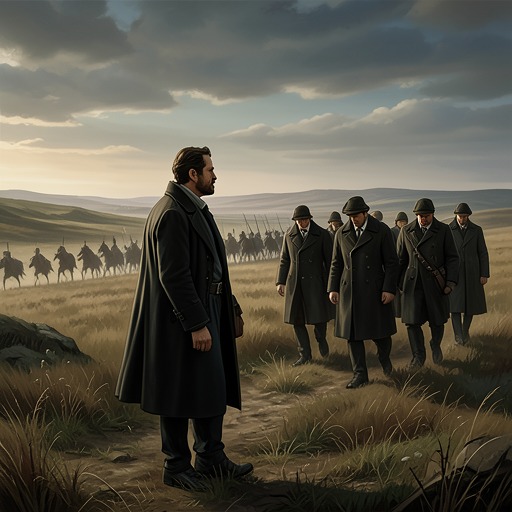
The reports of Shrewsbury arrive in stages. Rumour announces King Henry IV’s victory and says that Harry Percy and his troops have been beaten in the field. Morton, who has fled from Shrewsbury, describes death as having frightened their party; his account conveys the scale of the defeat without giving a full description of the battle. Northumberland then says that he saw Harry Percy in a bloody, exhausted state, offering only a faint resistance to Prince Henry before being overcome. The successive accounts move from public report to a claimed eyewitness recollection, making Harry Percy’s fall the central fact even as the battle itself remains offstage.
Political Memory and Consequence
Harry Percy’s defeat belongs to a wider history of shifting allegiance. Warwick recalls that Richard II and the Earl of Northumberland had been close friends less than ten years earlier, before their amity divided; he reflects that individual lives can figure the character of their times. Against that retrospective frame, Harry Percy’s celebrated military example and defeat become part of a political order changing with striking speed. A later report says that the Earl of Northumberland and Lord Bardolph, leading a large force of English and Scots, are overthrown by the sheriff of Yorkshire. The renewed defeat extends the play’s account of rebellion beyond Shrewsbury, while Harry Percy remains its defining lost martial figure.