Jerusalem Chamber
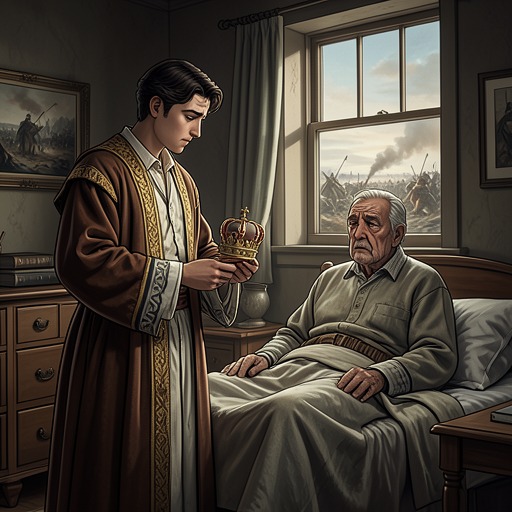
Henry IV, Part 2Jerusalem Chamber is identified as the lodging where King Henry IV first swooned. When he learns its name, he realizes that a prophecy he had understood as referring to the Holy Land instead concerns this chamber and his own death. The room’s importance lies in that convergence of a precise place, a remembered bodily collapse, and an approaching end.
Identification and Setting
Near the end of his life, King Henry IV asks whether the lodging where he first swooned has a particular name. Warwick identifies it as Jerusalem. The exchange establishes the chamber through the King’s own earlier physical crisis and the name supplied in response; the play gives no further architectural description or location details in this scene.
The Prophecy and Its Recognition
The name prompts King Henry IV to declare his belief that his life must end there. He explains that he had long supposed the prophecy meant the Holy Land, but now understands it as referring to this Jerusalem. He asks to be carried into the chamber and says that he will die in that Jerusalem. The room thus becomes the point at which an apparently distant, sacred destination is reinterpreted as a specific place already connected to his failing body.
Narrative Significance
Jerusalem Chamber is not merely the setting of a death prediction: it gives that prediction a concrete, previously established point of reference. The King’s first swoon links the chamber to an earlier bodily collapse, while his request to be taken there makes the prophecy an immediate matter of place and action. In this scene, the chamber is where King Henry IV recognizes the meaning he assigns to the prophecy; the scene ends without depicting his death there.