Lord Bardolph
Henry IV, Part 2Lord Bardolph is a supporter of the Earl of Northumberland whose reports connect the opening aftermath of Shrewsbury with the later defeat of Northumberland’s forces. He first arrives at Warkworth Castle presenting an apparently hopeful account of the battle; in the play’s larger pattern of competing reports, his confidence proves an unreliable guide to events, though the evidence does not establish that he knowingly misleads his listeners.
Identity and Introduction
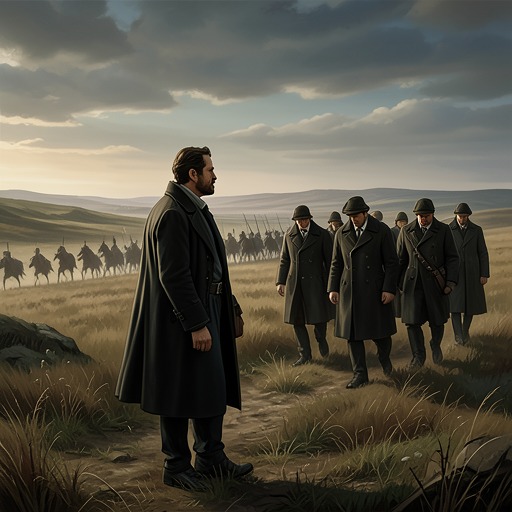
Lord Bardolph enters at Warkworth Castle as a messenger from Shrewsbury, addressing the Earl of Northumberland as a noble earl and presenting himself as the bearer of welcome news. His first appearance gives him a defined place in Northumberland’s circle: he carries news from the battlefield directly to the man whose son is involved in the conflict. The scene introduces him through political information rather than through personal history; no further background or private life is established in the available evidence.
The Shrewsbury Report
Lord Bardolph describes the news as good and says that King Henry IV is nearly wounded to death. He also begins to report the fortunes of Northumberland’s son, Harry Percy, but the surviving passage cuts off before completing that account. His report offers Northumberland the prospect of a favorable outcome at a moment when the truth of the battle is still uncertain to those at Warkworth Castle.
The play places this confident dispatch beside Rumour’s opening declaration that false reports travel among the towns between Shrewsbury and Warkworth Castle. Lord Bardolph calls his information certain, but that assurance does not make it reliable. Morton subsequently says that he ran from Shrewsbury and describes death as having frightened their party. The contrast between Lord Bardolph’s hopeful news and Morton’s account makes the arrival of a messenger an unstable source of knowledge: a report can be confidently delivered before events are fully understood, and then revised by another arrival. The evidence does not show whether Lord Bardolph is repeating what he has heard in good faith or deliberately shaping the account.
Northumberland’s Cause and Defeat
Lord Bardolph’s association with Northumberland recurs in a later report of military defeat. The Earl of Northumberland and Lord Bardolph are named together with a large force of English and Scots said to have been overthrown by the sheriff of Yorkshire. This places Lord Bardolph not only in the role of messenger but also within the leadership and fortunes of Northumberland’s opposing force. The report marks a reversal from the hopeful news he brought from Shrewsbury: the later account gives defeat, rather than victory, as the outcome for the force with which he is associated.
Narrative Role and Ending
Lord Bardolph’s brief appearances are organized around the movement and correction of political news. At first, he carries an optimistic version of Shrewsbury to Northumberland; later, his name appears in a report of the force’s defeat. That contrast makes his part in the play useful to its treatment of uncertainty: listeners receive accounts from particular messengers, and the accounts acquire meaning only as further reports arrive. The available evidence ends with Lord Bardolph named among the defeated, but does not establish his individual fate or describe what happens to him afterward.