Pistol
Henry IV, Part 2Pistol is a self-dramatizing military figure whose brief appearances bring bluster into the tavern world and, at the play’s close, news of political change. Addressed as an “ancient,” he arrives with Bardolph and a Page, then returns to tell Falstaff that Prince Henry is king.
Identity and Introduction
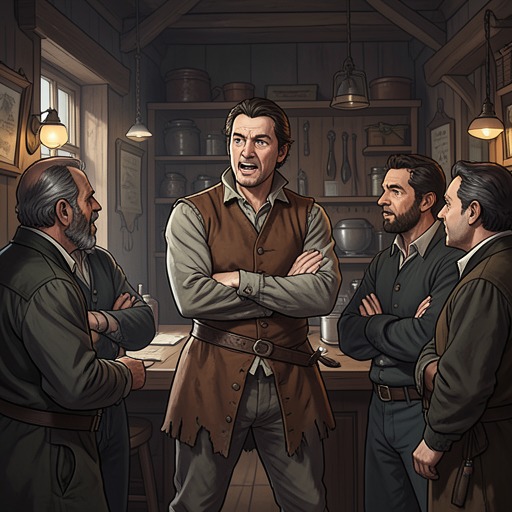
Pistol is introduced by his military title: Bardolph calls him a “good ancient,” identifying him through a role in the company rather than through family or personal history. He enters alongside Bardolph and a Page while Falstaff is saying that he cannot abide swaggerers. The timing sets Pistol’s arrival against Falstaff’s disdainful remark, placing him immediately in a world where military posturing and comic bravado meet.
Pistol’s own language is emphatic and theatrical. He cries, “Die men like dogs! give crowns like pins!” His exclamation turns death and reward into grand, abrupt images, giving his speech a deliberately heightened sound. The surviving evidence establishes this as his manner of address, but does not explain the circumstances behind the words or identify the “crowns” more precisely.
Association with Falstaff and Bardolph
Pistol’s entrance places him in company with Bardolph, who warns him to leave before the encounter grows into a brawl. That warning supplies a practical edge to the scene’s verbal swagger: the possibility of conflict is present, but Bardolph tries to prevent it from becoming physical. Pistol is therefore shown not in isolation but within a group whose exchanges can turn contentious.
His later return is specifically to Falstaff. Falstaff permits him to enter and greets him by name, and Pistol addresses him as “Sir John.” Their exchange makes Pistol the bearer of news to a familiar associate, rather than a participant in the court’s formal announcement of succession.
The Accession Announcement
Pistol tells Falstaff that his “tender lambkin” is now king and identifies the new monarch as Henry the Fifth. He insists that he speaks the truth, making the announcement a direct correction of any lingering assumption that Prince Henry remains merely the prince. His arrival turns a major change of rule into news delivered at the tavern door.
That news closes a play shaped by military reversals and contested authority. Earlier, Rumour announces victory at Shrewsbury, where King Henry’s forces defeat Harry Percy and his troops; later, a report describes the defeat of Northumberland and Lord Bardolph’s force. Against that sequence, Pistol’s message carries more than personal gossip: it registers that the prince has become king, and that Falstaff’s familiar world must now reckon with the new reign. The evidence ends with the announcement; it does not establish Pistol’s subsequent fate.