Poins
Henry IV, Part 2Poins is Prince Henry’s companion, an ally who combines willing obedience with enough familiarity to question the prince’s attachment to Falstaff. His most clearly defined actions are small but consequential: he promises to follow the prince, challenges his closeness to Falstaff, and joins him in disguise to observe Falstaff and Doll Tearsheet. Through Poins, companionship becomes both loyalty and a means of looking behind another character’s performance.
Identity and Introduction
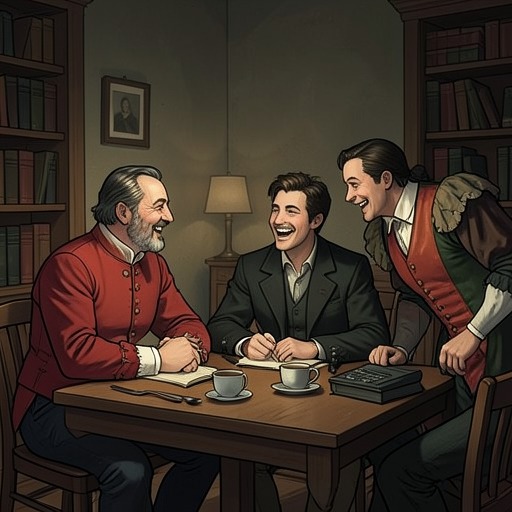
Poins enters with Prince Henry on another street in London. The prince declares himself exceedingly weary, but the scene establishes Poins less through independent business than through his close position beside the prince. Their exchange gives him a familiar address and an easy intimacy: the prince proposes that they approach Falstaff and his company at supper, and Poins promises to follow as the prince’s shadow.
That image captures the relationship’s practical shape. Poins is not presented as a rival claimant to authority or as the scene’s center; he is the companion who accompanies Prince Henry into situations the prince chooses. Yet his compliance does not make him merely silent. He can speak plainly about the prince’s conduct, giving the friendship a note of frankness as well as service.
Friendship and Frank Counsel
Poins identifies Prince Henry’s excessive attachment to Falstaff as the reason he takes the prince for a hypocrite. The charge matters because it comes from an intimate companion rather than an outsider: Poins recognizes the prince’s entanglement with Falstaff and is willing to name it. His criticism punctures the easy assumption that the prince’s association with Falstaff is invisible or beyond comment.
The exchange also sets counsel beside complicity. Poins questions the prince’s relationship with Falstaff, yet he does not withdraw from the prince or refuse the proposed visit. Instead, when Prince Henry suggests stealing upon the company at supper, Poins pledges to follow. His loyalty therefore appears active rather than dutifully distant: he can criticize the prince and still take part in the plan.
Disguise and the Tavern Scene
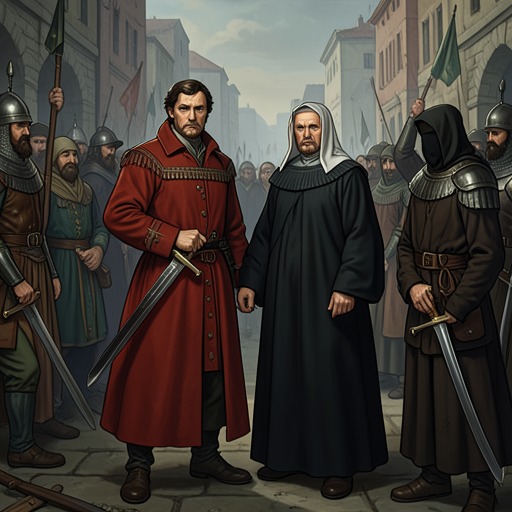
Poins is present when he and Prince Henry enter behind Falstaff in disguise. Their concealed entrance makes the pair spectators to Falstaff’s conversation with Doll Tearsheet, giving their companionship a theatrical form: they share not only a destination but also a hidden position from which to watch and hear the tavern company.
The prince’s intervention in the scene is sharper than Poins’s recorded words. While they remain disguised, Prince Henry comments on Falstaff’s conduct; Poins is established as his companion in the act of observation, not as the speaker of that rebuke. The distinction keeps Poins’s role clear: the evidence shows him participating in the concealment and witnessing the encounter, while the prince supplies the pointed judgment.
Narrative Role and Limits
Poins helps connect Prince Henry’s intimate friendship with Falstaff to the prince’s capacity to observe and judge him. He is at once the friend who exposes the prince’s attachment and the ally who follows him into a concealed vantage point. The shift from open conversation in the London street to disguised entry behind Falstaff turns that loyalty into shared access to a scene the tavern characters do not know is being watched.
The available scenes define Poins through this relationship and these acts of companionship, rather than through a separate ambition or a fully narrated personal history. His significance lies in the combination of candor and adherence: he can call attention to Prince Henry’s closeness to Falstaff, yet remains at the prince’s side when the prince chooses to approach the company.